
Quitting smoking is one of the most powerful decisions you can make for your health, but the rewards aren’t just years away. They begin the moment you put out your last cigarette. This article presents a comprehensive quitting smoking timeline of benefits, breaking down the incredible, evidence-backed milestones your body achieves from the first 20 minutes to 15 years and beyond.
Each step forward is a victory, a measurable return on your investment in yourself. This journey isn’t just about avoiding future illness; it’s about reclaiming your vitality, your breath, and your overall well-being, starting right now. The positive changes are both immediate and profound, offering tangible encouragement just when you need it most.
We will explore precisely what is happening inside your body at each stage, from normalized blood pressure to significantly reduced risks of chronic diseases. Alongside these physiological markers, you’ll find actionable tips to navigate the challenges that arise, such as nicotine withdrawal and powerful cravings.
We’ll also demonstrate how accountability tools can offer critical support. For instance, using the Soberly app to track your milestones, log urges, and complete daily reviews can provide the structure needed to stay committed. Prepare to be amazed by your body’s remarkable resilience and motivated by the immediate and long-term gains that await. This timeline is your roadmap to a healthier future, one minute at a time.
1. 20 Minutes: Heart Rate and Blood Pressure Normalize
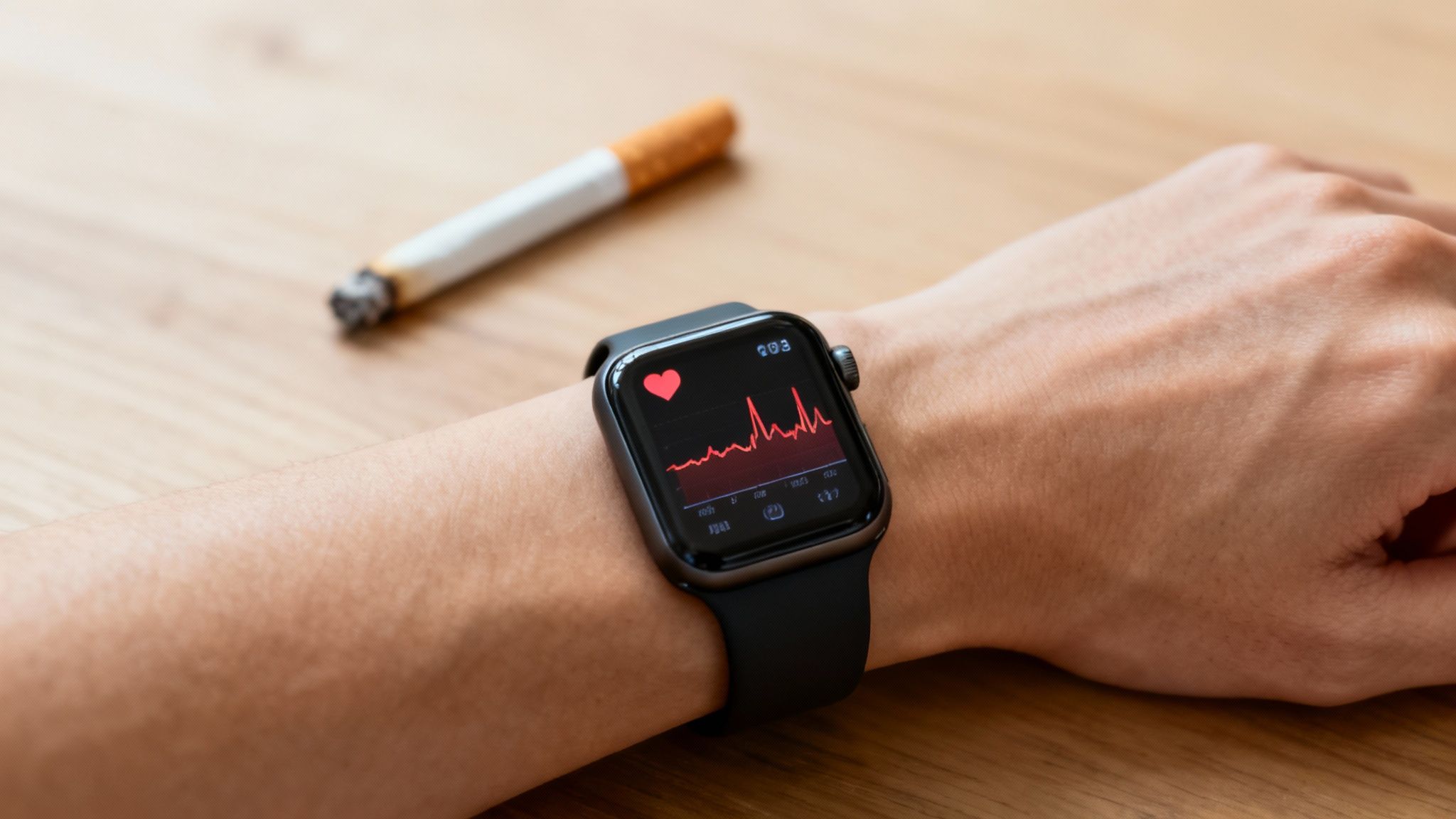
It’s remarkable how quickly the human body begins to heal. Within just 20 minutes of your last cigarette, the first tangible benefits of quitting smoking start to appear. This initial milestone centers on your cardiovascular system, which almost immediately starts its recovery from the acute effects of nicotine.
When you smoke, nicotine acts as a powerful stimulant. It triggers the release of adrenaline, which constricts your blood vessels and forces your heart to beat faster and work harder. This elevates both your heart rate and blood pressure, putting consistent strain on your heart and arteries. The moment you stop introducing this chemical, your body gets a chance to recalibrate. Your blood vessels begin to relax and widen, and your heart rate starts to slow down, returning to its normal resting rhythm. This is a crucial first step in reducing your risk of heart attack and stroke.
Making This Milestone Tangible
While you might not feel a dramatic shift, you can absolutely measure it. This immediate physiological response provides powerful, data-driven proof that your decision is already working, which can be a huge motivator during the first challenging hours of withdrawal.
- Track the Change: If you have access to a home blood pressure monitor, take a reading just before you quit and another one 20-30 minutes after your last cigarette. Seeing the numbers literally drop can provide a powerful dose of motivation.
- Use a Wearable: A fitness tracker or smartwatch can show you your resting heart rate decreasing in near real-time. This visual feedback reinforces the positive impact of your choice.
- Document Your Progress: Use an app like Soberly to log these initial victories. Create a note titled “First 20 Minutes” and record your heart rate or blood pressure changes. When a craving hits an hour later, revisiting this concrete proof of progress can strengthen your resolve. This early win sets the stage for the entire quitting smoking timeline of benefits to unfold.
2. 8-12 Hours: Carbon Monoxide Falls and Oxygen Is Restored
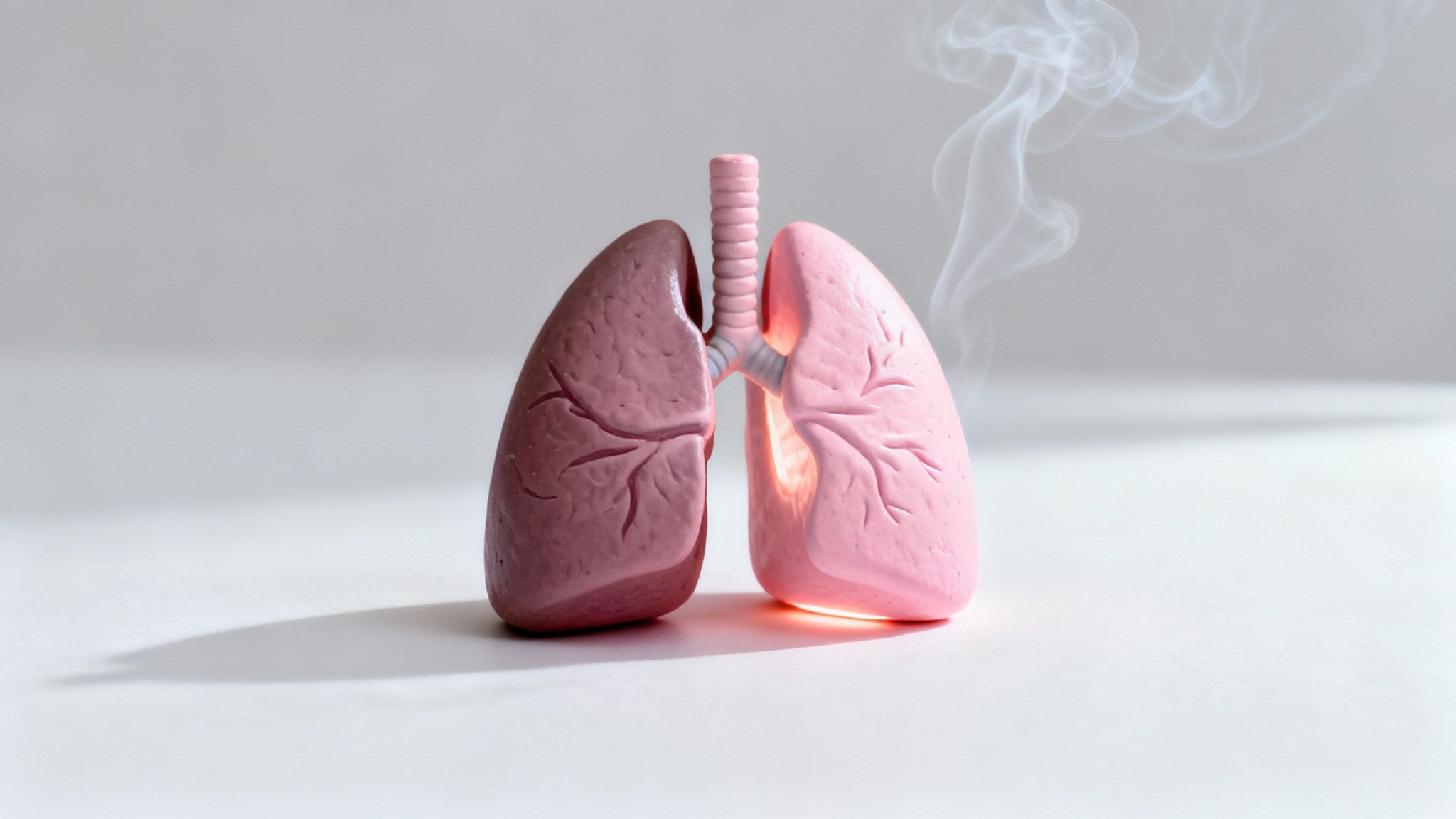
As you progress through your first day smoke-free, one of the most significant and unseen victories is happening inside your bloodstream. Within just 8 to 12 hours of your last cigarette, your body starts to purge itself of carbon monoxide, a toxic gas found in cigarette smoke. This is a critical step in the quitting smoking timeline of benefits because it directly impacts your body’s ability to transport and use oxygen.
When you smoke, carbon monoxide binds to hemoglobin in your red blood cells, taking the place of oxygen. This reduces the amount of oxygen delivered to your vital organs and tissues, forcing your heart and lungs to work much harder to compensate. After just half a day without smoking, carbon monoxide levels can drop by more than half, and by the 12-hour mark, they often return to a normal, non-smoker baseline. This frees up hemoglobin, allowing your blood’s oxygen-carrying capacity to be restored, which means better oxygenation for your brain, heart, and muscles.
Making This Milestone Tangible
While this internal cleanup is happening automatically, you can take active steps to support the process and feel the benefits more clearly. This milestone offers a fantastic opportunity to connect with your body’s healing journey and build momentum for the days ahead.
- Practice Deep Breathing: Take five minutes to focus on deep, diaphragmatic breathing. Inhale slowly through your nose, letting your belly expand, and exhale fully through your mouth. This simple exercise helps maximize your newfound lung capacity and oxygen intake.
- Stay Hydrated: Drinking plenty of water is essential for helping your circulatory system and kidneys flush out toxins like carbon monoxide and its byproducts. Keep a water bottle handy and sip throughout the day.
- Log Your Achievement: When you hit the 8-hour and 12-hour marks, celebrate them. Open your Soberly app and log this achievement in your notes or daily review. Write down how you feel, noting any reduction in fogginess or increase in energy. Recognizing these early wins is crucial for staying motivated through withdrawal.
3. 24 Hours: Reduced Heart Attack Risk Begins
Completing your first full day without a cigarette is a monumental achievement, not just for your willpower, but for your heart health. Within just 24 hours, you have significantly decreased your immediate risk of having a heart attack. This rapid improvement is a direct result of giving your cardiovascular system a much-needed break from the constant assault of chemicals found in tobacco smoke.
Smoking dramatically increases the risk of heart attack by raising blood pressure, increasing heart rate, and promoting the formation of blood clots. After a single smoke-free day, these acute effects begin to reverse. Your blood pressure and heart rate have stabilized closer to normal levels, and the oxygen levels in your blood have risen, allowing your heart to work more efficiently and with less strain. This milestone is often highlighted by organizations like the American Heart Association because it demonstrates the immediate, life-saving impact of quitting.

Making This Milestone Tangible
The first 24 hours are often the toughest due to withdrawal symptoms, so it’s crucial to celebrate this victory and use it as fuel for the next day. Acknowledging this tangible health benefit can make the discomfort of withdrawal feel worthwhile.
- Celebrate Your Victory: Mark this 24-hour point as a major win. Treat yourself to something you enjoy, like a nice meal or watching a favorite movie. Acknowledging your success reinforces your commitment.
- Get Moving: Engage in 20-30 minutes of light exercise, like a brisk walk. This not only helps manage cravings and withdrawal-related anxiety but also directly contributes to your improving cardiovascular health, building your confidence.
- Document Your Journey: The first day is filled with challenges and triumphs. Use the Soberly app to create a journal entry titled “Made it 24 Hours!” Detail the tough moments and how you overcame them. Logging this achievement in the app’s milestone tracker provides a powerful record you can look back on when your resolve is tested, solidifying this step in your quitting smoking timeline of benefits.
4. 48-72 Hours: Nicotine Completely Exits the System
This is a monumental turning point in your quitting smoking timeline of benefits. Between two and three days after your last cigarette, your body has successfully flushed out the last of the nicotine. While its metabolites, like cotinine, may take longer to clear completely, the primary chemical that drove your physical addiction is now gone. This signals the end of the acute physical withdrawal phase and the beginning of a new chapter where your brain chemistry starts to heal and rebalance itself.
The absence of nicotine means your brain’s acetylcholine receptors, which were previously overwhelmed and desensitized, can begin to return to their normal state. This recalibration is a profound physiological victory, but it often coincides with the peak of withdrawal symptoms. Irritability, anxiety, and intense cravings are common during this window because your body is learning to function without the chemical stimulant it had come to depend on. Recognizing that this discomfort is a sign of deep healing can reframe the experience from a struggle into a triumph.
Making This Milestone Tangible
Navigating this peak withdrawal period is challenging, but it’s also where you build the most resilience. The key is to support your body and mind as they adjust, turning this biological reset into a sustainable win.
- Celebrate the Victory: Acknowledge this achievement. You are now officially free from the physical grip of nicotine. Mark this milestone in your Soberly app with an entry titled “Nicotine Free!” to remind yourself of how far you’ve come when cravings feel overwhelming.
- Manage Cravings Proactively: Your brain is searching for the dopamine hit it used to get from smoking. Provide it with healthier alternatives. Go for a brisk walk, listen to an uplifting playlist, call a friend, or engage in a hobby you love. Physical activity is particularly effective at boosting mood and reducing craving intensity.
- Stay Hydrated and Nourished: Increased appetite is a common withdrawal symptom. Keep healthy snacks like fruits, nuts, or vegetable sticks on hand. Drinking plenty of water can also help manage cravings and flush out remaining toxins.
- Document Your Journey: Use the Soberly app to track your symptoms and cravings. Notice how they begin to lessen in intensity and frequency after passing the 72-hour mark. This data provides clear evidence that you are moving past the most difficult phase. To see how long you’ve been nicotine-free down to the second, you can learn more about tracking your progress with a nicotine sobriety calculator.
5. 2-4 Weeks: Improved Circulation and Lung Function
By the time you reach the two-week mark, you are moving beyond the most intense initial withdrawal symptoms and into a period of profound physical healing. This stage is particularly rewarding as the benefits become more noticeable in your daily life. Your cardiovascular and respiratory systems are now making significant strides in recovery, directly impacting your stamina and overall sense of well-being.
Smoking damages your lungs in two key ways: it inflames the airways and destroys the tiny, hair-like structures called cilia, which are responsible for clearing mucus and debris. Within a few weeks of quitting, these cilia begin to regrow and function properly again. This regeneration allows your lungs to clean themselves more effectively, reducing your risk of infection. Simultaneously, your blood circulation, which was constricted by nicotine, improves dramatically. This enhanced blood flow delivers more oxygen to your muscles and organs, making physical activity feel significantly easier.
Making This Milestone Tangible
This is one of the most motivating points in the quitting smoking timeline of benefits because you can feel the difference. You are no longer just measuring internal changes; you are experiencing them through increased energy and easier breathing.
- Take the Stairs: One of the most common reports from people at this stage is the ability to climb a flight of stairs without feeling winded. Make a point to choose the stairs over the elevator and notice how much easier it is now compared to when you were smoking.
- Start an Exercise Routine: This is the perfect time to introduce light to moderate exercise. A brisk 30-minute walk each day will not only feel more manageable but will also help maximize your circulation gains. You’ll likely notice your recovery time after exercise improves as well.
- Document Your Stamina: Use your Soberly app to create a daily entry about your physical activity. Note how far you walked, how you felt during, and how quickly you recovered. Looking back at these entries after just one week will reveal a powerful upward trend in your physical endurance, reinforcing your commitment to staying smoke-free.
6. 3 Months: Lung Function Increases Up to 30%
By the three-month mark, one of the most significant and life-altering benefits of quitting smoking becomes evident: a dramatic improvement in your lung function. This milestone moves beyond the initial healing stages and into substantial, measurable recovery. The tiny, hair-like cilia in your airways, which were paralyzed by smoke, have now regrown and are actively working to clear mucus and debris from your lungs.
This regeneration process allows your lungs to clean themselves far more effectively, reducing the chronic congestion and “smoker’s cough” that may have plagued you for years. Studies show that key measures of lung function, such as the amount of air you can forcefully exhale in one second (FEV1), can improve by up to 30% within this period. This means easier breathing, less shortness of breath during physical activity, and a profound reduction in your risk for developing chronic obstructive pulmonary disease (COPD).
Making This Milestone Tangible
This is a powerful point in the quitting smoking timeline of benefits where you can truly feel and quantify the positive changes in your daily life. It’s a transition from simply not smoking to actively feeling healthier and stronger.
- Test Your Progress: If possible, ask your doctor for a simple spirometry or pulmonary function test. Getting a baseline test early in your quit journey and another around the three-month mark can provide hard evidence of your lungs’ recovery, which is incredibly motivating.
- Embrace Physical Activity: Take advantage of your increased lung capacity. Start or intensify an exercise routine, whether it’s brisk walking, jogging, or cycling. Noticing you can go further or faster without getting winded is a tangible reward that reinforces your commitment.
- Reframe the Cough: You might notice you’re coughing more productively as your lungs clear out accumulated tar and mucus. Instead of seeing this as a negative sign, reframe it as proof of healing. Your body is actively cleaning house.
- Document the Feeling: Use the Soberly app to create a journal entry titled “Breathing Easier.” Describe specific moments where you noticed the difference, like climbing a flight of stairs without gasping for air or keeping up with your kids at the park. When a tough craving strikes, reading about these real-world gains can be the anchor you need to stay smoke-free.
7. 6 Months: Circulation and Lung Function Further Normalize
Reaching the six-month mark is a monumental achievement in your quitting smoking timeline of benefits. By this stage, the healing processes within your cardiovascular and respiratory systems have made profound and often visible progress. Your body is no longer in a constant state of repair from daily toxic exposure; instead, it is actively rebuilding and strengthening itself, leading to significant improvements in both how you feel and how you look.
The improvements in circulation are particularly noteworthy. Better blood flow means more oxygen and nutrients are efficiently delivered to all your body’s tissues, including your skin. This enhanced circulation helps repair some of the damage caused by smoking, such as the breakdown of collagen and elastin. Similarly, your lungs have continued to heal. The cilia are now much more effective at clearing debris, reducing your susceptibility to infections and further improving your capacity for physical activity.
Making This Milestone Tangible
At six months, the benefits are less about subtle internal shifts and more about noticeable, real-world changes. This is a time to acknowledge how far you’ve come and use that success as fuel to remain smoke-free for life.
- Look in the Mirror: Take note of your skin’s appearance. You may notice a healthier glow, a more even skin tone, and a reduction in the prominence of fine lines that smoking accelerated. The “smoker’s pallor” is likely a thing of the past.
- Push Your Physical Limits: If you’re an athlete or regularly exercise, compare your performance now to six months ago. You’ll likely find you can run farther, cycle longer, or lift heavier without getting winded as quickly. This is your improved lung function in action.
- Log Your Victory in Soberly: Reaching six months is a huge deal. Open your Soberly app and create a special entry under your achievements. Document how you feel, the compliments you’ve received on your appearance, and how much easier physical activity has become. This powerful testament to your hard work will be a source of strength for years to come.
8. 1 Year: Heart Disease Risk Cut in Half
Reaching the one-year mark is a monumental achievement in your journey to quit smoking, bringing with it one of the most significant health turnarounds. After 365 days smoke-free, your risk of coronary heart disease is now approximately half of what it was when you were a smoker. This dramatic reduction showcases the incredible resilience of your cardiovascular system and its ability to heal from the persistent damage caused by smoking.
Smoking injures the inner lining of your arteries, promotes the buildup of fatty plaque (atherosclerosis), and increases the likelihood of blood clots. By staying smoke-free for a full year, you have given your body the time it needs to substantially repair this damage. The inflammation in your arteries has decreased, your blood is less “sticky,” and your cholesterol levels have improved. This milestone is highlighted by health organizations like the CDC as a critical point where the long-term benefits of quitting become undeniable, solidifying your transition to a healthier, non-smoker identity.
Making This Milestone Tangible
This anniversary isn’t just a date on the calendar; it’s a celebration of your renewed health and a testament to your strength. Acknowledging this milestone reinforces your commitment and helps you look forward to a healthier future, which is a key part of the quitting smoking timeline of benefits.
- Celebrate Your Success: Plan a meaningful celebration. Whether it’s a special dinner, a weekend trip, or investing the money you’ve saved in something you love, mark this day as a major life accomplishment.
- Reflect and Share: Take time to reflect on all the positive changes you’ve experienced over the year, from easier breathing to improved taste. Sharing your success story with others who are trying to quit can be incredibly motivating for both you and them.
- Plan for the Future: Use this milestone as a launching pad for other health goals. If you gained weight after quitting, now is an excellent time to focus on developing healthy eating and exercise habits, armed with the knowledge that you can achieve difficult things.
- Document Your Journey: Open your Soberly app and create an entry for your one-year anniversary. You can track your total smoke-free days and money saved using tools like a sobriety calculator for smoking. Seeing the cumulative impact of your daily choices offers powerful motivation to continue your smoke-free life.
9. 5-10 Years: Lung Cancer and Stroke Risk Decrease Significantly
Reaching the five-to-ten-year mark in your smoke-free journey is a monumental achievement, representing a profound and sustained period of healing. This long-term milestone is where some of the most life-altering benefits on the quitting smoking timeline of benefits truly come to fruition. The risk of developing several major diseases, which once seemed alarmingly high, now dramatically declines, approaching levels seen in people who have never smoked.
Years of avoiding the thousands of carcinogens in tobacco smoke allow your body to perform incredible long-term repairs. The cilia in your lungs have long since regrown, but now the cells themselves have had years to replace damaged, precancerous cells with healthy ones. Epidemiological studies consistently show that after about five years, the risk of dying from lung cancer for an average former smoker (one pack a day) drops by about half. By the ten-year mark, your risk of stroke can fall to be nearly equivalent to that of a lifelong non-smoker. These dramatic reductions are a testament to the power of effective lifestyle changes for heart disease prevention and overall health.
Making This Milestone Tangible
This milestone is less about immediate feelings and more about long-term health security and peace of mind. Celebrating this profound health investment reinforces your identity as a non-smoker for life and can inspire others to follow your path.
- Schedule a Health Screening: Use this anniversary as a reminder to schedule a comprehensive physical. Discuss your smoking history with your doctor and follow their recommendations for screenings, celebrating the positive results as a direct outcome of your long-term commitment.
- Share Your Story: Your decade-long success is a powerful testament to what’s possible. Consider sharing your journey with friends, family, or on a support forum. Inspiring even one person to quit is a meaningful way to pay your success forward.
- Document Your Legacy: In the Soberly app, create a special entry titled “10-Year Anniversary.” Reflect on how your life has changed, the challenges you overcame, and the health you’ve reclaimed. This becomes a cornerstone of your personal history, a powerful reminder of your strength and resilience.
10. 15+ Years: Life Expectancy Approaches Never-Smoker Levels
This is the ultimate long-term reward in the quitting smoking timeline of benefits. After 15 years of being smoke-free, your body has undergone such a profound and complete recovery that your risk of mortality begins to mirror that of someone who has never smoked. The cumulative damage from years of smoking has been systematically repaired, and your risk for the most serious smoking-related illnesses has plummeted to its lowest possible point.
Smoking accelerates aging and drastically shortens life by damaging nearly every organ. By this 15-year mark, your risk of coronary heart disease is the same as a non-smoker’s. Your risk of developing lung cancer, while never zero, is dramatically reduced by as much as 90% compared to a continuing smoker. The same is true for risks of cancers of the mouth, throat, esophagus, and pancreas. Reaching this milestone means you have effectively reclaimed years of life that were previously at risk, a testament to the body’s extraordinary capacity for healing.
Making This Milestone Tangible
This milestone is less about immediate feelings and more about a profound, life-altering reality. It’s about celebrating the future you’ve secured for yourself. The benefits of this long-term sobriety from nicotine are immense, echoing the positive life changes seen across many forms of recovery. You can learn more about the extensive benefits of sobriety here.
- Become a Mentor: You are now an expert in what it takes to succeed. Share your story and offer guidance to others just beginning their journey. Your long-term success is a powerful source of inspiration.
- Celebrate the Gift of Time: Acknowledge this incredible achievement. Plan a special trip, start a new hobby, or spend quality time with loved ones, consciously celebrating the healthy years you’ve gained.
- Log Your Legacy in Soberly: Use the Soberly journal feature to write a letter to your past self. Reflect on the 15-year journey, the challenges overcome, and the life you’ve built. This creates a powerful testament to your resilience that you can revisit for years to come.
10-Step Quit-Smoking Benefits Timeline
| Milestone (timeline) | Implementation complexity 🔄 | Resource requirements ⚡ | Expected outcomes 📊⭐ | Ideal use cases & key advantages 💡 |
|---|---|---|---|---|
| 20 Minutes: Heart Rate and Blood Pressure Normalize (0–20 min) | Very low — automatic physiological change | Minimal — optional BP/HR monitor | Immediate drop in heart rate and BP; early cardiovascular relief | Early motivator; measurable proof-of-change; reduces acute cardiac strain |
| 8–12 Hours: Carbon Monoxide Falls and Oxygen Is Restored (8–12 h) | Low — body clears CO naturally | Low — hydration, deep-breathing exercises helpful | CO approaches non-smoker baseline; blood O2 saturation increases | Useful milestone to boost energy; supports tissue healing and confidence |
| 24 Hours: Reduced Heart Attack Risk Begins (24 h) | Low–moderate — ongoing normalization | Low — behavioral support for cravings recommended | Cardiac workload decreases; risk of heart attack begins to fall | Major early health milestone; strong psychological reinforcement |
| 48–72 Hours: Nicotine Completely Exits the System (2–3 days) | Moderate — peak withdrawal symptoms common | Moderate — NRT, support groups, distraction strategies helpful | Nicotine largely cleared; physical dependence ends; withdrawal peak passes | Turning point in addiction physiology; good time to reinforce coping plans |
| 2–4 Weeks: Improved Circulation and Lung Function (2–4 weeks) | Moderate — requires sustained abstinence | Moderate — exercise program, time and consistency | Better peripheral circulation; improved ciliary function and endurance | Noticeable functional gains (stairs, exercise); motivates continued abstinence |
| 3 Months: Lung Function Increases Up to ~30% (3 months) | Moderate — continued commitment needed | Moderate — optional spirometry to document gains | Significant FEV1 and breathing capacity improvements; less congestion | Major measurable respiratory recovery; improved quality of life |
| 6 Months: Circulation and Lung Function Further Normalize (6 months) | Low–moderate — maintenance phase | Low — lifestyle maintenance, weight management | Continued circulation gains; substantially reduced cardiovascular risk | Visible health benefits (skin, healing); cravings greatly reduced for many |
| 1 Year: Heart Disease Risk Cut in Half (1 year) | Low — long-term behavior sustained | Low — ongoing support as needed | ~50% reduction in coronary heart disease risk; stabilized reward system | Landmark milestone reinforcing non-smoker identity; durable risk reduction |
| 5–10 Years: Lung Cancer & Stroke Risk Decrease Significantly (5–10 years) | Low — long-term maintenance | Low — regular screenings and healthy lifestyle | Lung cancer risk ~50% lower (progresses toward never-smoker); stroke risk near normal | Major long-term disease prevention; cumulative health benefits |
| 15+ Years: Life Expectancy Approaches Never-Smoker Levels (15+ years) | Low — lifelong vigilance advisable | Low — preventive care and healthy habits | Overall life expectancy and most disease risks approach never-smoker levels | Near-complete recovery for many; powerful evidence that quitting at any age helps |
Your Journey, Your Timeline: Making These Benefits Your Reality
The quitting smoking timeline of benefits we’ve explored is more than a list of scientific facts; it’s a powerful, tangible roadmap to reclaiming your health, vitality, and future. From the moment your heart rate steadies just 20 minutes after your last cigarette to the day your life expectancy mirrors that of a non-smoker, every single milestone represents a profound act of self-care and a victory worth celebrating.
This timeline demonstrates that your body has an incredible, innate capacity to heal. The journey begins immediately, with measurable improvements happening faster than most people realize. The initial 72 hours, while often the most challenging due to nicotine withdrawal, are also when your body expels the toxin and starts resetting its chemistry. Within weeks, you can physically feel the difference in your breath and your energy levels.
Turning Knowledge into Action
Understanding this timeline is the first step, but internalizing it and using it as a daily motivator is where the real transformation happens. It’s about shifting your perspective from what you are giving up to what you are actively gaining with every smoke-free hour.
- Focus on the Next Milestone: When an urge strikes, instead of dwelling on the craving, pull up this timeline. Are you a few hours away from the 24-hour mark and a reduced heart attack risk? Are you closing in on one year and halving your risk of heart disease? Anchoring your resolve to these concrete goals makes the abstract desire to quit feel immediate and achievable.
- Visualize Your Healing: Actively think about the healing processes described. Picture the carbon monoxide clearing from your blood, your cilia regrowing and cleaning your lungs, and your blood vessels becoming more flexible. This mental imagery reinforces the positive impact of your decision and strengthens your commitment.
- Track Your Progress Tangibly: Don’t just keep this timeline in your head. Use a tool like Soberly to log your quit date and watch these milestones unlock in real-time. Seeing a visual representation of your progress, from days to weeks to months, provides a powerful and consistent source of encouragement. The app’s urge-logging feature can help you identify patterns and triggers, turning difficult moments into valuable data for your journey.
Beyond the Timeline: Quantifying Your Health Gains
As you progress through the quitting smoking timeline of benefits, your internal health markers will transform dramatically. While you can feel many changes, like improved breathing, others are invisible. To truly appreciate the deep-seated health improvements from quitting, a valuable step is understanding your Comprehensive Metabolic Panel (CMP). This blood test provides a snapshot of your metabolism, kidney function, and liver health, all of which are positively impacted when you stop smoking. Seeing these numbers improve over time can be an incredibly powerful motivator, offering concrete proof that your efforts are paying off on a cellular level.
Ultimately, this timeline is your personal script for a comeback story. Each entry is a scene where your body defeats the damage of smoking and rebuilds itself stronger. The journey is not always linear, and challenges will arise, but the rewards are life-changing and guaranteed. You are not just quitting a habit; you are choosing a longer, healthier, and more vibrant life. You are choosing to be there for future moments, big and small, with the full capacity to enjoy them. Let that be your ultimate motivation.
Ready to start your own timeline and make these benefits your reality? Download Soberly to track your smoke-free progress, log urges, and celebrate every milestone on your path to a healthier life. Let us be your companion on this incredible journey. Find out more at Soberly.
Related Topics