
Deciding to get sober is a huge, life-changing moment. But that initial decision, as powerful as it is, is just the beginning. The real work starts in those first few critical days, where you’ll be building the foundation for a life without alcohol. This isn’t about some grand, perfectly executed plan; it’s about taking small, deliberate actions to get through the first 24, 48, and 72 hours.
Navigating Your First Days of Sobriety

Let’s be honest: the first 72 hours of sobriety are tough. You’re likely to feel a chaotic mix of relief, anxiety, and some very real physical discomfort as your body starts to detox. It’s completely normal for this period to feel like a rollercoaster.
The key is to simplify your focus. Don’t get bogged down thinking about next month or next year. Right now, your only job is to get through the next hour, then the next. Breaking it down like this makes the seemingly impossible feel manageable. For a deeper dive into what your body and mind are going through, you can explore a detailed alcohol recovery timeline that outlines the process.
Create Your Safe Haven
Your immediate environment can either be your biggest ally or your worst enemy. The very first order of business is to get rid of any and all alcohol in your home. Pour it out. Give it away. Just get it out of sight. This is a non-negotiable step that removes the most obvious temptation.
Next, line up your support. You need at least one person you can call at any time, day or night, when things get hard. This could be a trusted friend, a family member who gets it, or your therapist. Just knowing you have someone to reach out to can make all the difference. Now is also the time to protect your peace—politely decline any social invitations that involve alcohol. Your well-being comes first.
Focus on Your Body’s Needs
Your body has been through a lot and is now working overtime to heal. You can give it a major boost with some fundamental self-care.
First, hydration is everything. Water, herbal tea, and drinks with electrolytes will help flush out the toxins and rehydrate your system, which is crucial during withdrawal.
Nutrition is a close second. Alcohol messes with your body’s ability to absorb nutrients, so focus on eating regular, balanced meals. If you don’t have much of an appetite, try small, nutrient-rich snacks like a banana, a handful of nuts, or some yogurt. Keeping your blood sugar stable can work wonders for your mood and help keep cravings at bay. Even a short, gentle walk can clear your head and release some much-needed endorphins.
This isn’t just about being healthy; it’s a strategy. Making a simple meal or going for that walk gives your mind and body something productive to do, pulling your focus away from the urge to drink.
The table below breaks down these initial priorities into a simple, actionable checklist for those critical first three days.
Immediate Actions for Your First 72 Hours of Sobriety
| Focus Area | Actionable Step | Why It Helps |
|---|---|---|
| Environment | Remove all alcohol from your home, car, and office. | Eliminates immediate temptation and reinforces your commitment. |
| Support | Identify and contact at least one sober-supportive person. | Creates a lifeline and prevents you from feeling isolated with cravings. |
| Hydration | Drink water, herbal tea, or electrolyte drinks consistently. | Flushes toxins, combats dehydration, and aids physical recovery. |
| Nutrition | Eat small, frequent, and nutrient-dense meals or snacks. | Stabilizes blood sugar, which helps regulate mood and reduce cravings. |
| Mindfulness | Focus on getting through the next hour, not the next year. | Makes the overwhelming goal of sobriety feel much more achievable. |
Remember, the goal in these first few days isn’t to be perfect. It’s about building a strong, stable launchpad for the rest of your journey. By focusing on these tangible actions, you’re giving yourself the tools you need to build momentum and confidence from day one.
Building a Sober Routine That Works for You

In the early days of sobriety, structure is your best friend. Those unstructured hours—the ones you used to fill with drinking—can feel like a huge, empty space. The goal here isn’t to lock yourself into a rigid, military-style schedule. It’s about building a stable, predictable, and genuinely fulfilling life where alcohol just doesn’t fit anymore.
Think of it as reclaiming your time. A good routine acts like a guardrail, keeping you on a positive track and shrinking those idle moments where boredom and cravings love to sneak in. You’re building a life you don’t feel the need to escape from.
Start and End Your Day with Intention
One of the most powerful things you can do is “bookend” your day. This just means creating simple, consistent rituals for your morning and evening. These small habits set the tone for the day and help you wind down peacefully at night, replacing old drinking patterns with new, healthy ones.
Your morning routine doesn’t have to be some huge production. It’s just about starting the day centered and reminding yourself of your commitment to stay sober.
- Five-Minute Meditation: Use an app or just focus on your breath. It’s a fantastic way to quiet the morning anxiety and start your day mindfully.
- Simple Stretching: Gently wake up your body and release any tension you’re holding onto.
- Journaling: Grab a notebook and jot down one thing you’re grateful for or a single goal you have for your sober day.
An evening routine is just as important. It helps you shift gears from the day’s stress to a restful night’s sleep—a time when many of us used to drink. Instead of pouring a glass of wine, maybe you read a chapter of a book, listen to a calming podcast, or make a great cup of herbal tea. These rituals tell your brain it’s time to relax, no alcohol required.
A predictable routine reduces decision fatigue. When you know what’s next—a healthy meal, a walk, a call with a friend—there’s less mental space available for debating whether or not to drink.
Fill the Gaps and Rediscover Joy
The hours between your morning and evening bookends matter just as much. That period right after work or on the weekends can be a major trigger zone for a lot of people. This is where getting proactive about scheduling your time becomes a game-changer for staying sober.
Don’t leave these chunks of time to chance. Fill them with activities that actually fit the new life you’re building. This isn’t just about “staying busy.” It’s about finding things that bring you real satisfaction and boost your self-esteem. As you fill your days with these positive experiences, you’ll naturally start to see the many benefits of sobriety firsthand.
Building Your Personalized Sober Schedule
The best routine is the one that’s tailored to you. If your schedule feels like a chore, you won’t stick with it. The key is to find a mix of activities that support your well-being and that you actually find enjoyable.
Try weaving some of these elements into your week:
- Consistent Meal Times: Eating regular, nutritious meals helps keep your blood sugar and mood stable, which can make a huge difference in taming cravings. Planning your meals for the week also cuts down on last-minute stress.
- Movement You Enjoy: You don’t have to suddenly become a marathon runner. Find a way to move your body that you actually like. It could be a daily walk in a park, a dance class, a local sports league, or following a yoga video at home.
- Creative or Learning Pursuits: Get your mind engaged. Dust off that old guitar, sign up for an online course on something you’re curious about, or just go to the library. Learning and creating are powerful ways to build a new identity that isn’t centered on drinking.
- Scheduled Relaxation: Intentionally schedule downtime that doesn’t involve a screen. Put on some music, take a bath, or practice a grounding technique. True relaxation is a skill, and it’s a crucial one for managing stress without alcohol.
By mindfully crafting a routine, you’re doing more than just passing the time. You are actively laying the foundation for a sustainable, rewarding, and sober life—one day at a time.
How to Socialize Without Drinking
Let’s be honest: social events can feel like a minefield when you’re newly sober. It’s easy to feel like you have to choose between your recovery and your social life. But the good news is, you don’t. With a little forethought and a fresh perspective, you can walk into parties, dinners, and after-work events feeling confident and in control.
The trick is to have a solid game plan before you even walk out the door. When you feel prepared, the anxiety melts away, and you can focus on what really matters—connecting with people.
Arrive with a Plan
Walking into a party without a strategy is a recipe for anxiety. Before you go, make a few simple decisions.
First, figure out what you’ll drink. This might sound minor, but it’s a game-changer. Bring your own sparkling water or decide ahead of time that you’ll order a club soda with lime. Having your go-to non-alcoholic drink ready means you won’t be caught off guard when someone asks, “What can I get you?”
Second, map out your exit strategy. You don’t have to be the last one standing. In fact, it’s often better if you’re not. Give yourself permission to stay for just an hour or to leave the second you feel uncomfortable. A simple, pre-planned reason like “I’ve got an early morning” is the perfect, no-fuss way to make your exit.
This isn’t about being rigid; it’s about setting boundaries that protect your recovery and empower you to socialize on your own terms.
Master the Art of Saying No
One of the biggest hurdles is figuring out how to turn down a drink without making it a big deal. The reality? Most people won’t even bat an eye. A simple and confident, “No, thanks, I’m good for now,” is usually all you need.
If you run into someone who’s a bit more persistent, you still don’t owe them your life story. Keep a few easy-going responses ready:
- “I’m not drinking tonight, but I’d love a water.”
- “Thanks, but I’m sticking with this for now.” (as you hold your non-alcoholic drink)
- “I’m driving, so I’ll pass.”
The key is to be friendly but firm. Your own confidence in the decision sends a clear signal that it’s not up for discussion. This is about more than just avoiding alcohol; it’s about owning your choice to stay sober with self-assurance.
Shift Your Social Focus
When alcohol was in the picture, drinking was often the main event. Now, it’s time to shift your focus to the real reason you’re there: genuine connection. Instead of worrying about what’s in your glass, put your energy into the conversations happening around you.
This can feel a little strange at first, especially if you relied on alcohol to get over social hurdles. Learning new skills, like how to start a conversation with confidence, can make a huge difference as you navigate these situations. You’ll probably find that you’re able to form much deeper, more authentic connections when you’re fully present.
Remember, you are not defined by what you drink. You bring value to social gatherings through your personality, your stories, and your presence—not through the beverage in your hand.
You’re also not alone in this. While the United States’ per capita alcohol intake is 9.8 liters of pure alcohol annually, overall consumption is on a downward trend, particularly among younger generations. You can dive deeper into these global trends over at World Population Review.
The rise of the “sober curious” movement and the explosion of premium mocktails and non-alcoholic spirits have made it easier than ever to socialize without booze. You’re not just protecting your recovery; you’re part of a growing cultural shift toward more mindful and authentic living.
Managing Triggers and Overcoming Cravings
Let’s be real—learning how to stay sober means getting good at managing the tough moments. Cravings don’t just happen; something almost always sparks them. The first, most crucial step is figuring out what those personal tripwires are so you can start disarming them.
A trigger can be just about anything. It could be a person, a place, a certain time of day, or even an emotion. Think about that “5 o’clock somewhere” feeling after a rough day at work, running into an old drinking buddy, or the wave of anxiety that hits on Sunday night. The goal isn’t to hide from life, but to become a detective of your own habits and feelings.
Mapping Your Personal Triggers
I always suggest people create a “trigger map” when they’re starting out. For one week, just pay close attention to when the urge to drink pops up. When it does, take a breath and ask yourself a few simple questions:
- What am I doing right now?
- Who am I with?
- Where am I?
- What am I feeling?
Jotting this down in a journal or using an app like Soberly is a game-changer. It helps you spot patterns you’d otherwise miss. You might be surprised to find that boredom is a bigger trigger for you than stress, or that scrolling social media on a Friday night is a guaranteed path to a craving. This kind of self-awareness is your superpower in recovery. For a little more help with this kind of self-reflection, check out our guide on using mental health journal prompts for self-discovery.
This infographic offers a great, simple framework for thinking through social situations that might be triggering.
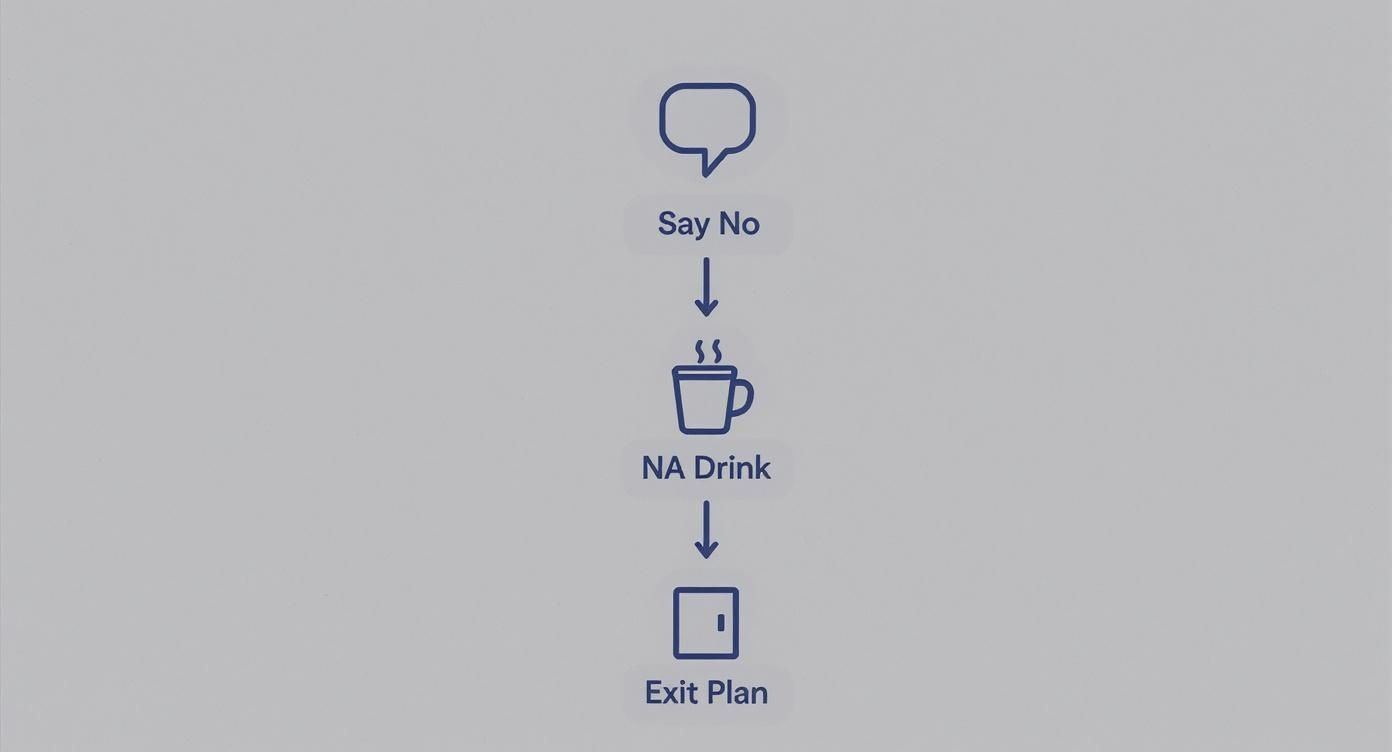
It’s a powerful reminder that you always have options. You’re in control, and you can make a choice that protects your sobriety.
Your In-the-Moment Coping Toolbox
Once you have a better handle on your triggers, you can build a toolbox of go-to strategies for when cravings hit. And they will hit. Having a plan ready means you won’t be caught off guard when an urge feels like it’s taking over.
A craving can feel huge and all-consuming, but here’s something to hold onto: it’s temporary. Most cravings only last about 15-30 minutes. Your only job in that moment is to find a healthy way to ride it out.
Here are a few proven techniques I’ve seen work time and time again:
- Play the Tape Forward: This one is huge. When the craving whispers sweet nothings, force yourself to visualize the whole scenario. Don’t stop at the temporary relief of that first drink. Play the tape all the way through to the morning after—the hangover, the regret, the anxiety, the promises you broke to yourself. This simple mental exercise strips the craving of its power by connecting it to its real, painful consequences.
- The 5-4-3-2-1 Grounding Method: Feeling overwhelmed? This technique yanks you out of your head and back into the present moment. Just look around and name: 5 things you can see, 4 things you can feel, 3 things you can hear, 2 things you can smell, and 1 thing you can taste. It’s an incredibly simple but effective circuit-breaker for the craving cycle.
- Urge Surfing: Instead of fighting a craving head-on, try observing it like a scientist. Picture the urge as a wave in the ocean. Notice it building, peaking, and then naturally breaking and fading away. When you stop struggling against it, you prove to yourself that you’re strong enough to let it pass without giving in.
Stress is a massive trigger for so many of us, so having solid coping mechanisms is non-negotiable. It’s worth taking the time to explore different coping strategies for stress until you find what works for you. This is a global issue; the World Health Organization estimates that 400 million people aged 15 and up are living with alcohol use disorders. Choosing to stay sober is a powerful act that can drastically reduce your health risks.
Cravings are not commands. They are strong suggestions from a part of your brain that is still healing. Acknowledge the suggestion, then choose a different action.
By mapping your triggers and practicing these coping skills, you start to systematically dismantle the old patterns that kept you stuck. Every single craving you overcome is a win—a win that strengthens your resolve and rewires your brain for a healthier, sober life.
Creating Your Personal Support System
Going it alone in recovery is a tough road to travel. Think of it like trying to climb a mountain in a blizzard without a rope—sure, it might be possible, but why would you make it so unnecessarily difficult and risky? A solid support system is your safety line, your compass, and your personal cheering squad all rolled into one. The best part? You get to build it yourself, piece by piece, so it fits you perfectly.
This isn’t just about having a list of names to call when you’re on the brink of a relapse. It’s about weaving a net of connection, accountability, and positivity into the fabric of your daily life. When you feel genuinely seen and understood by others on a similar path, the burden of staying sober suddenly feels a whole lot lighter.
Diversifying Your Support Network
Putting all your eggs in one basket is never a great idea, especially in recovery. Relying on just one person or one type of support is a recipe for trouble. What if that person is busy when you need them? What if that one meeting just isn’t clicking for you anymore?
The trick is to build a layered system, pulling support from different corners of your life. Imagine building a sturdy table—you need more than one leg to keep it from toppling over.
- Professional Support: This is your expert guide. Therapists, addiction counselors, and specialists provide a confidential, non-judgmental space to dig into the “why” behind your addiction and build rock-solid coping skills.
- Peer Groups: These are the heart and soul of many recovery journeys. You’ve got options, from time-tested 12-step programs like Alcoholics Anonymous (AA) to alternatives like SMART Recovery, which uses cognitive-behavioral tools to empower you.
- Sober Communities: This is where recovery gets fun. Find people who share your passions! It could be a sober hiking club, a book group, a local sports league, or even an online gaming community for people in recovery. These friendships feel effortless because they’re built on shared joy, not just shared struggle.
Identifying Your Allies
Let’s be real: not everyone in your life is going to be a front-row supporter, and that’s okay. Your job is to figure out who your true allies are among your friends and family—the ones who are genuinely in your corner. These are the people who listen without jumping to conclusions, respect your boundaries (like not offering you a drink), and get genuinely excited about your milestones.
An ally doesn’t need to be an addiction expert. They just need to be willing to listen, learn, and show up for you in the way you need them to. Sometimes, a simple, direct conversation is all it takes.
“Hey, I’m really focused on my sobriety, and it would mean a lot to me if we could hang out at places that aren’t centered around drinking. Your support here is huge for me.”
This kind of honest talk sets clear expectations and gives people a concrete way to help. It also has a way of showing you who isn’t quite ready to support the new you, which is just as important to know.
Leveraging Digital Tools for Connection
In our hyper-connected world, your support network can live right in your pocket. Digital tools are a game-changer for recovery, offering a lifeline of connection and accountability whenever you need it.
Sobriety tracking apps, like Soberly, do more than just count your sober days. Many have thriving community features where you can instantly connect with thousands of people who know exactly what you’re going through. These forums are a place to share wins, get advice in a tough moment, or just be reminded that you aren’t alone in this. It’s like having a support group on call, 24/7.
| Support Type | Key Benefit | Example |
|---|---|---|
| One-on-One Therapy | Personalized, professional guidance for deep-seated issues. | Working with a therapist to address anxiety that triggers drinking. |
| Peer Support Groups | Shared experience and a sense of community belonging. | Attending a weekly SMART Recovery meeting to discuss challenges. |
| Sober Social Groups | Building new friendships based on shared, healthy activities. | Joining a local sober softball team for fun and connection. |
| Digital Communities | 24/7 access to a large network for immediate support. | Using the community forum in the Soberly app to navigate a craving. |
Building your support system is an active, ongoing project. It’s about making a conscious choice to surround yourself with people and resources that lift you up and reinforce your commitment to stay sober. You were never meant to do this alone, and creating this network is one of the most powerful things you can do to protect your recovery for the long haul.
Common Questions About Staying Sober
Starting a sober journey naturally brings up a lot of questions. It’s totally normal to have a head full of “what ifs” and “how tos” as you find your footing on this new path. Getting straight, honest answers is one of the best ways to build your confidence and get ready for the challenges that will inevitably pop up.
What If I Slip Up and Have a Drink?
First, let’s get one thing straight: a slip-up is not a full-blown failure. It’s a piece of data. The most critical thing to do is to stop, take a deep breath, and immediately get back to your commitment to stay sober. The real danger isn’t the drink itself, but the wave of shame that can make you think, “Well, I’ve already blown it, so I might as well keep going.”
Don’t let one misstep wipe out all the hard work you’ve put in. Think of it as a learning experience. Get brutally honest with yourself or someone you trust about what led to the slip. Look at the situation without judgment:
- What was the trigger? Was it a stressful day at work, a specific social gathering, or just an out-of-the-blue craving?
- Did you try to use any of your coping skills? What worked and what didn’t?
- What’s a different approach you could take next time you’re in a similar spot?
Use what you learn to make your recovery plan even stronger. The road to lasting sobriety is almost never a perfectly straight line. What really matters is picking yourself back up and showing yourself some compassion.
How Long Will Cravings Last?
This is probably one of the biggest concerns for anyone getting sober, and the truth is, cravings change a lot over time. Those intense, all-consuming physical cravings you might feel in the first week or two? They will calm down as your body heals and adjusts. Those are the hardest, but they don’t stick around forever.
Then there are the psychological cravings, the ones tied to your emotions, old habits, and memories. These can linger a bit longer, but the good news is they get way less frequent and much less powerful as you build new, healthier ways of dealing with life.
Most cravings feel like they’ll last forever, but the episode itself is surprisingly short—usually just 15 to 30 minutes. Your only job is to get through that short window. Simple techniques like distracting yourself, “urge surfing,” or just calling a friend can be incredibly effective at helping you ride out the wave until it passes.
Every time you choose not to drink, you’re actively rewiring your brain. You’re weakening the old neural pathways that scream for alcohol and strengthening the new, sober ones until they become your automatic response.
Do I Have to Tell Everyone I’m Sober?
Not at all. This is your journey, and you have complete control over who you share it with. Your privacy is yours to protect, and you don’t owe anyone an explanation you’re not ready to give.
For your inner circle—your closest friends, family, and partner—being open can be a huge help. It lets them know how to support you and helps you avoid potentially triggering situations. For everyone else, keep it simple. A polite but firm, “No thanks, I’m not drinking tonight” is a complete sentence and all the explanation needed. If someone gets pushy, you can just repeat it. You get to decide what a safe and supportive environment looks like for you.
Your journey is one of a kind, and having the right tools can make all the difference. Soberly was designed to be a companion in your pocket, helping you track your milestones, manage urges, and connect with a community of people who actually get it. Take control of your recovery and start celebrating every single win. Learn more about how Soberly can support you.
Related Topics