
If you’ve ever wondered how to stop craving sugary foods, the first thing to know is that you’re not fighting a simple battle of willpower. It’s a biological one. The real key is to work with your body’s chemistry—not against it—by stabilizing your blood sugar, figuring out your emotional triggers, and essentially retraining your brain’s reward system.
The Science of Why You Crave Sugar

That intense, almost desperate feeling for something sweet isn’t just in your head. It’s a powerful cocktail of brain chemistry and hormonal signals. When you eat sugar, your brain gets a hit of dopamine, the neurotransmitter that makes you feel pleasure and signals reward.
This system is hardwired into us for survival—it’s designed to make us seek out energy-rich foods. But the highly concentrated sugar in modern foods sends this reward system into overdrive. Your brain quickly learns that cookies, soda, and candy deliver a massive reward, creating a powerful urge to get that feeling again and again.
This biological pull is a huge part of why just knowing sugar is bad for you isn’t enough to make you stop. It explains how global sugar consumption has ballooned to 200.1 million metric tons as of 2023. In the U.S., the average person eats about 17 teaspoons of added sugar a day, which is way more than health experts recommend. These numbers aren’t just statistics; they show how compelling sugar’s grip really is. You can explore more of these trends with these insights about dietary sugar statistics.
The Blood Sugar Rollercoaster
The dopamine rush is only half the story. The other part of the equation is the wild ride your blood sugar takes.
After you eat something sugary, your blood glucose levels shoot up. Your pancreas responds by pumping out insulin to get that sugar out of your blood and into your cells. But here’s the catch: the system often overreacts, pushing your blood sugar down just as fast as it went up.
This is the infamous “sugar crash.” It leaves you feeling sluggish, grumpy, and foggy. And what’s the fastest way to fix that? Your brain screams for another hit of sugar.
This spike-and-crash cycle is the core physiological driver behind persistent cravings. Your body is simply trying to re-stabilize its energy levels, but it mistakenly calls for the very thing that caused the instability in the first place.
This vicious cycle can feel impossible to escape. It’s a self-perpetuating loop that looks something like this:
- You feel stressed, bored, or just plain tired, so you grab a sweet snack.
- The dopamine hits, and you get that temporary feeling of relief and pleasure.
- Your blood sugar spikes, and insulin rushes in to manage it.
- Then comes the crash, bringing on fatigue, moodiness, and—you guessed it—more cravings.
Getting a handle on this biological feedback loop is the first real step to breaking free. Once you start stabilizing your blood sugar and finding healthier ways to trigger that reward system, you can finally get off the rollercoaster and learn how to stop craving sugary foods for good.
How to Pinpoint Your Personal Craving Triggers
If you really want to get a handle on sugar cravings, you first have to figure out what’s causing them in the first place. Cravings rarely just pop up out of nowhere. They’re almost always a reaction to something specific, a trigger. The most powerful thing you can do right now is become a detective of your own habits.
Think of a craving as a signal. Your job is to decode what your body is trying to tell you. These signals typically fall into one of three buckets: emotional, environmental, or physiological. Nailing down which ones get you is the key to creating a plan that actually works.
The Three Main Types of Triggers
When you start to understand these different trigger types, you can finally connect the dots between the urge and its root cause. Instead of feeling ambushed by a sudden craving for a donut, you’ll start to recognize the patterns that lead you there.
-
Emotional Triggers: These are all about your feelings. Maybe you find yourself reaching for a cookie after a tense meeting, out of sheer boredom on a slow afternoon, or when you’re feeling a bit lonely at night. Sugar offers a quick, temporary lift, and our brains get wired to remember that easy fix.
-
Environmental Triggers: Your surroundings can send some seriously powerful cues. It could be the candy bowl on a coworker’s desk, the smell of a bakery you pass on your commute, or even a TV commercial for ice cream. These external prompts can fire up a craving even when you aren’t the slightest bit hungry.
-
Physiological Triggers: These are tied directly to what’s happening in your body. The classic example is that 3 PM energy slump, which is often just your blood sugar taking a nosedive. Dehydration is another sneaky culprit—thirst often masquerades as a need for a sugary pick-me-up.
Become a Craving Detective
The best way to figure out your own unique triggers is to start tracking them. This doesn’t have to be complicated. Just for one week, try keeping a simple log every time a strong sugar craving hits. You can use a small notebook or a tool like the urge log in the Soberly app.
For each craving, just quickly note down the answers to a few questions:
- What time is it? (Are you noticing a pattern, like a daily dip around 3 PM?)
- What were you doing right before? (Were you wrapping up a stressful project or just mindlessly scrolling on your phone?)
- How were you feeling emotionally? (Try to be specific: stressed, tired, bored, anxious, or even happy?)
- Where were you? (At your desk, in the kitchen, stuck in traffic?)
After just a few days, you’ll probably start to see some clear patterns emerge. You might realize your “sweet tooth” is actually a response to boredom every Tuesday afternoon, or that you only crave chocolate after a tense phone call with a family member.
This whole process isn’t about judging yourself—it’s about gathering intelligence. Once you see that your main trigger is work stress, for instance, you can create a plan to deal with it head-on. Maybe that means taking a five-minute walk outside instead of making a beeline for the vending machine.
This strategic approach shifts you from simply reacting to cravings to proactively managing them. It puts you firmly back in control.
Building a Craving-Proof Meal Plan
If you want to get a handle on sugar cravings, the battle begins long before the urge actually strikes. It starts on your plate. Think of your meal plan as your frontline defense—it’s designed to keep your blood sugar stable and your body satisfied, so you’re not left feeling deprived and desperate.
The secret isn’t complicated. Every single meal should include a powerful trio: protein, fiber, and healthy fats. This combination is key because it slows down digestion, which prevents those wild blood sugar spikes and crashes that send you running for the nearest sugary snack. When your energy is steady, your brain isn’t screaming for a quick fix.
The Anatomy of a Craving-Fighting Meal
So, what does this actually look like day-to-day? Let’s get practical. Instead of starting your day with a carb-heavy breakfast like a plain bagel—which pretty much guarantees a mid-morning energy slump—you need to build meals with real staying power.
- Breakfast: Ditch the sugary cereal. Try two scrambled eggs (protein and fat) with half an avocado (healthy fat and fiber) and a slice of whole-grain toast (complex carbs and more fiber).
- Lunch: That simple sandwich on white bread isn’t doing you any favors. Instead, build a big salad with grilled chicken or chickpeas (protein), tons of colorful veggies (fiber), and a dressing made with a good olive oil (healthy fat).
- Dinner: A great balanced plate could be something like baked salmon (packed with protein and omega-3 fats), a side of roasted broccoli (fiber!), and a small serving of quinoa (a fantastic complex carb that also has protein).
This infographic breaks down some of the common things that can throw even the best-laid plans off track.
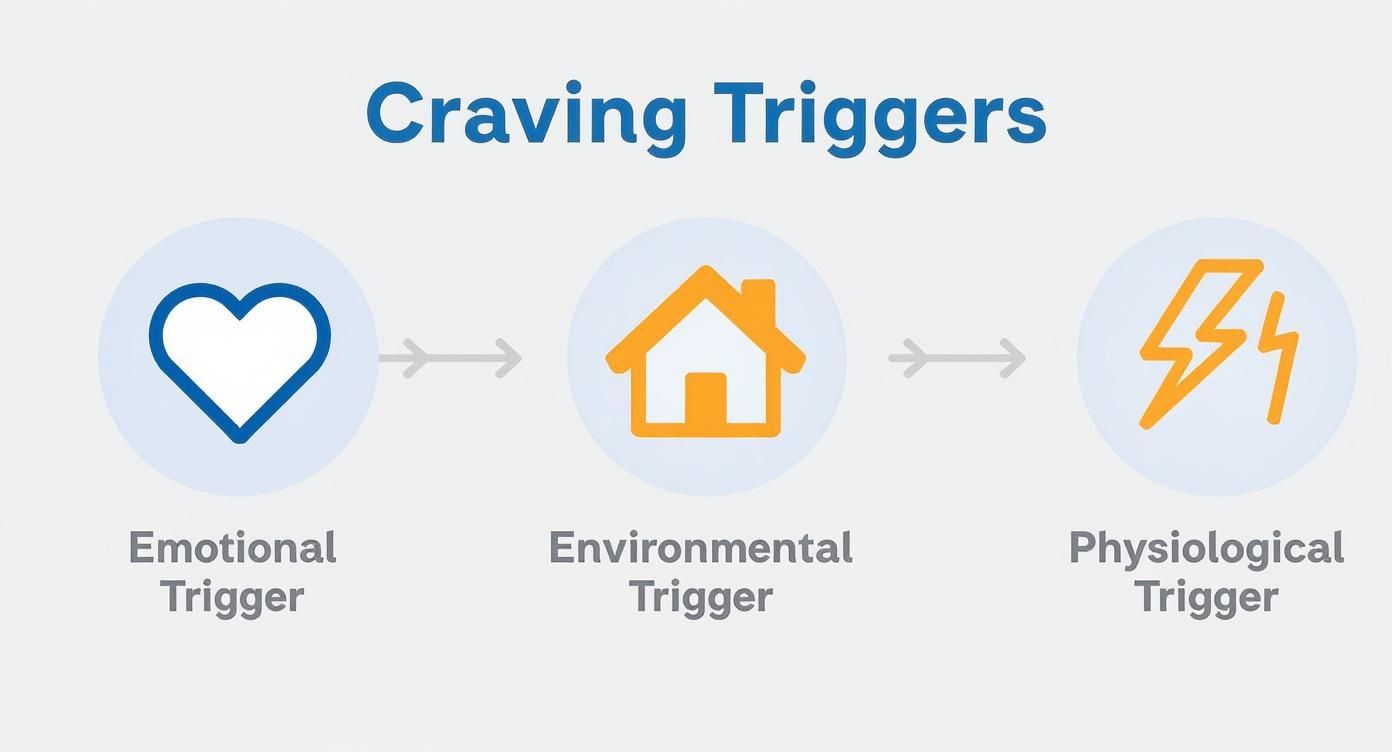
Figuring out if your craving is emotional, environmental, or purely physical is half the battle. Once you know the why, you can choose the right strategy instead of just giving in.
Smart Snacking Is Your Safety Net
Let’s be real—even with perfect meals, cravings happen. That’s where smart snacking comes in as your secret weapon. A well-timed, nutrient-dense snack acts as a bridge, getting you from one meal to the next without that dreaded energy crash.
Your snacks should play by the same rules as your meals: protein and fiber are your best friends. The goal is to shut down hunger and keep blood sugar even, not just to get a temporary sweet buzz.
Here are a few go-to options that work wonders:
- A small handful of almonds or walnuts
- An apple sliced up with a tablespoon of peanut butter
- Plain Greek yogurt with a few fresh berries
- A hard-boiled egg
Having these on hand makes grabbing a good choice just as easy as grabbing a bad one. To get really good at this, learning how to meal prep to save time and eat healthy is a game-changer.
If you’re wondering just how much of an impact your current habits are having, try using a tool like this sobriety calculator for junk food consumption. It can give you a surprisingly clear picture.
Healthy Swaps for Common Sugary Foods
Sometimes, you just want something specific. Instead of fighting it with pure willpower, having a smart swap ready can satisfy the craving without the sugar bomb.
| If You’re Craving This… | Try This Healthy Swap Instead… | Why It Works |
|---|---|---|
| Candy or Chocolate Bar | A square of dark chocolate (70% cacao or higher) with a few almonds. | Dark chocolate has less sugar and offers antioxidants. The almonds add protein and healthy fat to keep you full. |
| Ice Cream | A bowl of plain Greek yogurt with frozen berries and a drizzle of honey. | You get the creamy texture and sweetness, but with a ton of protein from the yogurt and fiber from the berries. |
| Soda or Sweet Tea | Sparkling water with a squeeze of fresh lime, lemon, or a few muddled berries. | It satisfies the need for carbonation and flavor without any of the sugar or artificial sweeteners. |
| Chips or Salty Snacks | A handful of salted edamame or roasted chickpeas. | These deliver that satisfying crunch and saltiness but are packed with protein and fiber, making them way more filling. |
| Cookies or Pastries | An apple baked with cinnamon or a small bowl of oatmeal with fruit. | You get natural sweetness and a comforting vibe from the warm spices and fiber-rich whole grains. |
Making these simple substitutions can make a massive difference over time. It’s not about deprivation; it’s about making smarter choices that still feel good.
Lifestyle Habits That Tame Sugar Cravings

What you do outside of the kitchen can make or break your efforts to kick sugar cravings to the curb. Honestly, the most perfect meal plan can completely fall apart if you’re not sleeping well, constantly stressed, or just plain dehydrated.
Think of these daily habits as the foundation of your success. When you get them right, you’re not just fighting against cravings—you’re creating an environment inside your body where they’re far less likely to show up in the first place.
Prioritize Quality Sleep
Sleep is non-negotiable when it comes to regulating your hormones. It’s not a luxury. In fact, just one night of bad sleep is enough to send your appetite signals haywire.
When you don’t get enough rest, your body produces more ghrelin, the hormone that screams “I’m hungry!” At the same time, it produces less leptin, the hormone that tells you you’re full. This hormonal double-whammy is a perfect storm for intense cravings, especially for the high-calorie, sugary stuff your body thinks it needs for a quick energy fix.
When you’re running on fumes, the decision-making part of your brain (the prefrontal cortex) essentially goes offline. This makes it physically harder to say no to that cookie or doughnut. It’s not a lack of willpower; you’re fighting an uphill battle against your own biology.
Aiming for 7-9 hours of quality sleep a night isn’t just about feeling less tired. It’s one of the most effective tools you have for keeping your cravings in check.
Manage Your Stress Levels
Ever had a terrible day at work and found yourself face-first in a pint of ice cream later that evening? It’s not a coincidence. When you’re stressed, your body pumps out a hormone called cortisol.
Cortisol’s primary job is to get you ready for “fight or flight” by flooding your system with glucose for immediate energy. The problem is, your body then wants to restock that energy, triggering powerful cravings for—you guessed it—more sugar. This creates a vicious cycle of feeling stressed, eating sugar, and then feeling even more stressed.
Finding simple ways to decompress is essential. This doesn’t have to be complicated.
- Take a quick walk: Just 10 minutes of fresh air and movement can work wonders for your cortisol levels.
- Try deep breathing: A few slow, deep breaths can calm your nervous system almost instantly.
- Do something you enjoy: Get lost in a good book, put on your favorite playlist, or work on a hobby.
- Write it out: Getting your worries down on paper can make them feel much more manageable. If you need a starting point, these mental health journal prompts for self-discovery are a great resource.
Stay Properly Hydrated
Never, ever underestimate the power of H2O. Mild dehydration feels surprisingly similar to a blood sugar crash—you might feel tired, foggy, or get a headache.
More often than not, your brain mistakes thirst for hunger. It’s an easy signal to confuse.
So, next time a craving hits, try this first: drink a big glass of water and wait 15 minutes. You’ll be surprised how often that “desperate need for sugar” just vanishes.
Using Simple Tools to Stay on Track
Let’s be honest: breaking up with sugar isn’t just about willpower. It’s about having a smart strategy and the right support. You don’t have to rely on guesswork or memory to figure things out. A few simple tools can be your secret weapon, turning a vague goal into something you can actually see and manage.
The real magic happens when you make your habits visible. When you start tracking your urges and your wins, you finally get to see the big picture. Imagine looking at a log and realizing your cravings spike like clockwork after that stressful 3:00 PM meeting every single day. That’s not a personal failure; it’s a piece of data you can use to build a better defense.
Turn Tracking Into Your Superpower
One of the most powerful tools in your arsenal is an urge log. While apps like Soberly are built for a variety of habit changes, their features are perfect for getting a handle on sugar.
The next time a craving hits, don’t just give in. Pause. Take a moment to log it. Note the time of day, what you were feeling, and what was going on around you. This simple act creates a crucial gap between the urge and your reaction, giving you the space to make a conscious choice instead of running on autopilot. Before you know it, you’ll have a roadmap of your personal triggers.
By documenting your urges, you’re not just fighting them—you’re studying them. This shift from fighter to observer is a total game-changer. It allows you to dismantle cravings with strategy instead of trying to beat them with brute force.
Celebrate Progress and Build Momentum
Tracking isn’t just about spotting the tough moments. It’s also about celebrating the wins, no matter how small they seem. Marking each sugar-free day on a calendar or in an app gives you a powerful visual of how far you’ve come. This creates a positive feedback loop that makes you want to keep going.
Seeing a streak of successful days is incredibly motivating. It’s proof that you can do this. Tools like a sobriety calculator for sugar intake can even quantify your progress, showing you exactly how much you’ve accomplished.
This kind of approach recognizes that managing sugar cravings is a complex biological puzzle. In fact, some emerging pharmaceutical interventions are projected to significantly cut sugar consumption in the coming years—a clear sign that this is a multifaceted challenge. You can find more insights on the factors influencing global sugar consumption on czapp.com.
So instead of grabbing a candy bar during that afternoon slump, maybe it’s time to explore effective supplements for sustained energy and focus. By combining smart tools with practical lifestyle tweaks, you build a solid support system that will help you stay on track for good.
Got Questions About Kicking Sugar? We’ve Got Answers
As you start to dial back on sugar, you’re bound to have some questions pop up. That’s a totally normal part of the process. Having a clear idea of what to expect and how to handle those inevitable hurdles can be a game-changer. Let’s tackle some of the most common questions we hear from people just like you.
How Long Until These Cravings Actually Go Away?
This is the big one, right? While everyone’s body is a little different, most people feel a significant shift after about 2-3 weeks of being really consistent. I won’t sugarcoat it (pun intended)—the first few days can be the toughest. That’s when your body and brain are recalibrating.
The secret isn’t about being perfect; it’s about being consistent. When you focus on building meals around protein, fiber, and healthy fats, you’re not just fighting cravings—you’re preventing them by keeping your blood sugar stable. Over time, this literally retrains your taste buds. You’ll be surprised when that super-sweet dessert you used to love suddenly tastes almost too sweet. Give yourself some grace and patience; it’s a process.
Should I Quit Cold Turkey or Ease Into It?
Honestly, there’s no single “right” answer here. The best approach is the one you can actually stick with. It really boils down to knowing yourself and your personality.
- Going Cold Turkey: This is the rip-the-band-aid-off method. For some, it’s the quickest way to break the craving cycle and reset their habits. The downside? You might feel it more intensely at first, with a few days of headaches or crankiness.
- The Gradual Taper: This is about making small, sustainable changes over time. Maybe you cut out one soda a week, or you start putting one less spoonful of sugar in your coffee. For many, this feels less overwhelming and is easier to maintain long-term because it gives your body more time to adjust.
No matter which path you choose, remember that adding more of the good stuff—whole, nourishing foods—is just as crucial as cutting out the sugar.
Help! A Huge Craving Just Hit Me. What Do I Do Right Now?
Okay, when a craving hits you like a ton of bricks, the most important thing to do is pause. Cravings feel incredibly urgent, but they’re just temporary waves. They will pass.
A fantastic tool for this moment is the “15-Minute Rule.” When the urge strikes, just tell yourself, “Okay, I can have that, but I have to wait 15 minutes first.” That little bit of time is often all you need to let the emotional, impulsive part of your brain calm down so you can make a conscious choice.
Here’s what to do during that 15-minute window:
- Grab Some Water: Seriously, drink a big glass of water right away. It’s amazing how often our brains mix up the signals for thirst and a sugar craving.
- Change Your Scenery: Get up and move. Walk around the block, put on a great song and dance for a few minutes, or knock out a quick chore. Shifting your focus is incredibly effective at making the craving fade.
- Have Your Smart Swap Ready: If the 15 minutes are up and the feeling is still lingering, go for a healthy alternative you’ve already planned for. A handful of almonds, a crisp apple with peanut butter, or even a small square of very dark chocolate (70% cacao or higher) can hit the spot without derailing you.
Will I Ever Be Able to Eat Sugar Again?
Yes, absolutely! The goal here isn’t to sentence you to a life without another birthday cake. It’s about putting you back in the driver’s seat.
We want to get you to a place where you can enjoy a treat on a special occasion and not have it trigger a week-long sugar binge. Once you’ve broken the cycle of constant, nagging cravings, sugar loses its power over you. It becomes a mindful choice you make, not a compulsion you can’t control.
Ready to get a deeper understanding of your own patterns? The tools inside Soberly can help you log your urges, see your progress visually, and celebrate every single sugar-free milestone. Take the first step toward a healthier relationship with food and download the app today.
Related Topics