The Science of Habit Change: How to Build Lasting Sobriety

Key Takeaways
- It takes 18-254 days to form a new habit, with an average of 66 days -- there's no magic '21 days' despite the popular myth
- The habit loop (cue-routine-reward) is neurological, not just psychological -- your basal ganglia automates repeated behaviors to conserve mental energy
- Implementation intentions ('When X happens, I will do Y instead of drinking') increase follow-through by 2-3x compared to motivation alone
- Habit stacking (attaching a new sober habit to an existing routine) leverages your brain's existing neural pathways for faster habit formation
- Environment design beats willpower every time -- removing alcohol from your home is more effective than trying to resist it when it's there
Why Willpower Fails and Science Works
“Just stop drinking.”
If quitting alcohol were that simple, addiction wouldn’t exist. Treatment programs wouldn’t be necessary. Millions of people wouldn’t struggle year after year to change their relationship with alcohol despite desperately wanting to.
The problem isn’t you. The problem is that we’ve been using the wrong approach. We’ve been treating drinking as a willpower problem when it’s actually a habit problem. And habits don’t respond to willpower. They respond to neuroscience.
Your drinking habit isn’t a character flaw. It’s a neural pathway — a deeply grooved pattern in your brain that fires automatically in response to specific triggers. You didn’t consciously decide to wire this pathway. It formed gradually through repetition, encoded into your basal ganglia, the part of your brain that automates behavior to conserve mental energy.
And here’s the critical insight: neural pathways can be rewired.
This article presents the science of habit change from researchers like Phillippa Lally, Wendy Wood, BJ Fogg, Peter Gollwitzer, and James Clear. These aren’t self-help platitudes. These are evidence-based techniques that explain how habits form at the neurological level and how to intentionally redirect them. For a broader exploration of rethinking your relationship with alcohol, our sober curious guide covers the full spectrum from mental health to social strategies.
Whether you’re sober-curious, doing a 30-day challenge, or working toward permanent sobriety, understanding the science of habit formation gives you a framework that works when willpower inevitably runs out.

The Habit Loop: Cue, Routine, Reward
Charles Duhigg’s framework from The Power of Habit revolutionized how we understand behavior change. Every habit — including drinking — follows a three-part loop:
- Cue: The trigger that initiates the behavior
- Routine: The behavior itself
- Reward: The benefit your brain receives
Here’s what this looks like with drinking:
Cue: It’s Friday at 6pm. You’ve just closed your laptop after a stressful week. You feel tension in your shoulders. Your mind is still racing with work thoughts.
Routine: You walk to the kitchen and pour a glass of wine.
Reward: Within 20 minutes, the tension melts. Your thoughts slow down. You transition from “work mode” to “weekend mode.” Your brain gets a dopamine hit and a GABA-induced relaxation response.
This loop repeats every Friday. After enough repetitions, it becomes automatic. Your basal ganglia encodes it as a pattern. By the time Friday hits, you’re pouring wine before you consciously decide to. The behavior is neurologically automated.
The Key Insight: You Can’t Delete a Habit Loop, But You Can Redirect It
This is the game-changer: your brain doesn’t unlearn habit loops. The neural pathway remains. Trying to simply “stop drinking” leaves a void where the habit used to be, and voids are unstable. Your brain will try to fill it with the old behavior.
Instead of deleting the loop, you redirect it by keeping the cue and reward while changing the routine.
Same example:
Cue: Friday at 6pm, stressful week, tension in shoulders, racing mind.
Routine: Walk to the kitchen, make sparkling water with lime, put on walking shoes, take a 10-minute walk.
Reward: Tension releases through movement, thoughts slow, transition ritual completed, brain gets endorphins instead of ethanol.
You’ve preserved the structure of the habit while swapping the routine. This works because your brain still gets what it was seeking — stress relief, transition ritual, chemical reward — through a different pathway.
Research from the Society for Personality and Social Psychology confirms that habit substitution is significantly more effective than habit elimination. You’re not fighting your neurology. You’re redirecting it.
Why “21 Days” Is a Myth (And What the Real Science Says)
You’ve probably heard that it takes 21 days to form a new habit. This number shows up everywhere — self-help books, articles, motivational Instagram posts.
It’s wrong.
The myth traces back to Dr. Maxwell Maltz, a plastic surgeon in the 1960s who noticed that patients took about 21 days to adjust to their new appearance after surgery. He wrote this observation in his book Psycho-Cybernetics. Somehow, “21 days to adjust to seeing your new nose” morphed into “21 days to form any habit.” It’s been repeated so many times that it became accepted as fact despite never being tested scientifically.
The Real Data: 18 to 254 Days
In 2009, health psychology researcher Phillippa Lally at University College London conducted the first rigorous study on habit formation timelines. She tracked 96 participants as they attempted to form a new daily habit — drinking water at lunch, eating fruit with breakfast, running before dinner.
The results:
- Range: 18 to 254 days for the behavior to become automatic
- Average: 66 days
- Individual variation: Massive
The simplest habits (drinking water after breakfast) became automatic fastest. Complex habits (50 sit-ups before breakfast) took much longer. And crucially, missing a single day didn’t reset progress — occasional lapses didn’t significantly impact the overall trajectory.
Why This Matters
Expecting habits to solidify in 21 days sets people up for failure. When Day 22 arrives and the new behavior still requires conscious effort, people assume they’re doing it wrong or that change is impossible. Neither is true. They’re just in the middle of a process that takes two to eight months on average.
If you’re on Day 30 of not drinking and it still feels hard, you’re not failing. You’re right on schedule. Your basal ganglia hasn’t fully automated the new routine yet. Keep going. The automaticity is forming in the background.

5 Evidence-Based Techniques for Habit Change
Now that you understand how habits form, here are five research-backed techniques to rewire your drinking habits.
1. Implementation Intentions: The “If-Then” Formula
Psychologist Peter Gollwitzer pioneered research on implementation intentions — pre-planned behavioral responses to specific situations. The format is simple:
“When [situation], I will [behavior].”
Instead of relying on motivation in the moment, you make the decision in advance and create a mental script your brain can follow automatically.
Examples for alcohol:
- “When I get home from work on Friday, I will immediately change into workout clothes and go for a walk.”
- “When I’m at a party and someone offers me a drink, I will say ‘No thanks, I’m good with this sparkling water.’”
- “When I feel a craving hit, I will commit to waiting 15 minutes and text my accountability partner.”
- “When I finish mowing the lawn on Saturday, I will make an iced coffee instead of opening a beer.”
Why this works: Gollwitzer’s research shows that implementation intentions increase follow-through rates by 2-3x compared to motivation alone. You’re outsourcing the decision from your willpower-limited prefrontal cortex to an automated if-then script. When the situation arises, your brain doesn’t debate. It executes the pre-programmed response.
2. Habit Stacking: Piggybacking on Existing Routines
BJ Fogg, behavior scientist at Stanford, developed the concept of “habit stacking” in his Tiny Habits framework. The idea: attach a new behavior to an existing automatic routine.
The formula:
“After I [existing habit], I will [new habit].”
Your brain already has neural pathways for existing habits. Stacking a new behavior onto an established routine leverages that existing wiring, making the new habit easier to encode.
Examples:
- “After I lock my car when I get home, I will take three deep breaths before walking inside.” (Creates a pause ritual to replace the automatic beer-grab)
- “After I finish dinner, I will immediately make herbal tea.” (Replaces the wine-with-dinner routine)
- “After I put my kids to bed, I will put on walking shoes.” (Creates a new transition ritual)
- “After I wake up, I will update my sober day tracker.” (Builds daily tracking into your morning routine)
Fogg’s research demonstrates that new habits stick fastest when they’re anchored to existing behaviors. You’re not trying to build a habit from scratch. You’re building a chain.
Start with one stack. Once it becomes automatic (likely 4-8 weeks), add another. Over time, you create a sequence of positive behaviors that flow naturally from one to the next.
3. Environment Design: Make the Right Choice the Easy Choice
Wendy Wood, social psychologist at USC, has spent decades researching the role of context in habit formation. Her conclusion: environment design is more powerful than willpower.
From her research in the Annual Review of Psychology: “If you have to use willpower to resist temptation, you’ve already failed at the design level.”
The principle: make desired behaviors easy and undesired behaviors hard.
For alcohol, this means:
Make drinking hard:
- Remove all alcohol from your home (not just hidden — gone)
- Change your route home to avoid passing the liquor store
- Delete delivery apps that let you order alcohol with one tap
- Unfollow social media accounts that romanticize drinking
- Avoid situations where alcohol will be present (at least for the first 30-60 days)
Make not-drinking easy:
- Stock your fridge with appealing non-alcoholic alternatives (sparkling water, kombucha, NA beer, fancy sodas)
- Keep a water bottle in your car, at your desk, by your bed
- Pre-plan social responses to “Why aren’t you drinking?”
- Identify 3-5 activities you enjoy that don’t involve alcohol (hiking trails, coffee shops, bookstores, gyms)
- Join a sober-curious community online or in-person for built-in support
Wood’s research shows that context cues trigger automatic behavior far more than conscious intention. If you walk into your kitchen at 6pm and see wine on the counter, your basal ganglia fires the drinking routine before your prefrontal cortex can intervene. If you walk into your kitchen and see a pitcher of cucumber water and lime wedges, a different routine fires.
You’re not using willpower. You’re using design.
4. Reward Substitution: Map Your Drinking Rewards
Every habit persists because it delivers a reward. To successfully change the routine, you need to identify what reward your brain is actually seeking and find a different path to it.
Common drinking rewards and non-alcohol substitutes:
| Reward Sought | Alcohol Routine | Alternative Routines |
|---|---|---|
| Stress relief | Wine after work | 10-min walk, hot shower, 4-7-8 breathing, progressive muscle relaxation |
| Social bonding | Drinks with friends | Coffee meetups, hiking, game nights, book clubs |
| Taste pleasure | Craft beer, wine | NA beer, mocktails, kombucha, specialty coffee, herbal tea |
| Transition ritual | ”Wine o’clock” | Change clothes, light a candle, make a special drink, stretch routine |
| Dopamine hit | Buzz from drinking | Exercise, cold shower, engaging hobby, creative work |
| Boredom relief | Drinking while watching TV | Hands-busy activities (knitting, puzzles, drawing), learning a skill |
The key is to match the intensity of the reward. If you’re seeking dopamine and stress relief after a brutal work week, herbal tea won’t cut it. You need something with comparable neurological impact — a hard run, a cold plunge, loud music and dancing in your living room, a meaningful creative project.
Your brain will accept the substitution if the reward is equivalent. Willpower isn’t required when the reward is present.
5. Identity-Based Habits: Be Someone Who Doesn’t Drink
James Clear’s framework from Atomic Habits introduces a crucial distinction: outcome-based habits vs. identity-based habits.
Outcome-based: “I want to quit drinking for 30 days.”
Identity-based: “I’m someone who takes care of their health.”
The difference seems subtle, but the psychological impact is massive. Outcome-based goals rely on external motivation (“I need to hit this target”). Identity-based habits are internally driven (“This is who I am”).
Research shows that identity drives behavior more reliably than goals. When your identity shifts from “I’m trying not to drink” to “I’m someone who doesn’t drink,” the behavior becomes self-reinforcing. You make choices aligned with your identity, not because you’re forcing yourself, but because it’s consistent with who you are.
How to build identity-based habits:
- Start small: Every time you choose not to drink, you cast a vote for the identity “I’m someone who doesn’t drink.” Repeated votes change your self-concept.
- Use identity language: Replace “I’m trying to quit” with “I don’t drink” or “I’m taking a break from alcohol” or “I’m sober-curious.”
- Join an identity group: Surround yourself with people who share your identity (sober-curious communities, alcohol-free social groups).
- Visualize your identity: What does the sober version of you do? How do they spend Friday nights? What do they value? Become that person incrementally.
The identity shift doesn’t happen overnight. But it happens. Most people report that around month 3-6, they stop thinking of themselves as “someone who’s not drinking” and start thinking of themselves as “someone who doesn’t drink.” That subtle shift makes all the difference.
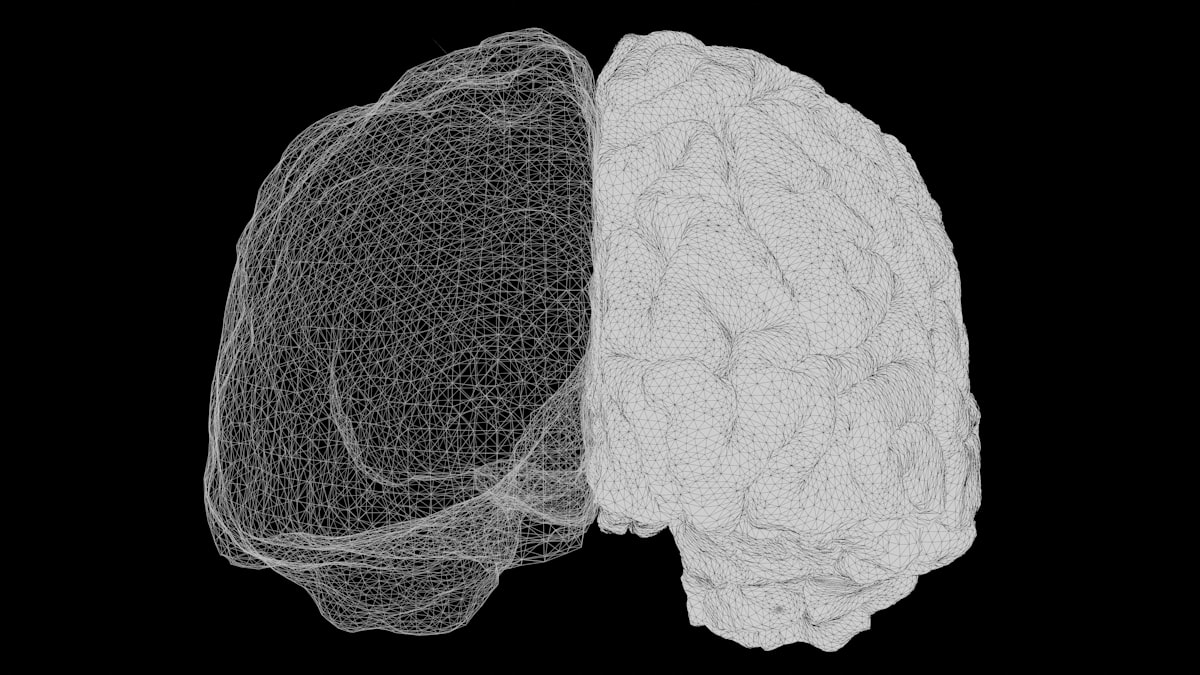
The Neuroscience: What’s Happening in Your Brain
Understanding the brain science behind habits helps you stop blaming yourself and start working with your neurology.
The Basal Ganglia and Habit Automation
The basal ganglia is a cluster of structures deep in your brain responsible for automating repeated behaviors. Every time you perform a behavior in response to a consistent cue, your basal ganglia strengthens that neural pathway.
This is evolutionarily brilliant. Your conscious brain (prefrontal cortex) has limited processing capacity. If you had to consciously think through every routine behavior — brushing teeth, driving to work, making morning coffee — you’d be mentally exhausted by noon. The basal ganglia automates routine tasks so your prefrontal cortex can focus on complex decisions.
But this system doesn’t distinguish between helpful habits (exercise after work) and harmful habits (drinking after work). It simply automates whatever you repeat.
When you’re trying to change a drinking habit, you’re fighting decades of neural wiring. The pathway from “cue” to “pour drink” is a superhighway in your basal ganglia. You’re trying to build a new pathway (“cue” to “make sparkling water”) while the old one still exists.
This is why the first few weeks are the hardest. You’re consciously redirecting behavior that used to be automatic. Your prefrontal cortex is doing the work. It’s exhausting. But with each repetition, the new pathway strengthens. After 30-90 days (depending on complexity), the new routine starts to feel automatic. Your basal ganglia is encoding the new pattern.
Dopamine Prediction Error and Craving
Dopamine is often misunderstood as the “pleasure chemical.” It’s actually the “prediction chemical.” Your brain releases dopamine in anticipation of a reward, not just when receiving it.
When you’ve established a drinking habit, your brain learns to predict the reward. The moment the cue appears (Friday at 6pm), dopamine surges in anticipation of alcohol. This dopamine spike is what we experience as a craving.
Here’s the problem: if you don’t deliver the expected reward, your brain experiences what neuroscientists call a “prediction error” — a mismatch between expected and actual reward. This creates discomfort, which your brain interprets as “I need to drink NOW.”
But here’s the critical part: prediction errors recalibrate over time. If you consistently don’t drink when the cue appears, your brain stops expecting the reward. The dopamine surge fades. Cravings diminish. When cravings hit, evidence-based craving management techniques can help you surf the 15-30 minute wave until it passes.
This process takes weeks to months, depending on how deeply ingrained the habit is. The first few weeks are the hardest because the prediction error is most intense. By week 4-6, most people report that cravings are less frequent and less intense. The brain is recalibrating.
Prefrontal Cortex and Executive Function (Willpower Is Limited)
Your prefrontal cortex handles executive functions: decision-making, impulse control, planning, and willpower. It’s the part of your brain that says “I know I want to drink, but I’m choosing not to.”
The problem: executive function is a limited resource. Research by Roy Baumeister on ego depletion shows that willpower diminishes throughout the day as you make decisions, resist temptations, and manage stress. By evening — precisely when most people’s drinking cues occur — your prefrontal cortex is depleted.
This is why “just use willpower” fails. You’re relying on a resource that’s already exhausted by the time you need it most.
The alternative: design your environment so willpower isn’t necessary. If there’s no alcohol in your house, you don’t need to resist it. If you’ve pre-planned your Friday night routine (implementation intention), you don’t need to make a decision in the moment. If you’ve stacked a new habit onto an existing one, the behavior happens automatically.
You’re not building more willpower. You’re building systems that don’t require willpower.
Tracking as a Habit Formation Tool
There’s a reason habit trackers are so popular: measurement increases both self-awareness and motivation.
The science:
-
Self-monitoring effect: Simply tracking a behavior makes you more conscious of it and more likely to change it. Research in the American Journal of Preventive Medicine found that people who tracked daily health behaviors had significantly higher success rates than those who didn’t.
-
Positive feedback loops: Seeing progress creates motivation to continue. Every sober day added to your tracker reinforces your identity and creates what behavioral economists call “loss aversion” — you don’t want to break the streak.
-
Pattern recognition: Tracking helps you identify triggers. When you log “craving hit hard today,” you can look back and notice patterns: Fridays are tough, social events trigger urges, stress at work predicts evening cravings. Once you see the patterns, you can design interventions.
This is where tracking your sober days with an app like Soberly creates a powerful feedback loop. You’re not just counting days. You’re building a visible streak that your brain wants to protect. The longer the streak, the more psychologically costly it becomes to break it. You’re leveraging loss aversion in your favor.
The habit isn’t just “don’t drink.” The habit is “update my tracker every day.” That daily ritual reinforces your identity and gives you a tangible record of progress when motivation fades.
When Habits Aren’t Enough
Habit change techniques are powerful for most people working to reduce or quit alcohol. But it’s important to be honest: habit science isn’t a cure-all.
If drinking is driven by underlying trauma, untreated depression, severe anxiety, or meets criteria for moderate to severe alcohol use disorder, habit techniques alone may not be sufficient. Changing environmental cues and building implementation intentions helps, but it doesn’t address root psychological drivers or physiological dependency.
Signs that professional support may be necessary:
- You’ve tried multiple times to quit using habit techniques and relapse consistently
- Withdrawal symptoms are severe (tremors, hallucinations, seizures)
- Drinking is a way to cope with unresolved trauma or mental health conditions
- You drink to the point of blacking out regularly
- Alcohol is causing serious consequences in your life (job loss, relationship breakdown, legal issues)
Seeking professional support isn’t failure. It’s intelligence. Therapists, counselors, and medical professionals can address issues that habit change techniques can’t. For many people, the most effective approach combines habit science with therapy, medication-assisted treatment, or structured programs.
There’s no shame in needing more than one tool. Use what works.
Building Your Personal Habit Change Plan
Theory is useful, but action is what changes behavior. Here’s a practical framework to get started:
Step 1: Identify Your Top 3 Drinking Cues
Spend a few days observing when you drink or feel the urge to drink. Write down:
- Time: What time of day?
- Location: Where are you?
- Emotional state: How are you feeling? (stressed, bored, lonely, celebratory)
- Social context: Alone, with friends, at an event?
Identify the 3 most consistent cues. These are your high-leverage intervention points.
Step 2: Design an Implementation Intention for Each Cue
For each cue, create an “if-then” plan:
- Cue 1: “When [trigger], I will [alternative behavior].”
- Cue 2: “When [trigger], I will [alternative behavior].”
- Cue 3: “When [trigger], I will [alternative behavior].”
Be specific. “I’ll do something healthy” is too vague. “I’ll put on running shoes and run 1 mile” is actionable.
Step 3: Stack One New Sober Habit Onto an Existing Routine
Choose one existing daily habit and stack a new alcohol-free behavior onto it.
“After I [existing habit], I will [new habit].”
Examples:
- “After I finish dinner, I will make herbal tea.”
- “After I get in my car after work, I will take 5 deep breaths before driving.”
- “After I brush my teeth at night, I will update my sober day tracker.”
Step 4: Modify Your Environment (One Change Today)
Pick one environmental change you can implement immediately:
- Remove all alcohol from your home
- Stock your fridge with non-alcoholic alternatives
- Unfollow social media accounts that trigger drinking thoughts
- Identify one activity you can do instead of going to a bar
Don’t try to redesign your entire life. Start with one high-impact change.
Step 5: Start Tracking
Download a habit tracker app or use a simple calendar. Mark each day you execute your plan.
The goal isn’t perfection. The goal is building the new neural pathway through repetition. If you miss a day, don’t reset. Just continue the next day. Remember Lally’s research: occasional lapses don’t significantly impact habit formation.
The Bottom Line: Neuroscience Over Willpower
Your drinking habit isn’t a character flaw. It’s a neural pathway that was built through repetition and can be redirected through intentional behavior change.
Willpower will fail you because willpower is finite. Habit science works because it rewires your brain’s automatic responses.
The techniques aren’t magical. They’re neurological. Implementation intentions create pre-programmed responses. Habit stacking leverages existing neural pathways. Environment design removes the need for conscious resistance. Reward substitution satisfies your brain’s actual needs. Identity-based habits shift your self-concept.
The process takes longer than 21 days. For most people, it takes 60-90 days for new behaviors to become automatic. That’s not failure. That’s normal.
If you’re on Day 10 and it still feels hard, you’re exactly where you should be. Your basal ganglia is in the process of encoding the new pattern. Your dopamine system is recalibrating. Your prefrontal cortex is building new decision-making scripts.
Keep going. The automaticity is forming in the background. One day — probably somewhere between week 6 and week 12 — you’ll realize you didn’t consciously think about not drinking. You just didn’t drink. The habit loop has been redirected.
That’s not willpower. That’s neuroscience.
Medical Disclaimer
This article is for informational purposes only and does not constitute medical advice. If you are experiencing alcohol dependence or withdrawal symptoms, please consult a healthcare professional. Withdrawal from alcohol can be medically dangerous and should be supervised by a doctor.
Related Topics