Key Takeaways
- The average American household spends $579 per year on alcohol at home -- but total spending (including bars, restaurants, and Ubers) averages $2,000-5,000 annually
- A moderate drinker who quits saves roughly $150-400 per month depending on location and habits
- Hidden costs of drinking add 30-50% on top of alcohol itself: rideshares, late-night food, hangover remedies, missed work productivity
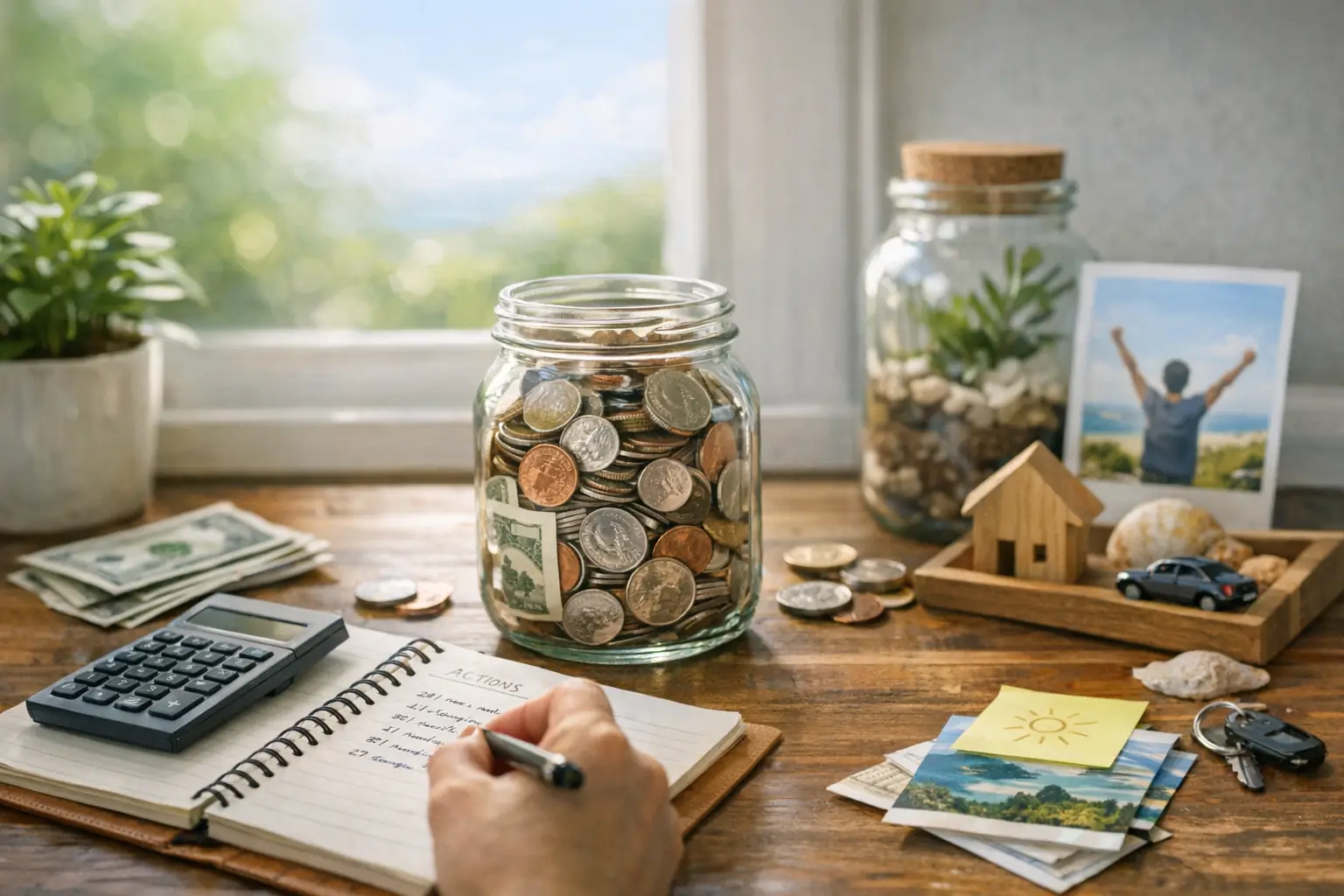
- At $250/month saved, you'd have $15,000 in 5 years -- enough for a down payment, emergency fund, or career change
- The financial impact of quitting compounds: saved money plus better job performance, fewer sick days, and lower healthcare costs
The Hidden Financial Drain
You probably know alcohol isn’t great for your health. But do you know what it’s costing you financially?
Most people dramatically underestimate their alcohol spending. They count the six-pack from the grocery store but forget the $14 cocktails, the $40 Uber after a night out, the $25 brunch to cure the hangover. The real cost of drinking isn’t just the bottle price. It’s everything that orbits around it.
This isn’t about guilt. It’s about clarity. When you see the actual numbers — monthly, annually, over five years — the financial case for reducing or eliminating alcohol becomes impossible to ignore. Even if health motivations don’t resonate with you, money talks. For a comprehensive look at the sober-curious lifestyle beyond just finances, our sober curious guide covers mental health, sleep, social life, and habit science.
Here’s exactly what Americans spend on alcohol, what the hidden costs add up to, and how to calculate your personal savings. The numbers might surprise you.
What Americans Actually Spend on Alcohol
Let’s start with the official data, then get real about total costs.
The Official Numbers (And Why They’re Wrong)
According to the Bureau of Labor Statistics Consumer Expenditure Survey, the average American household spends $579 per year on alcoholic beverages consumed at home. That’s about $48 per month, or roughly $11 per week.
If you’re reading that and thinking “There’s no way I only spend $50/month on alcohol,” you’re right. That number is wildly incomplete.
The BLS statistic only tracks alcohol purchased for home consumption — grocery store wine, liquor store runs, beer from the convenience store. It excludes:
- Drinks at bars and restaurants (categorized separately under “food away from home”)
- Alcohol at concerts, sporting events, airports
- Drinks included in vacation spending
- Alcohol-adjacent costs like rideshares, tips, and late-night food
When you account for the full picture, the real number is 3-10 times higher.
Realistic Total Spending by Drinking Level
Here’s what people actually spend when you include all alcohol-related costs:
Light drinker (2-3 drinks per week):
- Home alcohol: $30-50/month
- Bars/restaurants: $20-50/month
- Total: $50-100/month ($600-1,200/year)
Moderate drinker (5-7 drinks per week):
- Home alcohol: $60-100/month
- Bars/restaurants: $90-200/month
- Total: $150-300/month ($1,800-3,600/year)
Heavy drinker (10+ drinks per week):
- Home alcohol: $100-200/month
- Bars/restaurants: $200-400/month
- Total: $300-600+/month ($3,600-7,200/year)
These estimates assume:
- Mixed consumption (home + bars/restaurants)
- Urban to mid-sized city pricing (adjust down for rural areas, up for NYC/SF/LA)
- Standard drinks ($8-15 at bars, $2-4 at home)
Regional Variation Matters
Geography dramatically affects alcohol costs.
High-cost cities (NYC, San Francisco, Los Angeles, Boston, Seattle):
- Bar drinks: $12-20 each
- Restaurant wine: $10-16 per glass
- A typical night out: $60-100 in alcohol alone
Mid-cost cities (Denver, Austin, Portland, Charlotte):
- Bar drinks: $8-12 each
- Restaurant wine: $8-12 per glass
- A typical night out: $40-60 in alcohol alone
Low-cost areas (rural Midwest, smaller cities, Southeast):
- Bar drinks: $5-8 each
- Restaurant wine: $6-9 per glass
- A typical night out: $25-40 in alcohol alone
If you live in Manhattan and drink 2-3 nights per week at bars, you could easily spend $500-800/month on alcohol. If you live in rural Ohio and drink at home, you might spend $80-120/month. Your location matters as much as your consumption level.
The Hidden Costs You’re Not Counting
Beyond the price of alcohol itself, there’s a constellation of expenses that only exist because you drink. These hidden costs add 30-50% on top of direct alcohol spending.
Rideshares and Taxis
If you’re drinking responsibly, you’re not driving. That means Ubers, Lyfts, or taxis.
Average rideshare cost after a night out: $20-50 each way ($40-100 round trip)
If you go out twice a week and Uber both ways, that’s $320-800 per month in rideshare costs. Even once a week adds $160-400/month.
Some people justify this as “the cost of being safe,” which is true. But it’s still a cost that disappears when you stop drinking.
Late-Night Drunk Eating
Drunk you makes terrible food decisions. And expensive ones.
Post-bar pizza: $15-25. Late-night diner: $20-30. Delivery because you’re too drunk to cook: $25-40 with tip and fees.
Average drunk food spending: $15-30 per drinking occasion
If you drink 2-3 nights per week, that’s $120-360/month in food you wouldn’t buy sober.
Hangover Recovery Costs
The morning after costs money too.
- Greasy breakfast or brunch to “cure” the hangover: $15-30
- Extra coffee, energy drinks, Gatorade: $5-10
- OTC pain relievers, antacids, multivitamins: $5-15
- Delivery fees because you’re too hungover to leave the house: $5-10
Average hangover recovery: $30-65 per hangover
If you’re hungover twice a week, that’s $240-520/month just recovering from drinking.
Missed Work and Reduced Productivity
This is harder to quantify but arguably the biggest hidden cost.
According to research on workplace productivity, excessive drinking costs the U.S. economy $249 billion annually, with $179 billion attributed to lost workplace productivity. That includes:
- Missed workdays due to hangovers
- “Presenteeism” — showing up but performing poorly
- Job loss due to alcohol-related performance issues
Even if you’re not calling in sick, showing up hungover reduces your cognitive performance by 20-40%. Over time, that affects raises, promotions, and career trajectory.
Conservative estimate: If hangovers cost you even one missed workday per month or reduce your performance enough to delay a promotion by a year, you’re losing thousands in potential earnings.
Impulse Purchases While Intoxicated
Drunk shopping is real. Drunk you buys things sober you would never purchase.
Late-night Amazon orders. Bar tabs you didn’t intend to run up. Rounds of drinks for people you barely know. Concert tickets purchased in the moment. Agreeing to expensive plans you’d normally decline.
Average impulse spending while drinking: $20-100 per drinking occasion
This varies wildly by person, but the pattern is universal: alcohol lowers inhibition and increases impulsive financial decisions.
Higher Insurance Premiums and Healthcare Costs
Long-term, alcohol increases your healthcare costs:
- Life insurance premiums are higher for drinkers
- Auto insurance skyrockets after a DUI (average increase: $1,800-5,000/year)
- Health insurance costs rise with alcohol-related conditions (liver damage, hypertension, mental health)
Even without a DUI, regular drinking increases your lifetime healthcare spending by thousands to tens of thousands of dollars.
Total Hidden Costs
Add it up:
- Rideshares: $160-800/month
- Drunk food: $120-360/month
- Hangover recovery: $240-520/month
- Impulse purchases: $80-400/month
Total hidden costs for a moderate to heavy drinker: $600-2,000+/month
These aren’t rare edge cases. This is the invisible financial tax of drinking culture.
Calculate Your Personal Savings
Here’s a step-by-step framework to calculate how much you’d save by quitting or reducing alcohol.
Step 1: Estimate Weekly Alcohol Spending
Track one typical week. Include:
- Alcohol purchased at stores (beer, wine, liquor)
- Drinks at bars, restaurants, events
- Alcohol on weekends vs. weekdays (be honest)
Example:
- Tuesday dinner: 2 glasses of wine at restaurant ($24)
- Friday at home: 6-pack of craft beer ($12)
- Saturday night out: 4 cocktails at bar ($56)
- Weekly total: $92
Step 2: Multiply by 4.33 (Monthly) or 52 (Annual)
Your weekly spend × 4.33 = monthly spend Your weekly spend × 52 = annual spend
Example:
- Monthly: $92 × 4.33 = $398
- Annual: $92 × 52 = $4,784
Step 3: Add Hidden Costs
Estimate your monthly hidden costs:
- Rideshares after drinking: $_____
- Late-night drunk food: $_____
- Hangover recovery: $_____
- Impulse purchases while drinking: $_____
Example:
- Rideshares: $120/month (2 nights out, $30 each way)
- Drunk food: $80/month (2-3 occasions)
- Hangover recovery: $100/month (2 hangovers)
- Impulse purchases: $60/month
- Hidden costs total: $360/month
Step 4: Subtract Replacement Costs
You won’t spend zero on social activities or drinks. You’ll still go out, still buy beverages, still socialize. Account for replacement costs:
- Non-alcoholic drinks at bars/restaurants: $20-40/month
- Mocktail ingredients, NA beer, fancy sodas: $30-50/month
- New activities (gym, classes, hobbies): $50-100/month
Example replacement costs: $100/month
Step 5: Calculate Net Savings
(Direct alcohol spending + hidden costs) - replacement costs = net monthly savings
Example:
- Direct alcohol: $398/month
- Hidden costs: $360/month
- Replacement costs: -$100/month
- Net savings: $658/month ($7,896/year)
This is money that stays in your bank account instead of disappearing into drinks, Ubers, and hangover recovery.
Your Turn
Use this framework to calculate your personal savings:
Direct alcohol spending: $_____ /month Hidden costs: $_____ /month Replacement costs: $_____ /month Net monthly savings: $_____ /month Annual savings: $_____ /year
The number might be higher than you expected. For many people, seeing the actual dollar amount is the wake-up call.
Track Your Sobriety Journey
While Soberly’s sobriety calculator tracks your time sober — counting the years, months, days, hours, and minutes since your last drink — you can use the framework above to calculate your financial savings alongside your time milestones.
Pair the two: every day your sobriety counter ticks up, your savings grow too. When you hit 30 days sober, calculate how much you’ve saved. At 90 days, run the numbers again. At one year, see the full financial impact.
The combination is powerful. Time sober proves you can do it. Money saved proves it’s worth it.
Some people track their savings in a dedicated account — every dollar they would have spent on alcohol goes into a “freedom fund” instead. Watching that account grow creates tangible motivation. The abstract concept of “saving money” becomes a concrete number you can see.

What Could You Do With the Money?
Hypothetical savings don’t feel real until you translate them into actual things. Here’s what your alcohol savings could buy at different levels.
$100/Month Saved ($1,200/Year)
- Gym membership + streaming services + date night fund
- High-quality mattress (better sleep, better life)
- Professional development course or certification
- Weekend getaway every quarter
- Start an emergency fund ($1,200 is a solid foundation)
$250/Month Saved ($3,000/Year)
- Fully fund a Roth IRA (2026 contribution limit: $7,000 — you’re almost halfway)
- Pay off a credit card or student loan faster
- Build a 3-month emergency fund in one year
- Take a significant international vacation
- Invest in a side business or career change
$500/Month Saved ($6,000/Year)
- Max out a Roth IRA and start a taxable brokerage account
- Make extra mortgage payments (pay off years faster)
- Fund a career pivot or sabbatical
- Build a 6-month emergency fund in one year
- Travel internationally multiple times
$250/Month Over 5 Years: $15,000
This is where it gets transformational.
- Down payment on a house (FHA loan: 3.5% down on $400k = $14,000)
- Pay off significant debt (student loans, car, medical)
- Career change fund (quit your job and train for a new one)
- Start a business with real capital
- Backpack the world for 6-12 months
And that’s just the saved money. It doesn’t account for:
- Investment growth if you put it in index funds
- Career advancement from better performance
- Health cost savings from not drinking
The Investment Angle
If you invest your alcohol savings instead of just saving them, the numbers compound dramatically.
$250/month invested at 7% annual return (historical stock market average):
- After 5 years: $17,400
- After 10 years: $42,800
- After 20 years: $130,000
- After 30 years: $303,000
That’s not a typo. $250/month for 30 years becomes over $300,000 invested at market rates.
If you’re in your 20s or 30s and you quit drinking now, the financial impact by retirement is six figures. The earlier you quit, the more dramatic the compounding effect.
The Compounding Financial Benefits
The direct savings are just the beginning. Quitting alcohol creates financial benefits that compound over time.
Better Job Performance = Higher Earnings
Sober you is sharper, more reliable, more productive. That translates directly into career advancement.
- No more missed deadlines because of hangovers
- Better performance reviews because you’re operating at full capacity
- Increased likelihood of promotions and raises
- More mental bandwidth for skill development and networking
Even a 5% salary increase from improved performance is worth thousands to tens of thousands per year. Over a career, that’s life-changing money.
Lower Healthcare Costs Long-Term
Alcohol contributes to:
- Liver disease ($10,000-$50,000+ in treatment)
- Cardiovascular issues ($5,000-$30,000+ annually)
- Mental health conditions ($3,000-$10,000+ annually in therapy and medication)
- Cancer risk (treatment costs: $50,000-$200,000+)
Quitting dramatically reduces these risks, which means lower healthcare spending for decades. Even with insurance, out-of-pocket costs for alcohol-related conditions add up fast.
Better Financial Decision-Making
Alcohol impairs judgment. Not just while you’re drinking, but in the habits it creates.
Sober, you:
- Make fewer impulse purchases
- Stick to budgets more consistently
- Think long-term instead of instant gratification
- Avoid financially risky decisions (gambling, bad investments, expensive nights out)
The cumulative effect of thousands of better small financial decisions is enormous.
Improved Credit Score and Financial Health
Drinking often correlates with financial chaos:
- Late payments because you forgot or were hungover
- Maxed-out credit cards from bar tabs and drunk spending
- Missed bills because money went to alcohol instead
Sobriety brings financial discipline. Bills get paid on time. Savings grow. Credit scores improve. That means better interest rates on loans, lower insurance premiums, and financial opportunities that were previously out of reach.
The “But I Only Drink Socially” Reality Check
Maybe you’re reading this thinking “I’m not a heavy drinker. I just have a few drinks on weekends.”
Let’s do the math on “social drinking.”
Scenario: Weekend social drinker
- Friday night: 3 drinks at happy hour ($36)
- Saturday: 4 drinks at dinner ($48)
- Uber both nights: $60
- Drunk food Saturday: $25
- Hangover brunch Sunday: $30
Total: $199 for one weekend
Multiply by 4 weekends per month: $796/month ($9,552/year)
Even “I only drink socially” costs close to $10,000 per year when you include all expenses.
You don’t have to be a heavy drinker for the savings to add up. The sober-curious angle is this: even moderate drinking has a significant financial footprint. What you do with that information is up to you.
What the Numbers Tell You
The data doesn’t lie. For most drinkers, alcohol costs:
- $2,000-7,000+ per year in direct spending
- $1,000-5,000+ per year in hidden costs
- Tens of thousands lost in career advancement and healthcare over a lifetime
The total financial impact of drinking is often $150,000-$500,000 over a lifetime. That’s a house. That’s retirement. That’s generational wealth.
Here’s what the numbers say: Alcohol is one of the most expensive habits you can have, and most people don’t realize it because the costs are distributed across dozens of small transactions.
But here’s the other thing the numbers say: quitting gives you immediate financial breathing room. The savings show up in your bank account within the first month. You can feel the difference.
For some people, health motivations drive them to quit. For others, it’s the financial math. Both are valid. If seeing these numbers makes you rethink your drinking, that’s useful information.
Start Counting Your Savings
The first step is awareness. Track your alcohol spending for one month. Include everything — liquor store runs, bar tabs, rideshares, drunk food, hangover recovery.
Write it down. Add it up. Calculate what you’d save by quitting or significantly reducing.
Then decide: What would you rather do with that money?
Save it. Invest it. Spend it on something that actually improves your life instead of something that makes you feel worse the next day.
The choice is yours. But now you have the data to make it.
Medical Disclaimer
This article is for informational purposes only and does not constitute medical advice. If you are experiencing alcohol dependence or withdrawal symptoms, please consult a healthcare professional. Withdrawal from alcohol can be medically dangerous and should be supervised by a doctor.
Related Topics