
The Fourth Step, making a “searching and fearless moral inventory,” is a cornerstone of recovery, yet it’s often the most daunting. The goal isn’t self-criticism; it’s radical self-awareness. It’s about uncovering the patterns of resentment, fear, and harm that fueled addiction so you can finally address them at their root. But where do you start? A blank page can feel overwhelming, and abstract concepts can be difficult to translate into concrete action.
This practical guide is designed to demystify the process by providing concrete examples and actionable templates. Instead of just talking about what an inventory is, we will show you. We break down five distinct and effective sample 4th step inventory formats, each tailored to explore different facets of your personal experience. You will find detailed examples, replicable templates, and strategic insights to help you approach this pivotal step with clarity and confidence.
We’ll explore inventories focused on:
- Character Defects and Resentment
- Fear and Anxiety
- Sexual Conduct and Relationships
- Values and Principles
- Behavioral Patterns and Triggers
This inventory process is a powerful tool for developing self-honesty and building a foundation for lasting change. As you bravely face your past and embark on this process of deep self-reflection, learning how to overcome guilt and shame is a critical part of the healing journey. Our goal is to show you not just what to write, but how to transform this personal inventory into a powerful roadmap for lasting freedom and self-understanding.
1. Character Defects and Resentment Inventory
The Character Defects and Resentment Inventory is arguably the most foundational and widely recognized format for a sample 4th step inventory. Popularized by the Big Book of Alcoholics Anonymous, this method serves as the cornerstone of self-examination in many 12-step programs. Its primary goal is to help individuals identify and understand the personal shortcomings that fuel anger, bitterness, and destructive behaviors. By methodically listing resentments and tracing them back to their root causes, you can begin to see your own part in life’s conflicts.

This inventory is not about blaming others or justifying past actions. Instead, it’s a fearless and searching moral inventory designed to uncover the exact nature of our wrongs. The process involves deconstructing each resentment to understand what was truly affected, what role we played, and which character defects were at play.
How It Works: The Four-Column Method
The most common approach uses a four-column grid to organize thoughts and uncover patterns. This structured format prevents the inventory from becoming a simple list of grievances and transforms it into a powerful tool for self-discovery.
Here’s a breakdown of the columns:
- Column 1: Who or What I Resent. List the specific person, institution (like a former employer or the legal system), or principle (like “unfairness”) that is the source of your anger.
- Column 2: The Cause. Describe in detail what happened. What did they do that caused the resentment? Be specific. For example, instead of “My boss was mean,” write “My boss publicly criticized my work in a team meeting.”
- Column 3: How It Affected Me. Identify which parts of your self-esteem, security, ambitions, or personal relationships were threatened or harmed. Did you feel disrespected (self-esteem)? Did you worry about losing your job (security)?
- Column 4: My Part. This is the most crucial column. Here, you examine your own actions and motives. Where were you selfish, dishonest, self-seeking, or frightened? This is where you connect the resentment to your own character defects.
Sample Resentment Inventory Entry
Let’s look at a practical example of a sample 4th step inventory entry to see how these columns work together.
| I’m Resentful At… | The Cause | Affects My… | My Part (My Defects) |
|---|---|---|---|
| My former boss, Jane | Jane took credit for a project I led, resulting in her getting a promotion I felt I deserved. She never acknowledged my contribution. | Self-Esteem (Felt unvalued and invisible) Ambitions (Blocked my career growth) Security (Worried about my future at the company) | Fear: I was afraid to confront her or speak to her superior about the issue. Dishonesty: I was dishonest by omission by not speaking up for myself. Self-seeking: I wanted all the credit and recognition. |
Actionable Tips for a Successful Inventory
To get the most out of this process, keep these strategies in mind:
- Be Unflinchingly Honest: This inventory is for you. Don’t censor your feelings or downplay events. The more honest you are, the more freedom you will find.
- Look for Patterns: As you fill out your list, do the same character defects like fear, pride, or dishonesty appear repeatedly? Recognizing these patterns is the key to lasting change.
- Focus on Your Part: It’s easy to get stuck on what others did to you. The transformative power of the 4th Step comes from turning the focus inward and taking responsibility for your actions, reactions, and motives.
- Take Your Time: A thorough inventory is not a one-day task. It can take weeks or even months. The goal is depth, not speed. Using guided exercises can help maintain momentum. For additional support, discover some powerful prompts to deepen your self-discovery and growth.
This method is ideal for anyone new to recovery or for those who need to revisit their foundational recovery work. It directly addresses the “spiritual malady” described in 12-step literature by helping to clear away the wreckage of the past that blocks personal and spiritual growth.
2. Fear and Anxiety Inventory
While the resentment inventory tackles anger directed at others, the Fear and Anxiety Inventory turns the focus inward to the anxieties that often drive addictive behaviors. This alternative sample 4th step inventory is mentioned in the Big Book of Alcoholics Anonymous and is especially powerful for individuals whose destructive patterns are rooted in fear, trauma, or anxiety disorders. Its primary purpose is to identify the core fears that dictate our reactions and decisions, allowing us to see how they manifest in our lives.

This inventory is not about eliminating fear, which is a natural human emotion. Instead, it’s a searching process to distinguish between rational caution and the irrational, paralyzing fears that hold us back. By cataloging these anxieties, we can trace them to their origins and understand the controlling role they have played, often since childhood.
How It Works: The Four-Column Method
A structured four-column grid is an effective way to dissect fears, moving from identification to understanding their impact. This format helps prevent you from getting lost in the emotion of the fear and instead encourages objective analysis.
Here’s a breakdown of the columns:
- Column 1: What I Fear. List the specific fear. This could be a person, a situation, or a concept. Examples include fear of failure, fear of abandonment, fear of financial insecurity, or fear of criticism.
- Column 2: The Cause. Describe the origin of this fear. When did it start? What specific events or experiences created this anxiety? This requires deep honesty and reflection.
- Column 3: How It Affects Me. Detail how this fear manifests in your life and behavior. Does it make you controlling, isolated, dishonest, or indecisive? How does it impact your relationships, career, and self-worth?
- Column 4: How I Rely on Self. This is the crucial step for spiritual growth. Examine how you have tried to manage or control this fear on your own, without faith or help. This often points to defects like self-reliance to the point of exclusion, manipulation, or excessive planning.
Sample Fear Inventory Entry
Let’s look at a practical example of a sample 4th step inventory entry focused on fear to see how these columns connect.
| What I Fear… | The Cause (Origin) | Affects My… | How I Rely on Self (My Defects) |
|---|---|---|---|
| Fear of Abandonment | My parents divorced when I was young, and I felt my father left me. I internalized the belief that people I love will always leave. | Relationships (I become controlling or needy) Behavior (I people-please to avoid rejection) Self-Esteem (I feel I am not good enough for others to stay) | Self-seeking: I try to manipulate situations and people to ensure they won’t leave me. Dishonesty: I am not honest about my needs, pretending to be what I think others want. Pride: I refuse to show vulnerability or ask for help. |
Actionable Tips for a Successful Inventory
To get the most out of your fear inventory, consider these strategies:
- Explore the Origin Story: Spend time reflecting on the “Cause” column. The goal is to understand the roots of your fears, not to blame. This is particularly important for those working through trauma.
- Distinguish Rational from Irrational: Acknowledge the difference between healthy caution (e.g., fear of a dangerous situation) and irrational fear (e.g., the belief that any new partner will inevitably abandon you).
- Look for Behavioral Patterns: Notice how different fears might produce the same behaviors, such as isolation or control. This helps identify the core issues that need to be addressed.
- Write from Different Perspectives: Try writing about a fear from the perspective of your child self and then your adult self. This can provide powerful insights into how old fears continue to influence present-day actions. The anxiety from these fears can fuel overthinking; a sobriety calculator for overthinking may offer perspective on how recovery time can reduce this cycle.
This inventory is ideal for anyone who recognizes anxiety as a major trigger for their addiction. It helps untangle the complex web of fear and control that undermines spiritual faith and healthy relationships, paving the way for a life based on courage rather than apprehension.
3. Sexual Conduct and Relationship Inventory
The Sexual Conduct and Relationship Inventory is a highly specialized and sensitive format for a sample 4th step inventory. Popularized by fellowships like Sex Addicts Anonymous (SAA) and pioneers in the field like Dr. Patrick Carnes, this method addresses behaviors and patterns in intimate and sexual relationships. Its goal is to uncover how selfishness, fear, dishonesty, and trauma have manifested in this area of life, causing harm to oneself and others. By examining these deeply personal experiences, individuals can begin to heal from trauma and break cycles of compulsive or unhealthy behavior.
This inventory is not about shame or judgment. Instead, it is a courageous and compassionate moral inventory designed to bring harmful patterns into the light. The process involves documenting relationship histories, identifying where harm was caused or received, and understanding the underlying defects and motivations that drove those actions.
How It Works: The Thematic Approach
Unlike the resentment inventory’s strict grid, this inventory often uses a more thematic or narrative approach, focusing on specific relationships and behaviors. The structure is designed to explore both the harm done to others and the harm one has experienced, as they are often interconnected.
Here’s a breakdown of the key areas of examination:
- Relationship/Person: List each significant romantic or sexual partner or relationship you need to examine.
- What Happened (My Conduct): Describe your specific actions in the relationship. Where were you selfish, dishonest, manipulative, inconsiderate, or controlling? This is about your behavior.
- What Happened (Harm Received): Describe any harm you experienced in the relationship. Were you manipulated, controlled, or abused? This acknowledges your own trauma without excusing your behavior.
- Underlying Motives/Defects: Connect your actions to your character defects. Was your conduct driven by fear of abandonment, a need for control (pride), dishonesty, or selfishness?
Sample Sexual Conduct Inventory Entry
Let’s look at a practical example of a sample 4th step inventory entry focused on a past relationship to see how these areas work together.
| Relationship/Person | What Happened (My Conduct) | What Happened (Harm Received) | My Part (My Defects) |
|---|---|---|---|
| Ex-partner, Alex | I was dishonest about my pornography use throughout the relationship. I used manipulation and gaslighting to hide my behavior when confronted, making Alex feel insecure and crazy for being suspicious. | Alex was emotionally distant and often critical of me, which made me feel inadequate and unloved. | Dishonesty: I lied consistently and created a secret life. Selfishness: I prioritized my compulsive behavior over Alex’s emotional well-being and the health of our relationship. Fear: I was terrified of being rejected if Alex knew the truth, so I hid it. Pride: I refused to admit I had a problem. |
Actionable Tips for a Successful Inventory
To navigate this sensitive process effectively, consider the following strategies:
- Write Without Judgment: The goal is self-understanding, not self-punishment. Approach this work with as much compassion for yourself as you can. This is about identifying patterns to create a healthier future.
- Find a Qualified Sponsor or Therapist: Not all sponsors are equipped to guide someone through a sexual inventory. Seek out a sponsor with experience in sexual recovery or consider working with a therapist specializing in sex addiction.
- Separate Harm Done from Harm Received: It can be helpful to write two separate lists: one for the harm you caused others and another for the harm you experienced. This prevents you from using your own victimization to justify your actions.
- Distinguish Between Consent and Harm: Examine your motives even in consensual encounters. Did you use someone to satisfy an emotional void or to exert control? The inventory goes beyond legality to the spiritual and emotional nature of your actions.
This method is crucial for individuals whose addictive behaviors are deeply intertwined with intimacy, relationships, or compulsive sexual activity. It provides a path to understand the root causes of these behaviors, such as how to manage issues like compulsive pornography use, and build a foundation for healthy, honest relationships in recovery.
4. Values and Principles-Based Inventory
The Values and Principles-Based Inventory offers a forward-looking and spiritually-oriented approach to the 4th Step. Instead of focusing exclusively on past wrongs and character defects, this method encourages you to define your core values and then examine where your behaviors have been out of alignment with those principles. It shifts the perspective from “What did I do wrong?” to “Who do I want to become, and what is standing in my way?”
This inventory is less about dissecting resentments and more about bridging the gap between your ideal self and your actual self. It’s a constructive, aspirational form of self-examination that helps build a strong foundation for a meaningful life in recovery. By identifying what truly matters to you, you create a clear roadmap for future decisions and actions.
How It Works: The Alignment Grid Method
This process often begins with identifying your core values, such as honesty, compassion, integrity, or service. Once you have a clear list, you can create a grid to analyze where your actions have conflicted with these deeply held beliefs. This structure helps you see how specific behaviors were not just mistakes, but violations of your own personal code.
Here’s a breakdown of a common three-column approach:
- Column 1: My Core Value. List a principle that is fundamentally important to you. Examples include honesty, accountability, compassion, or spiritual growth.
- Column 2: Where My Behavior Was in Conflict. Describe specific situations where your actions, thoughts, or words went against this stated value. This is where you conduct your “fearless and searching” inventory.
- Column 3: How I Will Realign My Actions. Outline concrete, actionable steps you can take to live more consistently with this value moving forward. This column turns the inventory into a plan for change.
Sample Values and Principles-Based Inventory Entry
Let’s explore a practical example of a sample 4th step inventory using this values-focused format to see how it fosters personal growth.
| My Core Value | Where My Behavior Was in Conflict | How I Will Realign My Actions |
|---|---|---|
| Honesty | I lied to my spouse about how much money I spent, hiding receipts and bank statements to cover my tracks. I also told my boss I was sick when I was too hungover to work. | Transparency: I will commit to being completely open about finances with my spouse, reviewing our budget together weekly. Accountability: If I am unable to work, I will be honest with my boss about needing a personal day without fabricating excuses. |
| Compassion | I was harshly critical of a coworker who made a mistake, gossiping about them with others instead of offering support. I also ignored calls from a friend I knew was struggling. | Empathy: When a colleague struggles, I will offer help or private encouragement. Service: I will check in on my friend and practice being a better listener, focusing on their needs instead of my own discomfort. |
Actionable Tips for a Successful Inventory
To get the most out of this values-based approach, consider these strategies:
- Identify Your Values First: Before starting, use a values clarification worksheet or exercise to get crystal clear on what principles matter most to you. This becomes your compass.
- Be Specific About Conflicts: Don’t just write “I was dishonest.” Detail the specific instances, as this is where the true learning occurs. The more specific the behavior, the clearer the path to correction.
- Create Actionable Commitments: The “re-alignment” column is key. Instead of vague promises like “be more compassionate,” create specific, measurable actions like “I will volunteer once a month” or “I will call my mother every Sunday.”
- Write a Personal Mission Statement: Use the insights from your inventory to craft a personal mission statement that summarizes your core values and how you intend to live them out.
This method is particularly powerful for individuals who want to build a strong sense of purpose in their recovery. It complements other inventory styles by providing a positive and motivating framework for change, focusing on building a life that is not only sober but also deeply fulfilling and aligned with your truest self.
5. Behavioral Pattern and Trigger Inventory
The Behavioral Pattern and Trigger Inventory is a modern, psychology-informed approach to a sample 4th step inventory. This method moves beyond listing past wrongs to map out the real-time, cyclical nature of addiction and dysfunctional behavior. Drawing heavily from Cognitive-Behavioral Therapy (CBT) and Relapse Prevention models, it helps you identify the specific triggers, thoughts, and feelings that lead to destructive actions, creating a clear blueprint of your personal relapse cycle.
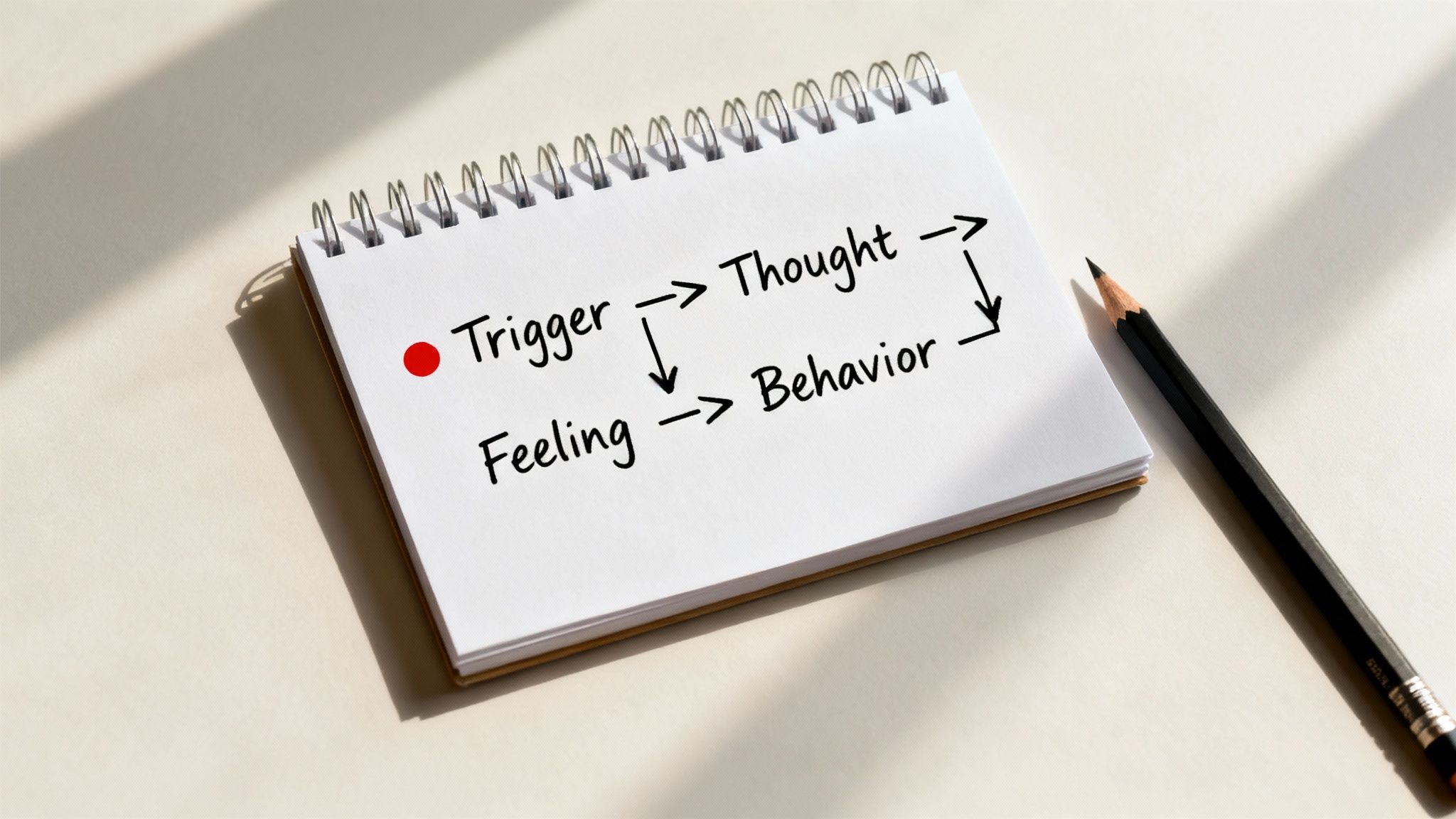
This inventory is less about assigning blame and more about understanding the mechanics of your behavior. It’s a “fearless and searching” look at the cause-and-effect chain that keeps you stuck. By deconstructing this process, you can pinpoint the exact moments where you have the power to intervene and make a different choice, effectively breaking the cycle before it starts.
How It Works: The Five-Column Method
This inventory uses a five-column grid to trace a behavioral sequence from start to finish. This structure provides a granular view of how external events and internal states connect, making it an incredibly practical tool for relapse prevention.
Here’s a breakdown of the columns:
- Column 1: The Trigger. What event, person, place, or internal feeling started the sequence? This could be a conflict, a time of day, or a feeling like boredom or loneliness.
- Column 2: Automatic Thought. What was the very first thought that popped into your head in response to the trigger? Often, these are subconscious and deeply ingrained, such as “I can’t handle this,” or “I deserve a reward.”
- Column 3: The Feeling. What emotion did the thought produce? This is a crucial link, as actions are often driven by a desire to change or escape a feeling. Examples include anxiety, shame, anger, or excitement.
- Column 4: The Behavior. What specific action did you take as a result of the feeling? This is where you document the problematic behavior, such as drinking, using, lashing out, or isolating.
- Column 5: The Consequence. What was the immediate and long-term result of the behavior? Be honest about both perceived positive outcomes (e.g., “temporary relief”) and negative ones (e.g., “damaged relationship,” “intense guilt”).
Sample Behavioral Pattern Inventory Entry
Let’s examine a practical sample 4th step inventory entry to see how this five-column method creates a map of behavior.
| Trigger (The Situation) | Automatic Thought | Feeling (The Emotion) | Behavior (The Action) | Consequence (The Result) |
|---|---|---|---|---|
| Conflict with spouse over finances. | ”This is hopeless. I can’t do anything right. I need an escape.” | Shame, Anxiety, Hopelessness | Drank heavily until I blacked out. | Immediate: Numbed the anxiety for a few hours. Long-term: Broke my spouse’s trust, increased financial stress, intense shame the next day. |
| Boredom and loneliness on a Friday night. | ”Everyone else is having fun. My life is pathetic. I deserve some excitement.” | Restlessness, Self-Pity, Envy | Spent hours scrolling social media and compulsively shopped online. | Immediate: Distraction from loneliness. Long-term: Wasted time, increased debt, felt more isolated and inadequate after comparing myself to others. |
Actionable Tips for a Successful Inventory
To get the most out of this process, keep these strategies in mind:
- Document Physical Sensations: When a trigger hits, what do you feel in your body? A tight chest? A knot in your stomach? Noting these physical cues can serve as an early warning system.
- Identify High-Risk Situations: Pinpoint 3-5 specific scenarios (people, places, or times) that are most likely to trigger you. This allows you to create targeted prevention plans.
- Create a Flowchart: For your most common behavioral cycles, draw a visual flowchart. Seeing the pattern laid out graphically can make it easier to understand and interrupt.
- Plan Interventions: For each major trigger you identify, write down a specific, healthy coping strategy you can use instead. For example, if your trigger is “conflict with spouse,” your intervention might be “call my sponsor” or “go for a walk for 20 minutes before responding.”
This inventory is perfect for individuals who want a practical, evidence-based tool for understanding their actions. It bridges the gap between the spiritual principles of the 12 Steps and the psychological mechanics of habit formation, making it a powerful asset for anyone serious about long-term recovery and relapse prevention.
4th Step Inventory Comparison
| Inventory Type | 🔄 Complexity | ⚡ Resources / Support Needed | ⭐📊 Expected Outcomes | 💡 Ideal Use Cases | ⭐ Key Advantages |
|---|---|---|---|---|---|
| Character Defects and Resentment Inventory | Moderate; structured three-column process, emotionally intense | Moderate: sponsor/group support recommended; time-intensive | Reveals recurring patterns; increases accountability; foundation for amends | Traditional 12‑step participants preparing Step 9; people with clear resentments | Widely accepted format; clear structure and community backing |
| Fear and Anxiety Inventory | Moderate–High; less standardized, requires careful framing | High: often needs therapist or trauma‑informed sponsor (CBT/EMDR) | Identifies anxiety‑driven behaviors; informs trauma treatment; reduces fear‑based compulsion | Trauma survivors, those with anxiety disorders, introverts | Targets root fears; complements evidence‑based therapies |
| Sexual Conduct and Relationship Inventory | High; highly sensitive content and ethical complexity | High: specialized sponsor/therapist; strict confidentiality; possible trauma care | Clarifies harm done/received; supports targeted healing and amends | Sex addiction recovery (SAA/SLAA); people with compulsive sexual behavior | Directly addresses sexual behavior and power dynamics; aids reparative work |
| Values and Principles‑Based Inventory | Moderate; introspective and potentially abstract | Low–Moderate: values worksheets, coach or spiritual direction helpful | Clarifies purpose and identity; reduces shame; supports relapse prevention via meaning | Spiritual seekers, those wanting purpose‑driven recovery | Forward‑looking, less shame‑focused; builds authentic motivation |
| Behavioral Pattern and Trigger Inventory | Moderate; technical mapping of triggers → thoughts → actions | Moderate: benefits from clinician/counselor and CBT tools; practical planning | Actionable relapse‑prevention plans; identifies specific coping strategies | Modern treatment settings, dual‑diagnosis, relapse prevention programs | Science‑based, highly actionable; bridges 12‑step work and therapy |
Turning Your Inventory into Actionable Growth
Completing your personal inventory is a monumental achievement. You have faced your past with courage, cataloging resentments, fears, and patterns with a level of honesty that is foundational to lasting change. The various examples we’ve explored, from the classic resentment inventory to a modern values-based assessment, all serve a single, powerful purpose: to provide you with a clear, factual map of your inner world. This isn’t just an exercise in self-reflection; it’s the creation of a personalized guide for your journey forward.
The true value of any sample 4th step inventory is not in the document itself, but in what you do with it. This raw, honest data is the catalyst for the steps that follow. It’s the fuel for a meaningful Fifth Step, the blueprint for a humble Sixth Step, and the specific prayer of a heartfelt Seventh Step. Without this detailed inventory, subsequent recovery work can feel vague and ungrounded.
From Insight to Action: Your Next Steps
The insights you’ve unearthed are potent, but they require action to become agents of change. Your inventory reveals the “what” and the “why” behind your behaviors; now it’s time to focus on the “how” of moving forward.
- Share with a Trusted Guide (Step 5): The process of sharing your inventory out loud with another person is transformative. It breaks the isolation that so often accompanies our defects and solidifies our commitment to a new way of life. Choose someone you trust implicitly-a sponsor, a therapist, or a spiritual advisor-who can listen without judgment.
- Embrace Willingness (Step 6): Your inventory has identified specific character defects. The Sixth Step asks for a simple, yet profound, state of being: willingness. Are you entirely ready to have these shortcomings removed? This step is about cultivating an open heart, preparing you for genuine change.
- Humbly Ask for Help (Step 7): This step moves from willingness to action. It involves humbly asking a Higher Power, as you understand it, to remove your defects of character. It’s an admission that self-reliance has not been enough and that you need help to become the person you aspire to be.
Making Your Inventory a Living Document
Your Fourth Step inventory is not meant to be completed and then filed away. It is a living document, a snapshot in time that can be revisited and built upon. As you continue your journey, you will gain new perspectives on old events and identify new patterns as they emerge.
The key to preventing relapse and fostering continuous growth is to integrate the practice of self-examination into your daily life. This requires consistent effort and a reliable system to keep you on track. Establishing effective strategies for accountability is paramount to transforming your inventory insights into lasting personal growth. Whether through daily check-ins with a sponsor or using a private tracking tool, accountability turns your one-time inventory into a lifelong practice of self-awareness.
Think of this process as learning a new language: the language of your true self. The inventory is your dictionary and grammar guide. At first, it feels awkward, but with daily practice, you become fluent. You begin to recognize old patterns of thought before they become destructive actions. You learn to respond to life’s challenges with new principles instead of old defects. This is where the real freedom of recovery is found, not just in abstaining from a substance or behavior, but in building a life of integrity, purpose, and peace. Your inventory is the map; the journey starts now.
Ready to turn your insights into a daily practice of growth and accountability? The Soberly app provides the private, secure tools you need to track your progress, monitor the patterns you discovered in your inventory, and get support when you need it most. Continue your journey with a powerful companion in your pocket by visiting Soberly today.
Related Topics