
Deciding to quit drinking alcohol is a huge step, and frankly, it’s one of the most powerful choices you can make for yourself. This isn’t about following a rigid set of rules; it’s about giving you a practical, supportive game plan that works in the real world, starting right from where you are today.
Why Quitting Alcohol Is a Journey Worth Taking
Let’s be real: choosing to stop drinking is about so much more than just skipping hangovers. It’s about getting your life back—a life filled with real connections, better health, and a sense of calm you might not have felt in years. It’s a deeply personal process, and everyone moves at their own pace, but the rewards are absolutely life-changing.
Many people who stop drinking notice improvements almost immediately, which creates this amazing positive momentum that keeps them going.
The Immediate Gains of Sobriety
As soon as you stop, your body gets to work healing itself. In that first week, you’ll probably sleep better, feel more hydrated, and notice your energy levels are much more consistent. That mental fog starts to clear, too, making way for sharper thinking and a brighter outlook. These early wins are incredibly motivating.
Unlocking Long-Term Potential
Stick with it for a few months, and the benefits really start to stack up. You aren’t just subtracting alcohol from your life; you’re adding space for incredible personal growth. This is your chance to rediscover who you are and build a life that you don’t feel the need to escape from.
Over time, this often looks like:
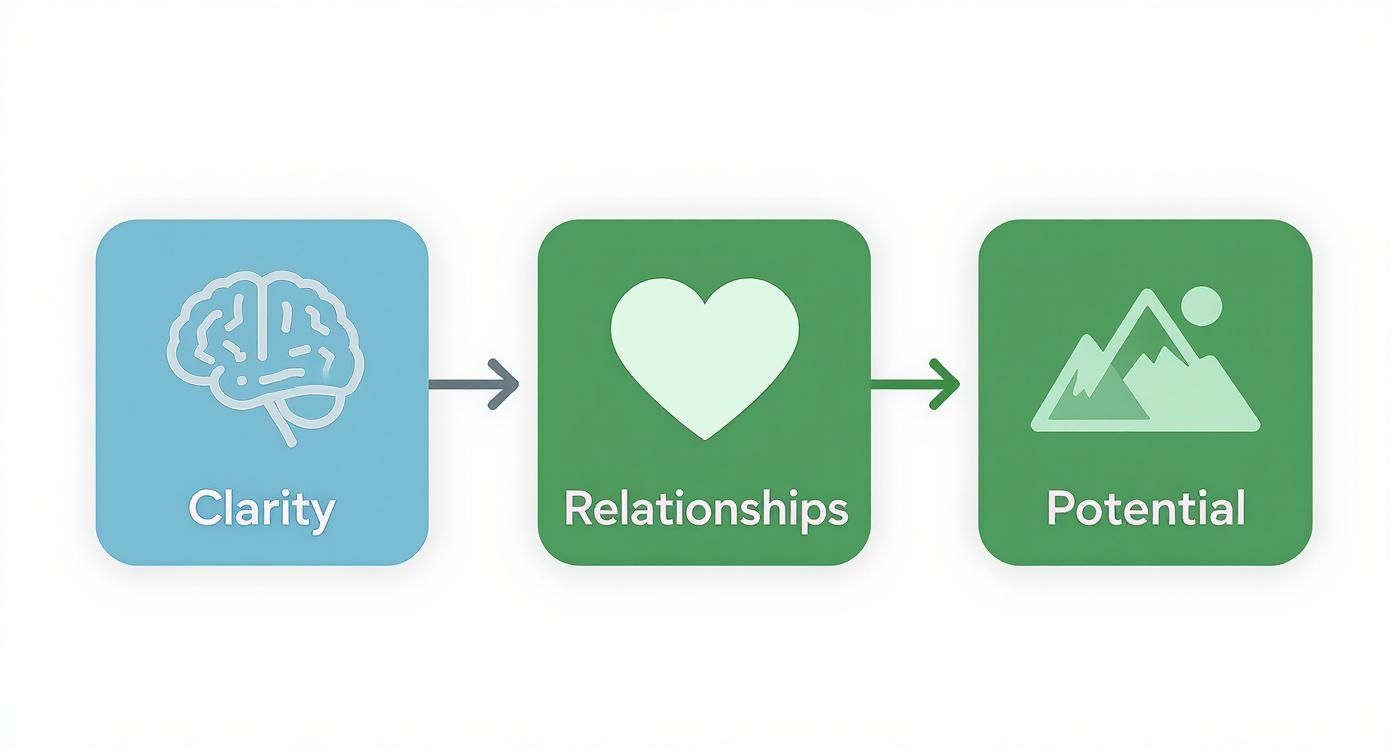
- Renewed Mental Clarity: When alcohol isn’t clouding your mind, you’ll likely find your focus is sharper, your memory improves, and your emotions feel much more manageable.
- Stronger Relationships: Sobriety helps you be truly present with the people you care about. You’ll build connections based on genuine interaction, not just nights out.
- Rediscovered Purpose: Suddenly, you have more time, energy, and money. This is your opportunity to pour that back into hobbies, passions, and goals that alcohol may have pushed to the side.
The visual below really captures the core of this transformation. It’s all about gaining clarity, deepening your relationships, and tapping into the potential you’ve always had.
This journey is about what you gain, not just what you give up. Seeing the tangible benefits laid out can be a huge motivator.
To make this feel even more real, you can get a personalized look at how much progress you’re making from day one. Using a sobriety calculator to track time and money saved can turn abstract goals into concrete achievements.
The 5 Stages of Your Journey to Quit Drinking
Thinking about this process in stages can make it feel much more manageable. Here’s a quick look at the road ahead, breaking down what to expect as you move from that initial decision to long-term freedom.
| Stage | What It Involves | Key Focus Area |
|---|---|---|
| 1. Getting Ready | Taking an honest look at your drinking habits and deciding you’re ready for a change. | Self-assessment and commitment. |
| 2. Making a Plan | Setting a quit date, identifying your triggers, and telling key people about your goal. | Preparation and strategy. |
| 3. Early Sobriety | Navigating the first days and weeks, which can include withdrawal and intense cravings. | Management of physical and mental challenges. |
| 4. Building Your New Life | Developing new routines, finding sober hobbies, and learning healthier coping mechanisms. | Habit formation and lifestyle change. |
| 5. Staying the Course | Practicing relapse prevention, continuing personal growth, and enjoying long-term sobriety. | Maintenance and thriving. |
Each of these stages comes with its own set of challenges and victories. This guide is here to walk you through all of them, offering actionable steps and support to help you not just succeed, but truly thrive.
Honestly Assessing Your Relationship with Alcohol
 Before you can map out a path forward, you need to get brutally honest about where you’re starting from. This isn’t about beating yourself up; it’s about getting a clear, unfiltered look at your relationship with alcohol. Think of it as gathering intel—the first, most critical step in any successful mission.
Taking a hard look at your habits helps you see the whole picture, not just the parts you want to see. It’s about looking past the “it’s not a problem” reflex and getting real about what alcohol is actually doing to your life.
Identifying Your Personal Triggers
Everyone has triggers. They’re the specific people, places, feelings, or even times of day that make you reflexively reach for a drink. Figuring out what yours are is the first real breakthrough you’ll have on this journey.
Start by asking some direct questions and really listen to the answers:
- When do I drink? Is it a weekend thing? Or is it a nightly ritual to “decompress” after a long day at the office?
- Why do I drink? Am I trying to bury stress? Do I need it to feel less awkward at parties? Is it just a way to kill time when I’m bored or lonely?
- Who do I drink with? Do I have a specific “drinking buddy” or group that I never see without a drink in my hand?
The Big Idea: Your triggers are like a roadmap. They show you exactly where you need to build new, healthier habits. If you know you drink to relax, you can start exploring other ways to unwind that don’t come with a hangover.
Seeing the Full Story
Once you’ve zeroed in on your triggers, the next step is to track the fallout. For one week, keep a private log. A simple notebook works, or you can use a tool like the Soberly app to discreetly track not just how many drinks you have, but how you feel before, during, and especially after.
Jot down notes about your mood, your energy the next morning, the quality of your sleep, and any fuzzy memories or regrets that pop up. The point isn’t to shame yourself—it’s to connect the dots. It’s so easy to remember the short-lived buzz and completely block out the anxiety, terrible sleep, and wasted days that follow.
This is a far more common struggle than most people realize. Around 400 million adults worldwide live with an alcohol use disorder—that’s roughly 7% of the global adult population. And the most staggering part? Only about 7.2% of them ever get any help, which speaks volumes about how many people are trying to navigate this alone. You can find more global statistics on alcohol use that really put the scale of the issue into perspective.
The Spectrum of Alcohol Use
Forget the black-and-white idea of being an “alcoholic” or not. Alcohol use exists on a wide spectrum, ranging from occasional drinking to mild, moderate, or severe alcohol use disorder (AUD). Understanding where you might fall on this spectrum is key to figuring out what kind of support you’ll need.
- Mild AUD: Maybe you consistently drink more than you planned to or find yourself thinking about alcohol a lot.
- Moderate AUD: This is when cravings get stronger and drinking starts getting in the way of your responsibilities at work or home.
- Severe AUD: At this point, you’ve likely built a tolerance (needing more to get the same effect), experience withdrawal if you stop, and keep drinking even when it’s causing major problems in your life.
Being honest about these patterns gives you a realistic sense of the challenge ahead. For so many people, this moment of clarity is the turning point. It’s what gives you the powerful “why” that you’ll need to carry you through the tough days on your way to quitting for good.
Building Your Personal Plan to Quit Drinking
 A vague idea to “drink less” rarely sticks. What you need is a real strategy—a roadmap that takes you from thinking about quitting to actually doing it. This is where you get practical and set yourself up for success.
Think of it less like a test of willpower and more like smart preparation. By making a few key decisions and getting your environment ready before you stop, you build a powerful defense against old habits and sudden urges.
Setting Your Quit Date and Informing Your Circle
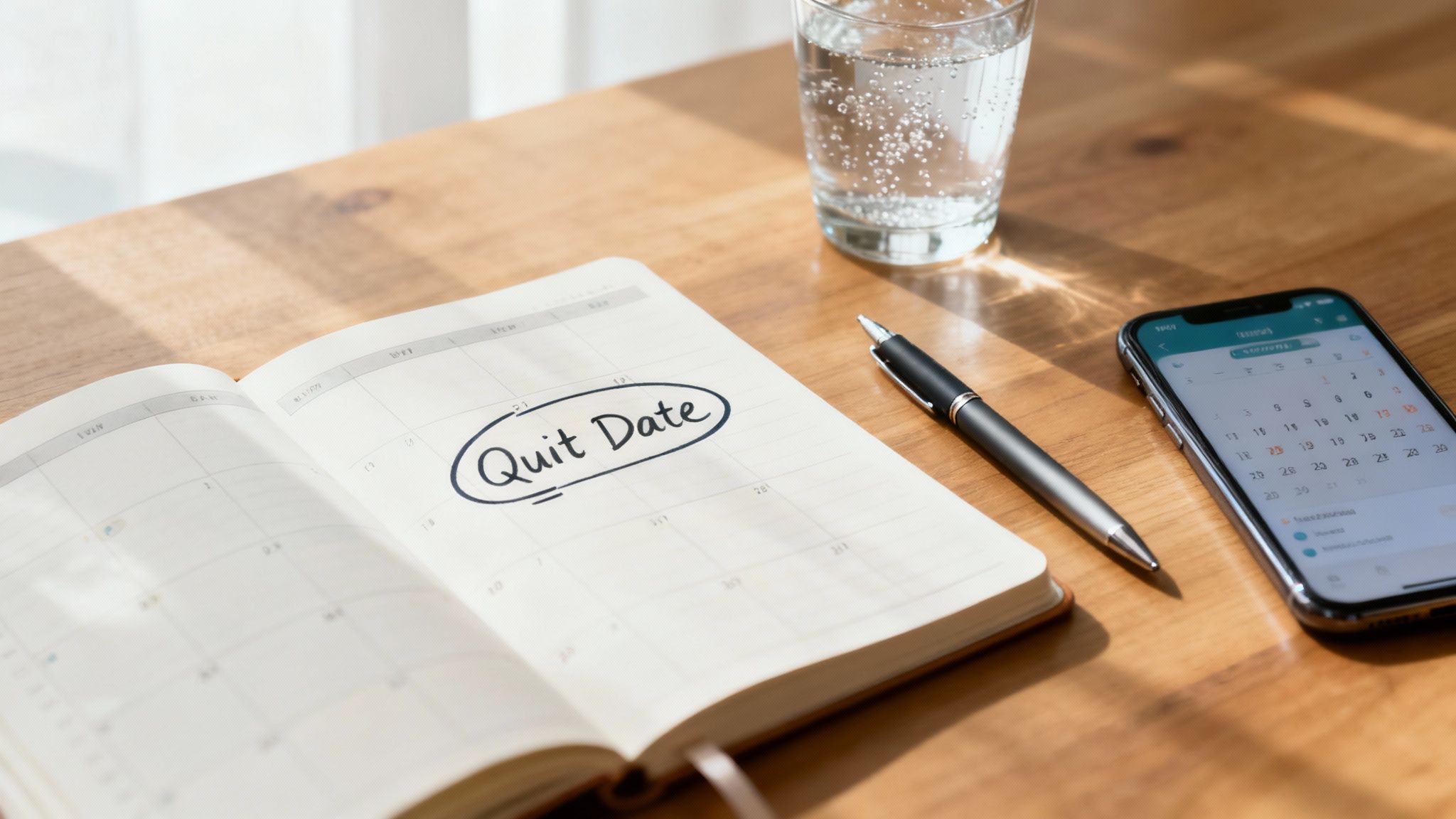
First things first, let’s make it real. Pick a specific date to stop drinking. Not “sometime next week,” but a concrete day on the calendar, like this coming Saturday. This simple act creates a clear line in the sand, giving your goal an anchor and a sense of importance.
Next, decide who needs to be in your corner. You don’t have to make a public service announcement, but telling a few trusted people can be a game-changer. Choose friends or family you know will be genuinely supportive, not the ones who might second-guess your decision. A simple, “Hey, I’m taking a break from alcohol for a while, and I’d really appreciate your support,” is often all it takes.
Preparing Your Environment for Success
Your home needs to be your safe zone, not a field of landmines. Before your quit date, go through your house and clear out all the alcohol. That means the half-bottle of wine in the fridge, the liquor cabinet, and the case of beer in the garage. Everything.
Removing alcohol from your immediate surroundings is one of the most effective things you can do to beat a craving. If it’s not there, you can’t drink it in a moment of weakness. It’s a simple, powerful barrier between you and a potential slip.
With the alcohol gone, it’s time to restock with things you’ll actually want to drink. Don’t just settle for water. Get creative and find some appealing alternatives.
- Sparkling Waters: The options are endless. A good seltzer with a splash of lime or a fancy flavored water can feel like a real treat.
- Herbal Teas: A warm cup of chamomile tea can be a fantastic way to wind down in the evening, replacing that old wine or whiskey ritual.
- Something with a Kick: Kombucha and high-quality ginger beers have a complexity and bite that can be really satisfying.
- The New NA Options: The non-alcoholic beer, wine, and spirits market is better than ever. Finding a craft NA IPA or mixing a mocktail with a convincing gin alternative can make you feel like you’re not missing out on anything.
Having these options ready to go makes it so much easier to reach for something enjoyable when an urge hits.
Tapering Down vs. Quitting Cold Turkey
For some people, stopping all at once—going “cold turkey”—feels like the cleanest way to do it. But for anyone who has been drinking heavily or daily, stopping abruptly can be medically dangerous. The risk of severe withdrawal is real.
This is a decision you should not make alone. Talk to a doctor to figure out the safest route for you. They might recommend a tapering plan, where you methodically reduce your alcohol intake over a few days or weeks. This gives your body time to adjust and minimizes withdrawal symptoms. For example, a doctor might suggest cutting back by one drink per day for a week. Never try to manage potentially severe withdrawal by yourself.
Planning for the First Challenging Days
Let’s be honest: the first few days and weeks are usually the hardest. A major trigger for many people is unstructured time, especially in the evenings or on weekends. Boredom is not your friend right now.
The trick is to have a plan for how you’ll fill the hours you used to spend drinking. Make a list of sober activities you can turn to when you feel restless.
- Rediscover a hobby you used to love, like playing guitar, painting, or working on a car.
- Get moving. Go for a walk, try a new hiking trail, or sign up for a class at the gym. Physical activity is a great mood booster.
- Line up some entertainment. Plan a movie marathon with a friend or finally dive into that book series you’ve heard so much about.
- Tackle a project. Use the extra time and energy to organize that messy closet or start a small garden.
The goal here isn’t just to not drink. It’s to start building a new, better life you don’t want to escape from. You’re replacing a destructive habit with positive, rewarding ones.
Navigating Cravings and Social Pressures
Once your quit plan is in place, the real work begins. Those first few days and weeks can feel intense as your mind and body get used to a new reality. This is when two of the biggest hurdles pop up: cravings and social situations. Having a solid toolkit ready to go can make all the difference.
Physical cravings are your body’s way of saying it misses a substance it had grown dependent on. They can feel incredibly powerful, almost like a primal urge. At the same time, mental cravings are often wired into our habits and emotions—that five o’clock itch, the urge to drink when stressed, or feeling like a celebration isn’t complete without a glass in hand.
The most important thing to remember is that these feelings are temporary. A craving is like a wave; it builds, it peaks, and then it crashes and recedes. Your job isn’t to fight the wave head-on, but to learn how to ride it out until it passes.
Practical Strategies for Managing Cravings
When a craving hits, you need a game plan. Just sitting there trying to “white knuckle” your way through it is exhausting and rarely works in the long run. The key is to actively shift your focus and break that mental loop.
Here are a few proven techniques that actually work:
- Play the Tape Forward: Before you give in, pause and think past that initial, fleeting moment of relief. What really happens next? It’s rarely just one drink. Fast forward to the potential hangover, the next-day anxiety, the regret, and the disappointment. This simple mental exercise can drain a craving of its power.
- Distract and Redirect: Most cravings only last for a few minutes. Your goal is to get through that short window. Find something to immediately occupy your mind and hands. Go for a brisk walk, call a friend who gets it, blast some music and dance, or tackle a small chore you’ve been putting off.
- Mindfulness and Deep Breathing: Instead of fighting the feeling, just acknowledge it without judgment. Silently say to yourself, “Okay, I’m having a craving right now.” Then, take a few slow, deep breaths. This simple act creates space between the feeling and your reaction, putting you back in the driver’s seat.
If anxiety is a big part of your journey, creative outlets can be a fantastic way to cope. Consider trying some calming art therapy activities for anxiety to add another tool to your distraction kit.
Handling Social Events with Confidence
Social pressure is one of the trickiest parts of getting sober. So much of our culture seems to revolve around alcohol, and saying “no” can feel awkward or leave you feeling like an outsider. But you’re definitely not alone.
The tide is actually turning. A recent global survey found that 22% of legal-age consumers reported not drinking any alcohol over a six-month period. This shift is largely driven by younger generations who are embracing moderation and sober-curiosity. What this means for you is that choosing not to drink is becoming more common and accepted than ever. Discover more insights about the growing moderation trend.
Key Takeaway: You don’t owe anyone an explanation. A simple, firm “No, thanks” is a complete sentence. If you feel like you need to say more, keep it brief and positive.
Have a few simple replies ready to go:
- “I’m not drinking tonight, but I’d love a sparkling water with lime.”
- “No thanks, I’m driving.”
- “I’m actually taking a break from alcohol for my health.”
Confidence is key. A direct, polite “no” is usually all it takes. The people who push are often the ones who are insecure about their own habits. Pro tip: always try to have a non-alcoholic drink in your hand. It helps you feel part of the group and stops people from constantly offering you something.
The Power of Community and Tracking
The good news is you don’t have to do this alone. Leaning on a community of people who truly understand what you’re going through is incredibly powerful. This is where modern tools designed specifically for sobriety can be a lifeline.
An app like Soberly, for example, gives you a dedicated space to connect with others on the same journey. You can find encouragement right when you need it most.
Seeing your progress in black and white also reinforces your commitment and gives you tangible proof that all your hard work is paying off. Tracking your sober days, urges, and moods provides invaluable data about your personal triggers and successes, empowering you to make smarter, more informed choices tomorrow.
Building a Life So Good You Don’t Miss the Booze
The real turning point in sobriety isn’t just about what you stop doing; it’s about what you start doing. This is where you shift your focus from what you’re leaving behind to what you’re actively building: a life that’s so rich and full, you no longer feel the need to escape it.
Once alcohol is out of the picture, you suddenly have a surplus of time, energy, and mental clarity. This is your opportunity to reinvest those precious resources back into yourself and build a new foundation for your future.
Finding Your Joy Again
For a lot of us, drinking became a hobby in itself. When you take it away, it can feel like there’s a huge empty space in your life. But instead of seeing a void, try to see it as a wide-open invitation to rediscover what genuinely makes you tick.
Think back. What did you love to do before drinking took up so much real estate in your mind? Maybe it was painting, playing guitar, hiking, or tinkering with an old car. Now is the perfect time to dust off those old passions and see if they still light you up.
If those old interests don’t resonate anymore, that’s okay too! It just means you get to explore something completely new.
- Get moving: Sign up for a 5k, try a dance class, or join a local sports league.
- Challenge your brain: Learn a new language, take an online coding course, or join a book club.
- Connect with nature: Start a small garden, go fishing, or make a habit of visiting a new park each week.
The whole point is to find things that give you a genuine sense of accomplishment and pleasure, which effectively replaces the artificial reward that alcohol used to provide.
Developing Healthier Ways to Cope
So many people, myself included, used alcohol as a crutch to deal with stress, anxiety, or sadness. A massive part of long-term success is building a new, healthier toolkit for handling life’s inevitable curveballs.
Instead of reaching for a drink, you start learning to lean into more constructive habits. This might look like calling a supportive friend to vent after a tough day, going for a run to clear your head, or just taking five minutes to practice mindfulness and calm your nervous system. These new routines become your go-to allies.
A New Perspective: Sobriety teaches you to actually sit with your feelings instead of numbing them out. Over time, you build real emotional resilience and realize you’re far more capable of handling stress than you ever gave yourself credit for.
This shift toward healthier living isn’t just a personal win; it’s part of a larger, positive global movement. Since 2010, there has been a remarkable 20.2% reduction in alcohol-attributable deaths worldwide, along with a 17.4% drop in alcohol-related morbidity. This proves that focusing on well-being makes a life-saving difference on a massive scale.
Deeper Connections, Realer Growth
Without the fog of alcohol, your relationships can deepen in incredible ways. You’re more present. You become a better listener and a more reliable friend, partner, and family member. Sobriety offers a chance to rebuild connections based on genuine shared experiences, not just shared drinks.
To make social situations easier, finding some killer alcohol-free drinks is a game-changer. You can easily discover mocktail recipes that let you feel part of the celebration without the side effects. Honestly, exploring non-alcoholic options can become a fun new hobby.
Seeing your progress in black and white provides powerful reinforcement. In the Soberly app, you can log new activities, celebrate personal milestones, and get tangible proof of how far you’ve come. Every new hobby you pick up and every relationship you strengthen becomes another solid reason to stay the course. The incredible benefits of sobriety aren’t just about avoiding the bad stuff; they’re about actively creating a positive, vibrant life you’re truly proud of.
Got Questions About Quitting Alcohol?
Making the decision to quit drinking is a big deal, and it’s totally normal to have a million questions running through your head. Feeling a bit lost or uncertain is part of the process. Let’s walk through some of the most common hurdles and give you some real, practical answers to keep you moving forward with confidence.
What If I Slip Up and Have a Drink?
Okay, let’s get one thing straight right away: a slip-up is not a failure. It absolutely does not erase all the progress you’ve made. The real challenge is preventing that one drink from turning into a full-blown relapse.
So, what do you do? First, give yourself some grace. Instead of letting shame take over, try to look at it as a learning experience. Get curious, not critical. What was the trigger? Was it a person, a place, a feeling? Understanding the why behind the slip gives you a powerful piece of information you can use to outsmart that trigger next time.
Your next move is simple: get right back on your plan. Don’t wait until tomorrow. Text a supportive friend, jump into your Soberly community feed, and recommit to your goal on the spot.
How Do I Deal with Friends Who Pressure Me to Drink?
Navigating social situations is easily one of the trickiest parts of early sobriety. But remember, your health has to be your top priority. The good news is you don’t owe anyone a lengthy explanation.
A simple and firm “No thanks, I’m not drinking tonight” is usually all you need. If you get a follow-up question, you can just hold up your soda or water and say, “I’m good with this.” Honestly, any true friend will respect your decision and drop it.
A great long-term strategy is to start shifting the focus of your social life away from booze-centric activities. Instead of automatically meeting at a bar, suggest grabbing coffee, going for a hike, or catching a movie. If you realize some friendships only seem to exist around alcohol and the pressure never lets up, it might be a sign to gently create some distance and invest that energy in people who support the life you’re trying to build.
When Will This Actually Start to Feel Easier?
This is the question everyone asks, and while the timeline is different for everyone, there’s a general pattern. The first few weeks are almost always the toughest. Your body and brain are recalibrating, and this is when cravings and withdrawal symptoms are usually at their most intense. Hang in there.
Many people find that things start to feel noticeably better around the one-month mark. You’ll still get cravings, but they often become less frequent and less powerful. By the time you hit three months, your new sober habits and routines start to feel more like second nature and less like a constant, draining effort. Every day you stack up makes the next one a little bit easier.
For a more detailed breakdown of what to expect week by week, this science-backed alcohol recovery timeline is a fantastic resource.
Do I Really Need Professional Help to Quit?
Look, plenty of people quit successfully using personal resolve and community support. But seeing a professional isn’t a sign of weakness—it’s a sign of strength. It can seriously boost your chances of making this stick for the long haul.
This is especially critical if you’ve been a heavy or long-term drinker. Quitting cold turkey can be dangerous, with a real risk of severe withdrawal symptoms like seizures.
Here’s when getting a pro involved is a really smart move:
- Your Doctor: A medical doctor can help you come up with a safe plan to stop drinking. This might involve tapering off slowly or prescribing medication to manage withdrawal. This step is purely about keeping you safe.
- A Therapist or Counselor: These professionals are experts in helping you uncover why you drank in the first place. They can give you practical tools for dealing with stress, anxiety, or past trauma in healthier ways.
Think of it like this: you wouldn’t try to fix your own transmission without a mechanic’s help. You’re making a major life change, and bringing in experts who’ve guided others through it just sets you up with the best possible toolkit for success.
Your journey to sobriety is a marathon, not a sprint, and having the right support system changes everything. Soberly gives you the tools to track your progress, celebrate your wins, and connect with a community that truly gets it. Take back control and start building your healthier future today. https://getsoberly.com
Related Topics