
Deciding to stop drinking is a big deal, and it all begins with a simple, honest plan. Before you even pour out that last drink, you need to look inward, figure out if you’re truly ready for this change, set a firm quit date, and get brutally honest about what makes you reach for a drink in the first place. This groundwork is everything; it’s the foundation for building a sober life that actually sticks.
Taking That First Step Toward Sobriety
Making the choice to quit drinking is a huge, life-altering decision. But what comes next can feel overwhelming and confusing. The trick is to start with deliberate, small actions instead of trying to change everything about your life overnight. This first phase is all about getting prepared—mentally and emotionally—for the road ahead.
This isn’t just about gritting your teeth and relying on willpower. It’s about building a smart, strategic approach. Quitting alcohol is tough, no doubt about it. Worldwide, an estimated 209 million people have an alcohol dependence, but shockingly few ever get help. But for those who do follow a structured plan, the results are so much better. You can dig into more of the data from the World Health Organization on global alcohol use if you’re curious.
Get Brutally Honest About Your Readiness
Before you can map out your journey, you have to know your starting point. This means taking a hard, judgment-free look at your relationship with alcohol. Sit down and ask yourself some tough questions to see how ready you really are.
- Why am I doing this now? What happened recently that made me think, “enough is enough”?
- What scares me most about quitting? Am I terrified of going to a party sober? Worried about withdrawal? Scared to face my feelings without the numbness alcohol provides?
- What do I actually gain from this? Paint a picture of what a sober life means to you. Is it better health? Mending relationships? Waking up without a hangover?
Answering these questions makes your motivation real. It turns the fuzzy idea of “I should quit” into a solid goal with a powerful “why” behind it. This kind of self-awareness is the first, and most important, tool in your recovery toolkit.
Laying Out Your Personal Sobriety Plan
Once you’ve decided you’re all in, it’s time to create a simple, actionable roadmap. A good plan takes the guesswork out of the early days and gives you something to lean on when things get tough. It doesn’t have to be a novel, but it should cover the essentials.
A goal without a plan is just a wish. Think of your sobriety plan as the bridge between wanting to quit and the daily actions that will actually get you there. It’s your guide when you feel lost.
Start by sketching out these key pieces:
- Set a Quit Date: Don’t just say “soon.” Pick a specific date within the next two weeks. This gives you enough time to prepare without letting you put it off forever. Circle it on a calendar. Make it real.
- Know Your Triggers: Make a list of everything that makes you want to drink. Is it a stressful day at work? A specific friend? The feeling of boredom on a Saturday night? Recognizing these patterns is half the battle.
- Tell Someone Who Gets It: Pick one or two people you truly trust—friends or family who will support you without judgment—and tell them your plan. Having an ally in your corner makes a massive difference.
- See the Future Benefits: Sometimes, you need a reminder of what you’re working toward. Tools like a sobriety calculator for alcohol can show you tangible milestones, like how much money you’re saving or how your health is improving. It can be a huge motivator to see that progress in black and white.
How to Navigate Alcohol Withdrawal Safely
Once you have a solid plan, it’s time to face the first major hurdle: alcohol withdrawal. Let’s be clear—this isn’t something to brush off. When your body is physically dependent on alcohol, taking it away suddenly forces your system into a state of shock. The experience can be anything from mildly unpleasant to genuinely dangerous.
Understanding what you might be up against is crucial for getting through it safely. Quitting isn’t just a test of willpower, especially when your physical health is at risk. This detox phase demands respect and, for many people, professional medical guidance to ensure it’s done right.
Understanding the Spectrum of Withdrawal Symptoms
Alcohol withdrawal is different for everyone. How bad it gets and how long it lasts really depends on your drinking history—specifically, how much and how often you drank. For some, it might just feel like a bad hangover that drags on for a few days. For others, it’s a much more serious ordeal.
You can usually expect the first signs to show up within 6 to 12 hours after your last drink. These often include:
- Anxiety and Irritability: That on-edge, restless feeling where everything gets under your skin.
- Shaky Hands: A noticeable tremor is one of the most classic signs of withdrawal.
- Headaches and Nausea: Think a pounding headache, sweating, and a constant feeling like you’re about to be sick.
- Insomnia: Getting to sleep feels impossible, and when you do, it might be filled with intense dreams or nightmares.
This simple decision tree helps visualize the foundational steps for initiating your journey to quit drinking.
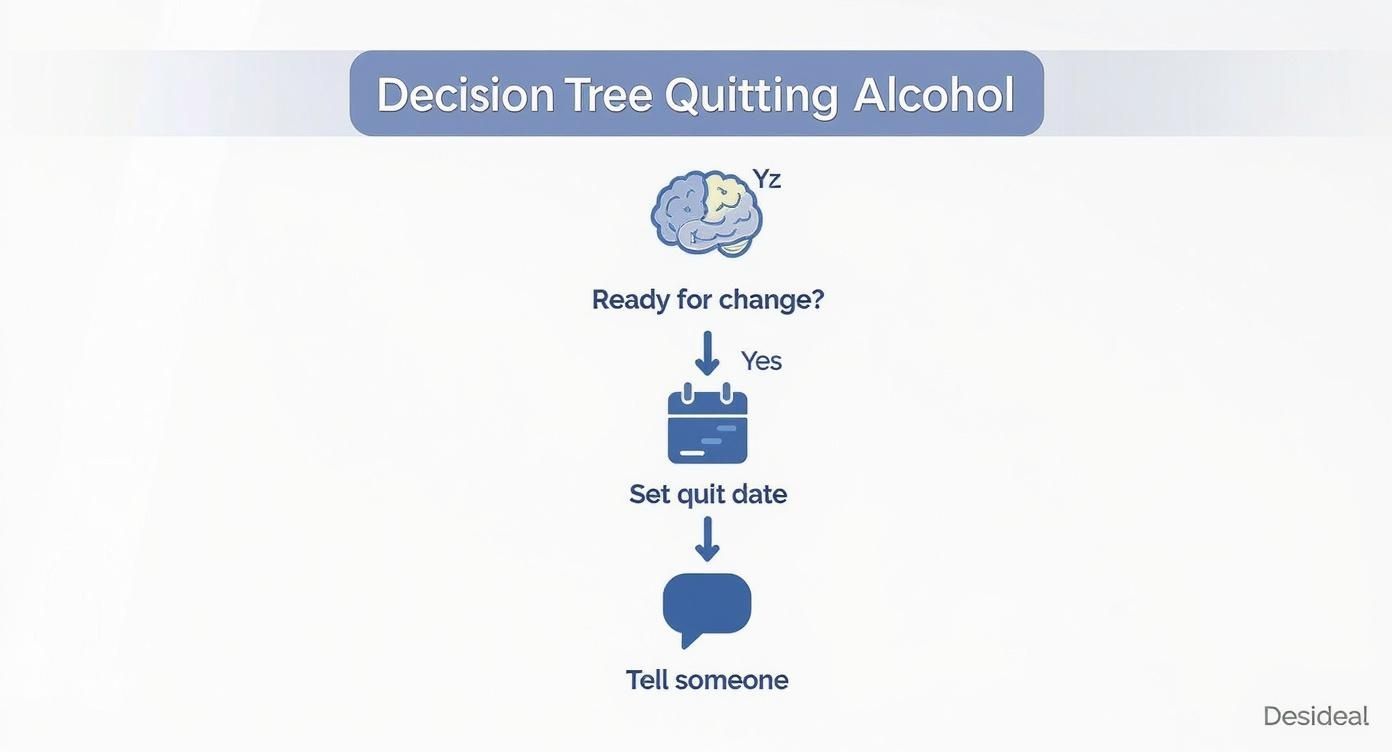
The visualization highlights that quitting starts with internal readiness, followed by concrete actions like setting a date and seeking support.
When Withdrawal Becomes a Medical Emergency
While the symptoms I just listed are often manageable, heavy and long-term drinking can lead to severe, life-threatening complications. This is exactly why a “do-it-yourself” detox is a bad idea for so many. The most dangerous form of alcohol withdrawal is known as delirium tremens (DTs), a medical emergency that can kick in 48 to 72 hours after the last drink.
The signs of DTs are impossible to miss and require immediate medical help:
- Severe confusion and disorientation
- High fever and intense sweating
- A dangerously fast heart rate and high blood pressure
- Hallucinations—seeing or hearing things that aren’t really there
- Seizures
Safety First: If you’ve been a heavy, long-term drinker, trying to detox on your own is incredibly risky. The potential for seizures or other severe medical events is very real. You must talk to a doctor before you stop drinking to map out a safe plan.
A healthcare professional can look at your specific situation and figure out the safest way for you to detox. Don’t let fear or embarrassment hold you back from getting this essential advice. Your health is the number one priority. To get a better sense of the road ahead, our alcohol recovery timeline provides a science-backed sobriety guide that breaks down what you can expect.
Choosing the Right Detox Environment
After a medical assessment, your doctor will recommend the best environment for you to manage withdrawal. The entire goal is to keep you safe, make symptoms as manageable as possible, and set you up for success in your long-term recovery. Generally, this breaks down into two main approaches.
| Detox Approach | Best Suited For | Key Features |
|---|---|---|
| Outpatient Detox | People with mild to moderate symptoms who have a strong and stable support system at home. | You’ll have regular check-ins with a doctor or clinic, possibly get medication to help with symptoms, and can continue living at home. |
| Inpatient Detox | People with a history of heavy drinking, past withdrawal seizures, or other medical or mental health issues. | You’ll have 24/7 medical supervision in a hospital or detox facility, with help available the second you need it. |
This isn’t a decision you should be making on your own. An honest conversation with your doctor will make it clear which option offers you the best chance of getting through this safely. Successfully navigating withdrawal is the first big win in your recovery journey, and doing it the right way lays the foundation for everything that comes next.
Building a Fulfilling Alcohol-Free Routine
Getting through withdrawal is a huge win, but the real work starts now. The truth is, lasting sobriety isn’t just about not drinking. It’s about building a life that’s so engaging and rewarding you don’t feel the need to escape from it. This is where you actively replace old, destructive patterns with positive routines that truly support your well-being.

Think about it: all those hours you used to spend drinking—after work, on weekends, at social gatherings—are now open slots in your schedule. If you leave that time empty, it’s easy for boredom, loneliness, and cravings to creep in. The trick is to get ahead of it by intentionally designing a daily structure that keeps you busy and moving in the right direction.
Reclaiming Your Time with New Habits
Your old routine probably centered around alcohol in ways you didn’t even notice. Maybe it was the beer you cracked open while making dinner or the bottle of wine that signaled the start of the weekend. The goal now is to create new rituals that actually serve you. As you start to re-architect your days, it can be really helpful to learn how to organize your life and regain control over your time and surroundings.
A great first step is to pinpoint the exact times of day when you’re most likely to feel a craving.
- Morning Kickstart: Instead of waking up feeling foggy and regretful, what if you started your day with a five-minute stretch, a quick walk around the block, or even just scribbling some thoughts in a journal? This simple act sets a positive tone before the day’s stress has a chance to hit.
- Evening Wind-Down: That 5-7 PM window is a classic trigger for so many people. Instead of reaching for that after-work drink, try replacing it with something else. Brew a fancy herbal tea, put on a podcast you love, or spend 20 minutes tinkering with a hobby like drawing or playing guitar.
This isn’t about deprivation; it’s about a conscious upgrade. You’re not just removing something negative, you’re actively adding something positive in its place.
Finding Joy in Sober Socializing
One of the biggest anxieties people have when they quit drinking is the fear that their social life is basically over. I’m here to tell you that couldn’t be further from the truth. In many ways, sobriety clears the path for deeper, more genuine connections that aren’t clouded by alcohol.
You just have to adjust where you’re looking. Instead of defaulting to bars and parties, start exploring social scenes where drinking isn’t the main event.
Sobriety isn’t about restriction; it’s about expansion. You’re not losing a social life; you’re discovering a more authentic one.
Think about activities that naturally push alcohol to the sidelines:
- Joining a local hiking or running club.
- Signing up for a class—pottery, cooking, or a new language.
- Volunteering for a cause you’re passionate about.
- Making a plan to explore new coffee shops, museums, or local markets with a friend.
This shift isn’t just personal; it’s part of a larger cultural movement. In the United States, excessive drinking costs the economy over $249 billion annually. As more people, especially younger generations, embrace sober-curious lifestyles, we’re seeing a rise in alcohol-free social spaces like sober bars and events.
Structuring Your Days for Success
When your emotions are all over the place in early sobriety, a solid routine is your anchor. Having a plan for the day cuts down on “decision fatigue” and makes it much less likely you’ll slip back into old habits just because you’re bored or don’t know what else to do.
A simple framework for your day can be incredibly stabilizing. It doesn’t need to be a rigid, minute-by-minute schedule, but a general outline provides a sense of purpose and direction.
Here’s a basic template you can adapt to fit your own life.
Sample Daily Sober Routine Framework
| Time Block | Activity Focus | Example Activities |
|---|---|---|
| Morning | Mind & Body | Meditation, exercise, healthy breakfast |
| Afternoon | Productivity & Connection | Work, errands, calling a supportive friend |
| Evening | Relaxation & Hobby | Reading, watching a movie, creative projects |
By thoughtfully designing your days, you begin to transform sobriety from a constant struggle of willpower into a new, intentional way of living. This structured approach helps reframe quitting alcohol not as a loss, but as a powerful and positive gain.
Handling Cravings and Triggers Like a Pro
Getting through early sobriety is all about learning how to deal with those intense urges and real-world cues that used to send you straight to the bottle. Let’s be clear: cravings and triggers are a totally normal part of this journey, especially at the start. The trick is not letting them run the show.
Having a solid game plan before a craving hits is non-negotiable. When you’re in the thick of it, rational thought goes out the window. By getting a few go-to techniques ready, you give yourself a fighting chance to stay the course and strengthen your commitment to an alcohol-free life.
Pinpointing Your Personal Triggers
You can’t dodge a trigger if you don’t know what it is. Triggers are simply the people, places, feelings, or times of day your brain has wired to alcohol. Getting really specific here is a game-changer for long-term success.
Take a few minutes and jot down a list. Seriously, write it down. It might look something like this:
- Emotional: The wave of stress after a brutal workday. That knot of social anxiety at a party. The sheer boredom of a Saturday afternoon.
- Social: Bumping into that one friend you always drank with. Going to a family cookout where the beer is flowing. Heading to a concert or sporting event.
- Environmental: Driving past your old favorite bar. The sound of ice clinking in a glass. The clock hitting 5 PM.
Once you see your triggers on paper, you can start being proactive. If you know Friday nights are tough, plan something engaging ahead of time—catch a movie, dive into a new hobby, or schedule a call with a supportive friend. Awareness is your best defense.
In-the-Moment Moves to Get You Through a Craving
When a craving washes over you, it can feel like a tidal wave. But here’s the good news: cravings are temporary. Think of them like waves—they build, they crest, and then they crash. Research shows most urges peak and fade within 15-20 minutes. Your job isn’t to fight the wave; it’s to ride it out until it passes.
Here are three battle-tested methods you can pull out of your pocket the second you feel that urge.
Play the Tape Forward
Your brain is a master at romanticizing alcohol, remembering only the instant (and fleeting) sense of relief. “Playing the tape forward” is a powerful mental exercise that forces you to see the whole picture, not just the highlight reel.
Don’t just think about that first drink. Ask yourself what comes next. What really happens after that first one? Will you actually stop? How will you feel in an hour? And what about tomorrow morning—the pounding headache, the crushing regret, the familiar anxiety? This simple act shatters the illusion and connects you back to the real consequences.
The 5-4-3-2-1 Grounding Technique
Cravings and anxiety often show up together, making you feel like you’re spinning out. The 5-4-3-2-1 method is a fantastic way to pull yourself back to the present moment by firing up all your senses.
It’s easy:
- 5: Name five things you can see right now.
- 4: Acknowledge four things you can physically feel (the chair beneath you, the fabric of your jeans).
- 3: Listen for three distinct sounds (traffic outside, the hum of the fridge).
- 2: Identify two things you can smell.
- 1: Name one thing you can taste.
This little exercise breaks the obsessive thought-loop of a craving by giving your brain a new, concrete task. It’s a quick and surprisingly effective mental reset.
A craving is just a thought. You don’t have to act on every thought that pops into your head. These techniques create that crucial pause between the urge and the action, putting the power of choice back in your hands.
Try “Urge Surfing”
This one might sound a little strange, but it works. Instead of wrestling with a craving, “urge surfing” is about mindfully observing it without judging or fighting. Find a quiet spot, sit down, and just notice the physical sensations. Is your jaw tight? Are your shoulders tense?
Imagine the craving as a literal wave. Feel it building, notice its peak intensity, and then ride it as it slowly recedes and disappears. By doing this, you’re teaching your brain that cravings are survivable. You’re proving to yourself that you can handle the discomfort without giving in, which makes you that much stronger for the next one.
Finding Support Systems That Actually Work for You
Knowing how to handle cravings is a powerful skill, but the journey to sobriety isn’t one you should walk alone. Isolation is a huge roadblock, and it can make the mental weight of recovery feel crushing. Building a solid support system is like creating a safety net; it’s the network of people, groups, and tools you can lean on when your own willpower feels shaky.
Let’s be clear: true support isn’t a one-size-fits-all solution. What works wonders for one person might feel completely wrong for another. The real goal is to find a blend of resources that fits your personality and specific needs, creating a strong foundation for your new, sober life.
Peer Support and Professional Guidance
For decades, peer support groups have been a cornerstone of recovery, and for good reason. They offer a unique sense of community and understanding that’s tough to find anywhere else. Connecting with people who just get it validates your struggles and celebrates your wins in a way that others often can’t.
You’ve got a few well-established options, each with a different approach:
- 12-Step Programs (like AA): These groups follow a structured, spiritual path to recovery. The emphasis is on community and mutual support through regular, accessible meetings.
- SMART Recovery: This is a more science-based alternative. It focuses on self-empowerment and teaches cognitive-behavioral techniques to help you manage your own thoughts and urges.
Beyond peer groups, working with a therapist or counselor gives you personalized, professional guidance. A good therapist can help you unpack the why behind your drinking, develop healthier coping skills, and address any co-occurring issues like anxiety or depression that might be tangled up in it.
Using Modern Technology for Accountability
On top of traditional support, today’s digital tools can play a huge role in keeping you on track. Sobriety apps, like Soberly, act as a personal accountability partner right in your pocket. They offer tangible, visual ways to see how far you’ve come, which is incredibly motivating on tough days.
Accountability is the glue that ties commitment to the result. Seeing your progress in black and white—days sober, money saved, health improvements—makes your hard work feel real and worth continuing.
These tools are great because they often include features that reinforce positive habits:
- Progress Tracking: Logging your sober days creates a visual chain you won’t want to break.
- Urge Logging: Documenting when and where cravings hit helps you spot patterns and get smarter about your triggers.
- Milestone Celebrations: Unlocking achievements provides small, consistent rewards that really boost motivation.
This data-driven approach is a fantastic complement to the emotional support you get from groups or therapy. For personalized advice or specific concerns, you might also want to consult with experts directly.
Finding Your Unique Support Mix
Ultimately, the strongest support systems combine a few different elements. You might find that a weekly therapy session, daily check-ins with an app, and a monthly coffee with a sober friend create the perfect balance for you.
Don’t be afraid to experiment. Attend a few different types of meetings or try out a couple of apps to see what clicks. The right combination of support will make you feel understood, empowered, and far less alone on your path.
The Real Physical and Mental Rewards of Sobriety
Staying motivated can be tough, but it helps to keep your “why” front and center. Quitting alcohol isn’t just about what you’re leaving behind; it’s about all the incredible things you’re about to gain. Think of this as your personal reminder of the life that’s waiting for you.

From the moment you stop drinking, your body gets to work on healing itself. You don’t have to wait long to feel the difference, either. In just the first few weeks, many people notice they’re sleeping more soundly and waking up feeling genuinely rested. That sluggishness and brain fog start to clear, giving way to sharper thoughts and more energy.
Your Body on the Mend
Those early wins are fantastic, but the long-term physical benefits are where things get really exciting. Our bodies are amazing at repairing themselves once we remove what’s harming them.
- A Healthier Liver: Your liver bears the brunt of processing alcohol. When you quit, it gets a much-needed break and can start to heal, significantly lowering your risk of conditions like fatty liver disease and cirrhosis.
- A Stronger Heart: Ditching alcohol can help bring your blood pressure down, stabilize your heartbeat, and reduce your overall risk of heart disease.
- A Tougher Immune System: Alcohol weakens your body’s defenses, making you more likely to catch whatever is going around. Sobriety helps rebuild your immune system so it can do its job properly.
On those days when you feel your resolve wavering, remind yourself of this: You’re not just “giving up” a drink. You are actively reclaiming your health, day by day.
The Mental and Emotional Upside
The transformation isn’t just physical. Alcohol might feel like it’s helping you cope, but it’s a depressant that often makes anxiety and low moods worse over time. When you remove it from the equation, your brain’s chemistry can start to find its natural balance again.
This rebalancing act often leads to a more stable mood, less background anxiety, and a feeling of inner calm you might not have felt in years. As you string together sober days, your self-esteem gets a huge boost. Every day you succeed is proof that you are strong and in control.
You can learn more about the full range of positive changes in our complete guide on the benefits of sobriety. Each sober day is a win, a step toward a healthier, more present, and more fulfilling life.
Your Questions About Quitting Drinking, Answered
Deciding to quit drinking is a huge step, but it naturally comes with a lot of questions. Let’s be honest, the “what ifs” and “how longs” can feel overwhelming. Having some clear answers can make the whole process feel less like a leap into the unknown. Here are some of the most common questions I hear, along with some straight talk about what to expect.
How Long Until I Feel “Normal” Again?
This is the big one, isn’t it? The truth is, there’s no single answer. Your personal timeline really depends on how long and how heavily you’ve been drinking. For most people, the most intense physical withdrawal symptoms tend to peak around the 72-hour mark and then start to get better within about a week.
But feeling “normal” is about more than just getting through the initial detox. You might run into something called Post-Acute Withdrawal Syndrome (PAWS), which can show up as unpredictable mood swings, trouble sleeping, or just feeling wiped out. This can last for a few months as your brain chemistry finds its footing again. The best thing you can do during this time is stick to your new routines—good food, some form of exercise, and leaning on your support network will make a world of difference.
Recovery isn’t a straight line. It’s totally normal to feel fantastic one week and a little foggy the next. Your brain and body are doing some serious repair work, so give yourself some grace.
Can I Just Quit Cold Turkey On My Own?
While it might seem tempting to just stop, going it alone can be incredibly risky, especially if you’ve been drinking heavily for a while. For anyone with a moderate to severe alcohol dependence, quitting cold turkey can lead to dangerous withdrawal symptoms, including seizures, which can be life-threatening.
The safest first step is always to talk to a doctor. They can give you a realistic assessment of your situation, potentially prescribe medication to make withdrawal safer and more comfortable, and help you figure out the right level of support. Think of this as a non-negotiable safety check before you start.
What Do I Do If I Relapse?
First things first: a relapse doesn’t mean you’ve failed. It’s a common bump in the road for many people, and the most important thing is how you handle it. It’s an opportunity to learn what went wrong. Don’t let shame or guilt push you back into isolation.
Here’s what to do right away:
- Reach out. Immediately. Call your therapist, your sponsor, a sober friend—whoever is in your corner.
- Figure out the trigger. Get honest with yourself. What happened right before you picked up a drink? Understanding the cause is key to avoiding it next time.
- Get back on track. Use what you just learned to strengthen your recovery plan. Maybe you need a new coping skill or need to avoid a certain situation for a while.
Lots of people stumble. What matters is that you get back up, dust yourself off, and keep moving forward.
Ready to build a stronger foundation for your recovery? Soberly gives you the tools to track your progress, celebrate your wins, and stay accountable to your goals. Download the app and get a supportive partner in your pocket at https://getsoberly.com.
Related Topics