
When you stop drinking, one of the biggest questions is, “How long will these cravings last?” The honest answer is that it varies, but generally, you can expect them to be a factor for a few weeks to a few months.
The most intense, gut-wrenching urges usually hit their peak within the first one to two weeks. After that, they don’t just disappear, but they do become far more manageable. They might pop up for months or even years, but their power over you will fade.
Navigating the Timeline of Alcohol Cravings
Trying to predict the timeline for your own cravings can feel like guessing the weather—it’s complicated and incredibly personal. But we do know that the experience typically unfolds in two distinct phases.
Think of it like getting your sea legs. At first, the waves are huge and relentless, knocking you off balance. But as you spend more time on the water, you learn to ride them. They get smaller, less frequent, and you find your footing. This roadmap isn’t about setting a rigid deadline; it’s about setting realistic expectations and reminding yourself that the storm will pass.
The Two Major Phases of Cravings
Your journey through cravings is a progression, not a flat line. It starts with a physical battle and gradually becomes more of a mental one.
- The Acute Phase: This is the initial sprint. It’s intense and typically lasts anywhere from a few days to two weeks. Your body is physically screaming for the alcohol it’s used to, and your brain chemistry is in overdrive trying to rebalance itself. Cravings during this time can feel constant, powerful, and downright overwhelming.
- The Post-Acute Phase: Once you’re through the initial storm, you enter a longer, steadier phase. This can last for several months or, in some cases, a year or more. The cravings shift from being intensely physical to more psychological. They’re often sparked by triggers—stress, boredom, celebrations, or even just seeing an old friend you used to drink with.
The infographic below really helps visualize this shift from the turbulent acute phase to the calmer (but still tricky) post-acute waters.
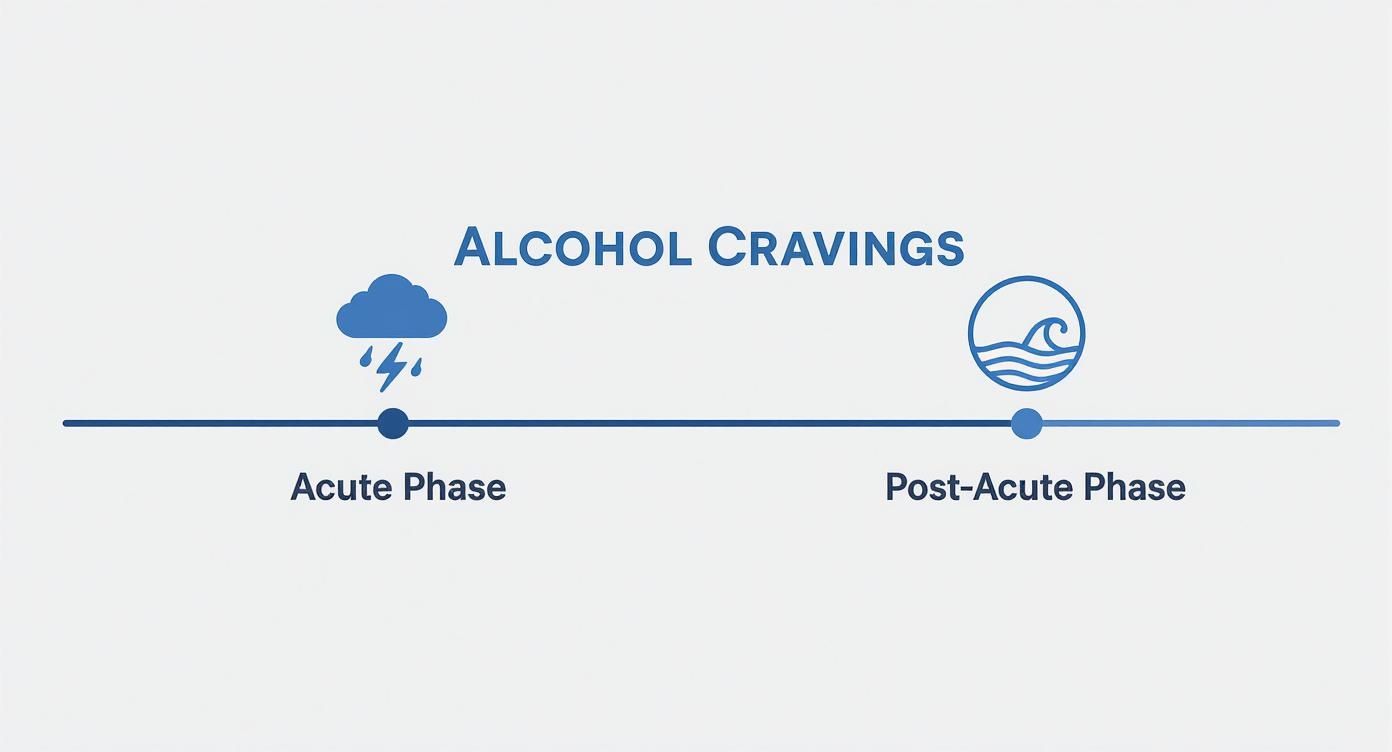
As you can see, the initial spike is sharp, but the trend line moves steadily downward. The intensity lessens, giving you more space to breathe and build stronger coping skills as you move forward.
To put it simply, here’s a quick breakdown of what to expect.
Alcohol Craving Timelines At a Glance
| Phase | Typical Duration | Nature of Cravings |
|---|---|---|
| Acute Phase | A few days to 2 weeks | Intense, frequent, and primarily physical. Feels overwhelming. |
| Post-Acute Phase | Several months to a year+ | Less intense, less frequent, and mainly psychological. Trigger-based. |
This table serves as a quick reference, reminding you that what you’re feeling is part of a well-understood process.
How Cravings Impact Relapse Risk
Let’s be direct: learning to manage cravings, especially in that chaotic acute phase, is crucial for staying sober. The link between craving intensity and relapse risk is crystal clear. Research shows that the stronger your urges are, the higher the likelihood of returning to drinking.
One study really brought this home. It found that people with high craving scores relapsed much faster than those whose urges were milder.
The difference was stark: those with high cravings relapsed in about 8 days, while people with lower scores made it to around 18 days—a full 10-day difference.
This statistic hammers home why having a game plan from day one is so important for building a solid foundation in sobriety. You can find a more detailed week-by-week guide in our comprehensive alcohol recovery timeline. The evidence is undeniable: how you handle your cravings directly impacts your early success.
Understanding these phases gives you a framework, turning what feels like a chaotic, unpredictable storm into a series of manageable, predictable steps.
Why Cravings Happen and What They Feel Like
To really get a handle on how long alcohol cravings last, we first have to talk about why they even happen. Let’s be clear: this has nothing to do with willpower or a lack of moral fiber. Cravings are a completely normal, physiological response when you stop using a substance your brain has learned to rely on.

Here’s a good way to think about it. Imagine your brain’s reward system is a network of trails through a forest. Things like a good meal or a great conversation create gentle footpaths. But heavy, long-term drinking is like driving a bulldozer down that same path over and over, carving out a deep, wide highway.
That process literally rewires your brain, creating a powerful, learned connection between alcohol and feeling good. Your brain starts producing less of its own “feel-good” chemicals like dopamine because it starts expecting alcohol to do the job. So when you suddenly stop, that highway is still there, and your brain sends out powerful signals—cravings—to get you back on it, just to feel normal again.
The Brain Science Behind the Urge
This biological process is at the very heart of what a craving feels like. It’s your brain demanding the one thing it’s been conditioned to expect for its chemical balance. This creates a physical and psychological pull that can feel absolutely overwhelming, especially in those early days.
But understanding the science behind it is empowering. It helps you see cravings not as a personal failure, but as a predictable symptom of your brain healing. You aren’t weak for having them; your brain is just doing what it was trained to do for months or years. Your job in recovery is to let that old highway become overgrown while you forge new, healthier paths.
A craving is essentially an itch in your brain that only alcohol seems to scratch. Recognizing it as a temporary signal—not a command—is the first step to regaining control.
Distinguishing Between Physical and Psychological Cravings
It’s also really important to know that not all cravings are created equal. As you move through sobriety, you’ll probably run into two very different types, and each one feels and acts differently.
- Physical Cravings: These are the ones that hit you like a ton of bricks during acute withdrawal, usually in the first week or two. They’re a direct result of your body screaming for a substance it’s physically dependent on. These cravings feel primal, raw, and incredibly demanding.
- Psychological Cravings: These are the sneaky ones that pop up later, well into the post-acute phase. They are tangled up with your emotions, habits, people, and places. Seeing your old go-to bar, feeling stressed after work, or even celebrating a big win can all trigger these urges out of the blue.
Knowing the difference helps you prepare for what’s coming. The intense physical fight eventually quiets down, but it’s replaced by a longer, more strategic mental game of outsmarting your triggers.
What Does a Craving Actually Feel Like?
While the experience is a little different for everyone, cravings tend to show up with a familiar set of physical and mental signs. Learning to spot them gives you a chance to react with a plan instead of being blindsided.
A craving can feel like:
- A sudden, racing heart or a knot of tightness in your chest or stomach.
- An obsessive focus on drinking; it’s like a song stuck in your head that you can’t turn off.
- Feeling irritable or angry for no apparent reason.
- Weird physical sensations, like a dry mouth or even strange aches and pains.
- A wave of nostalgia for the “good old days” of drinking, where your mind conveniently edits out all the negative parts.
These feelings can be intense, but they are always temporary. The trick is to learn to recognize them for what they are: clouds passing in front of the sun. It’s a sign to grab your umbrella—your coping tools—and wait for the brief storm to pass, because it always will.
What Makes Your Craving Experience Unique?
If you ask how long alcohol cravings last, you might as well ask how long it takes a broken bone to heal. There’s no single, straightforward answer. Everyone’s body, history, and life circumstances are different, which means the timeline for cravings isn’t a fixed calendar—it’s a deeply personal journey.
Two people can quit drinking on the exact same day and have polar opposite experiences. One might feel the intense urges start to fade after a few weeks, while the other is still wrestling with them months later. This isn’t a sign that one person is “stronger” or “better” at recovery. It just shows how many complex, individual factors are at play.
Getting a handle on these variables can help you look at your own experience with a lot more compassion and a lot less judgment. Your path is your own.
Your Drinking History Matters
One of the biggest factors is simply how long and how heavily you drank. Think of it like a well-worn path through a forest. Someone who drank heavily for 10 years has carved a much deeper, more defined trail in their brain’s reward system than someone who only drank for a couple of years.
- How long you drank: The more years you spent drinking, the more your brain’s neural pathways got used to alcohol. It’s had a long time to adapt to alcohol being around, so it’s going to take longer to readjust once it’s gone.
- How much you drank: The quantity you consumed is just as important. Heavy, daily drinking rewires brain chemistry far more significantly than occasional binge drinking. The more dependent your brain became, the louder it will scream for alcohol when you take it away.
These two pieces of your history really set the stage for what you can expect, influencing how intense and long-lasting those initial acute and post-acute cravings will be.
Your Unique Biology and Brain Chemistry
Beyond your habits, your own biology plays a huge role in how you experience cravings. We’re all built a little differently, with a unique genetic code and brain chemistry that affects our vulnerability to addiction and our resilience in recovery.
Some of us just have a more sensitive reward system, making us more susceptible to the powerful dopamine rush that alcohol delivers. Likewise, your natural levels of neurotransmitters like serotonin and GABA can affect your mood and anxiety during withdrawal, which can pour gasoline on the fire of a craving. It’s a biological lottery—what feels like a manageable urge for one person can feel like an overwhelming tidal wave for another.
The Impact of Co-Occurring Conditions
It’s incredibly common for alcohol use disorder to go hand-in-hand with other mental health conditions, like anxiety, depression, or post-traumatic stress disorder (PTSD). When that’s the case, cravings can get a lot more complicated and stubborn.
For many people, alcohol becomes a tool for self-medicating the symptoms of an underlying condition. Take away the alcohol, and those symptoms can come roaring back, creating a powerful urge to drink again just to get some relief.
The link here is undeniable. Research consistently shows that craving intensity is a major predictor of relapse, especially for those with co-occurring disorders. In fact, studies show that people with higher initial cravings are more likely to relapse sooner and face more serious alcohol-related problems down the road. It’s a vicious cycle: strong cravings paired with poor coping skills often lead to more drinking. If you want to dive deeper, you can explore the full study on craving control and co-occurring disorders.
The presence of a co-occurring mental health condition can act like fuel on the fire of cravings. Managing both is not just helpful; it’s often essential for long-term sobriety.
Finally, your environment and support system are game-changers. Someone who is recovering in a stable, supportive home with sober friends has a much better shot at navigating cravings than someone trying to do it alone in a high-stress environment surrounded by triggers. This is precisely why building a solid support network is one of the absolute cornerstones of a successful recovery.
Surviving the Surprise Cravings of Long-Term Sobriety
You’ve made it through the initial storm. Life without alcohol has found a new rhythm, your head is clearer, and those intense, physical urges from the early days feel like a lifetime ago. Then, seemingly out of the blue—maybe six months in, maybe even a year—a powerful craving hits you like a ton of bricks.
This isn’t a sign that you’re failing. It’s actually a normal, well-documented part of the recovery journey called Post-Acute Withdrawal Syndrome (PAWS). These cravings are different from the ones you fought off at the beginning. They aren’t your body screaming for alcohol; they’re subtle, psychological triggers often set off by your emotions.
Think of it this way: your brain has finished the major construction of its new, sober foundation. Now, it’s doing the delicate interior work—rewiring circuits and fine-tuning its chemical balance. These surprise cravings are just evidence that this deeper healing is still happening.
Understanding Emotional Ambushes
Unlike the raw, physical cravings of your first few weeks, the urges that pop up in long-term sobriety are much sneakier. They tend to surface during big emotional moments or major life events, whether they’re good or bad.
Common triggers for these “emotional ambushes” include:
- High-Stress Situations: A brutal day at work, a fight with a loved one, or sudden financial stress can make your brain want to default to its old, familiar coping mechanism.
- Celebrations and Success: It’s ironic, but good things—a promotion, a wedding, a holiday—can be potent triggers. Your brain has spent years building a strong association between celebrating and drinking.
- Boredom or Loneliness: Sometimes, it’s the quiet moments that are the hardest. An empty space in your day can feel like a void your mind wants to fill with an old habit.
- Nostalgia: Hearing a particular song or visiting an old haunt can unleash a wave of romanticized memories about drinking, conveniently forgetting all the reasons you quit.
These moments can feel like a punch to the gut, but they’re really opportunities in disguise. Every single time you face down one of these cravings and don’t pick up a drink, you’re strengthening your recovery and building new, healthier pathways in your brain.
Far from being a setback, these late-stage cravings are proof that your brain is actively healing. Each one you overcome weakens the old connection to alcohol and solidifies your commitment to a sober life.
The Realistic Timeline for Long-Term Healing
So, how long do you have to deal with these surprise cravings? For many people, PAWS symptoms can come and go in waves for up to two years. That might sound like a long time, but the most important thing to remember is that they get less frequent, less intense, and shorter as time goes on.
The way these urges behave is different for everyone, but they often fluctuate for many months after you get sober. Research shows that while the baseline level of cravings slowly decreases, they can still be sparked by your environment or your emotional state, which means the risk of relapse is real for quite a while. To see just how far you’ve come, our sobriety calculator for alcohol can help you track your progress and celebrate the milestones you’ve achieved.
Ultimately, think of these cravings as echoes from a past life. They will get fainter and less frequent as you continue to build a rich, full life in sobriety—one filled with new routines, passions, and people that have nothing to do with alcohol.
Your Toolkit for Managing Cravings in the Moment

Knowing the science behind cravings is one thing, but having a game plan for when an urge actually hits? That’s what makes all the difference. This is your hands-on guide for what to do in those critical moments when a craving feels like it’s taking over.
Think of these strategies as your personal toolkit. Just like a carpenter has different tools for different jobs, you’ll have a variety of techniques to pull from depending on the situation. This isn’t just about willpower; it’s about having real, practical options that turn a moment of panic into an opportunity to strengthen your resolve.
Behavioral Tactics to Ride Out the Wave
When a craving feels all-consuming, your first instinct might be to fight it head-on. A much better approach, however, is to learn how to simply ride it out. It’s a powerful technique often called “urge surfing.”
Imagine the craving is an ocean wave. You can’t stop it from forming, but you can absolutely learn how to surf it. Instead of letting it crash down on top of you, you acknowledge it, feel its energy, and ride it until it naturally fades away. The best part? This whole process usually only lasts for a few minutes.
Here’s how to put urge surfing into action:
- Acknowledge the Urge: First, don’t ignore it. Just say to yourself, “Okay, I’m having a craving to drink.” This simple step creates a bit of distance between you and the feeling.
- Observe the Sensations: Get curious about how the craving feels in your body. Is your heart racing? Is there a knot in your stomach? Notice these physical sensations without judging them.
- Breathe Through It: Take a few slow, deep breaths. This is a surprisingly powerful way to calm your nervous system and keep you grounded, preventing your thoughts from spiraling out of control.
Another fantastic behavioral tactic is good old-fashioned distraction. The idea is to do anything that gets your mind off the craving. The worst thing you can do is just sit there and let it build. Get up, change your environment, and break the mental loop.
Cognitive Shifts to Reframe Your Thinking
Cravings get their power from the stories we tell ourselves about alcohol. If you can challenge those thoughts, you can cut the craving off at the knees. One of the most effective ways to do this is called “playing the tape forward.”
Your addicted brain is an expert at showing you a highlight reel of drinking, conveniently forgetting all the bad parts. Playing the tape forward means forcing yourself to watch the full movie, all the way to the credits. What really happens after that first drink? It’s rarely just one. You’ll likely end up feeling regret, shame, and physically sick the next day, right back where you started.
A craving is your brain’s attempt to sell you a highlight reel of drinking. Your job is to remember the bloopers and the disastrous ending.
This mental exercise shatters the illusion and reconnects you with the real reasons you quit. It’s a stark reminder that the fleeting relief a drink might promise is never worth the long-term price. Learning to manage the intense feelings that often trigger these cravings is a critical skill, and there are many effective emotional regulation strategies that can help build that resilience.
Lifestyle Changes for Long-Term Resilience
While in-the-moment tactics are your first line of defense, building a lifestyle that supports sobriety is what will ultimately reduce how often cravings even show up. Two of your most powerful allies here are nutrition and exercise.
- Nutrition: Big swings in your blood sugar can actually trigger or worsen alcohol cravings. Focus on eating balanced meals with plenty of protein, healthy fats, and complex carbs to keep your energy stable. A lot of people in early recovery also find that a fizzy drink, like soda water with lime, helps satisfy that oral fixation.
- Exercise: Getting your body moving is a fantastic way to boost dopamine naturally. A quick walk, a run, or hitting the gym releases mood-lifting endorphins that can stop a craving dead in its tracks.
Your Craving Management Toolkit
Think of the different strategies as tools for specific jobs. This table can help you pick the right one when you’re under pressure.
| Technique | Best For | Quick Tip |
|---|---|---|
| Urge Surfing | Intense, sudden physical cravings. | Focus on your breath and notice where you feel the urge in your body. |
| Playing the Tape Forward | When you start romanticizing alcohol. | Be brutally honest about the negative outcomes of drinking again. |
| Distraction | When you feel stuck in obsessive thoughts. | Change your physical location; go for a walk or call a supportive friend. |
| Nutrition & Hydration | Preventing blood sugar-related cravings. | Keep healthy snacks and non-alcoholic drinks readily available. |
So, how long do alcohol cravings last? The real answer is that it’s partly up to you and how well you build and use your recovery toolkit. By combining these strategies, you’re not just surviving sobriety—you’re learning how to thrive in it, one moment at a time.
Knowing When to Get Professional Support
Handling cravings on your own is a massive achievement, but it’s just as important to know when it’s time to bring in the pros. There is absolutely no shame in asking for help. In fact, recognizing your limits is a sign of incredible strength, not weakness. Think of recovery as a journey—sometimes you need a seasoned guide to help you navigate the toughest parts of the trail.
If your cravings feel less like manageable waves and more like a constant, overwhelming storm, that’s a good sign it’s time to seek professional guidance. This is especially true if the question “how long do alcohol cravings last” starts to feel less like a curious thought and more like a desperate cry for relief.
Red Flags That Signal a Need for Help
Some signs are clear indicators that your cravings have grown too powerful to manage with self-help strategies alone. Don’t try to push through these red flags; they are warning signs that your sobriety is at risk.
- Constant, Intense Urges: Are cravings no longer just a passing thought? If they’ve become a constant, obsessive focus that hijacks your day, it’s a problem.
- Severe Emotional Distress: Your urges are showing up with friends—debilitating anxiety, deep depression, or an irritability that just won’t lift.
- Relapsing Despite Your Best Efforts: You’ve been using your coping skills and trying your best, but you keep finding yourself giving in to cravings.
- Physical Symptoms Persist: You’re still dealing with physical discomfort or your sleep is a mess, long after you should be past the acute withdrawal phase.
If any of this sounds like what you’re going through, it’s a clear signal that a higher level of care could make all the difference.
Finding the Right Professional Support
Seeking help opens up a whole new world of proven, evidence-based treatments that can dramatically dial down the intensity and frequency of your cravings. You don’t have to fight this battle with one hand tied behind your back.
Reaching out for professional help isn’t admitting defeat. It’s a strategic move to use every tool available to protect your sobriety and your well-being for the long haul.
Consider exploring some of these paths:
- Therapy and Counseling: Working with a professional who specializes in addiction can be a game-changer. Cognitive Behavioral Therapy (CBT), for instance, is incredibly effective at helping you spot the destructive thought patterns that trigger cravings and learn how to replace them with healthier ones.
- Support Groups: Programs like Alcoholics Anonymous (AA) or SMART Recovery connect you with people who just get it. There’s immense power in sharing your struggles with others who are on the same path.
- Medical Options: Sometimes, the right medication can make a world of difference. A doctor can prescribe options that help curb the intensity of cravings, giving you the mental space you need to focus on recovery.
A solid support system is one of the most critical parts of recovery. For a deeper dive into building your own, check out our guide on how to quit drinking for more practical steps. The right support changes everything.
Common Questions About Alcohol Cravings
When you’re on the path to sobriety, questions are going to pop up. It’s only natural. Let’s tackle some of the most common ones that people have about dealing with alcohol cravings.
Will My Cravings for Alcohol Ever Go Away for Good?
For most people, those raw, all-consuming cravings from early sobriety do fade away and eventually become a distant memory. The intensity just isn’t there anymore. But it’s realistic to expect that subtle psychological urges might still pop up now and then, especially when you’re hit with a lot of stress or run into a powerful old trigger.
The real goal isn’t to magically erase every thought of alcohol for the rest of your life. It’s about getting so good at managing those thoughts that they lose their grip on you. Think of it like a scar—it heals and fades over time until you hardly even notice it’s there.
I’m a Year Sober and Still Get Cravings. Is That a Bad Sign?
Not at all. Having a craving after a year—or even longer—is completely normal. It’s not a sign that you’re failing or that your recovery is weak. The brain takes a long time to heal and rewire after heavy alcohol use. This is a marathon, not a sprint.
Cravings that show up this far down the road are almost always tied to something specific: a stressful event, a vivid memory, or a wave of emotion. Instead of seeing it as a step back, look at it as a pop quiz. It’s a chance to flex the coping skills you’ve spent all this time building, recommit to your sobriety, and prove to yourself how much stronger you are now. You’ve got way more in your toolkit today than you did in those first few weeks.
Can Certain Foods or Drinks Make My Cravings Worse?
Yes, they absolutely can. This is something a lot of people in recovery discover. Certain foods and even non-alcoholic drinks can trick your brain and body, creating a confusing experience that can stir up a craving.
-
Sugary Stuff: Foods and drinks loaded with sugar can send your blood sugar on a roller-coaster ride. Those spikes and crashes can sometimes feel a lot like the shakiness of early withdrawal, which can be a powerful trigger.
-
“Safe” Substitutes: This one is tricky. For some people, non-alcoholic beers or mocktails are a minefield. Even without the alcohol, the familiar taste, smell, and the simple act of drinking one can be a potent psychological cue that reawakens old habits.
You have to be your own detective here. If you start to notice that every time you have a certain food or drink, a craving follows, it’s a smart move to steer clear of it—especially when you’re still building your sober legs.
Ready to get a handle on your cravings and see your progress in black and white? Soberly gives you tools like urge logging, daily check-ins, and milestone tracking to keep you focused and motivated. Start building a stronger, healthier you by downloading the app at https://getsoberly.com.
Related Topics